This Knowledge Share will look at the highs and lows of creative workshopping, and what the future might have in store for us. Drawing on decades (!) of experience between them Rebecca and Annabelle will grieve for what’s been left behind, share some ideas for the current day and look to future possibilities.
This session is to provide tips and tricks and open up the floor for more inspiration and sharing of ideas on how we can adopt technology to be even more creative in our workshopping techniques in future.
Our Presenters
Rebecca Harrison
30+yrs ethnographic and qual expertise, Rebecca has conducted numerous workshops across multiple disciplines, topics, countries and cultures both off and on-line. Always looking to push the boundaries of insight and engagement, she’s keen to explore how to best use new or combined techniques to up the ante and ‘bridge the divide’ when it comes to online workshops.
Annabelle Phillips
Annabelle has worked in the insight sector for nearly 30 years, and led on Innovation during her time at Ipsos. Much of her work sits at the intersection of public and private sector: communications, behaviour change, consumer understanding, and everything in between. She is a mixed method research with particular expertise in qual, ethnography and public dialogue workshops.
We welcome Alex Charlton, True Stories, to this Pitch Perfect.
An LLM is a plausibility engine, not a truth engine. It hands you the most convincing-sounding answer, not necessarily the true one. Point it at your qual transcripts and it works from whatever it happens to surface – there is no stratified sampling across your dataset, no language balancing stopping the Spanish groups being drowned out by the English ones. What comes back is the middle of the distribution, fluently written, with the odd, difficult, interesting participant quietly gone.
Even qual tools that do promise stratified sampling, simply place similar quotes in piles, then label the piles. This is data summarisation, not the analysis our clients pay us for. And then there’s the question of how we combine our own (human) intelligence with the artificial intelligence we’re working with. This is a minefield in and of itself.
None of this can be fixed by better prompting. The fix has to live in the architecture around the model.
By joining this session, expect a working demonstration, some lessons learnt along the way, and a sharper set of questions to put to any vendor who tells you their tool “understands” your data.
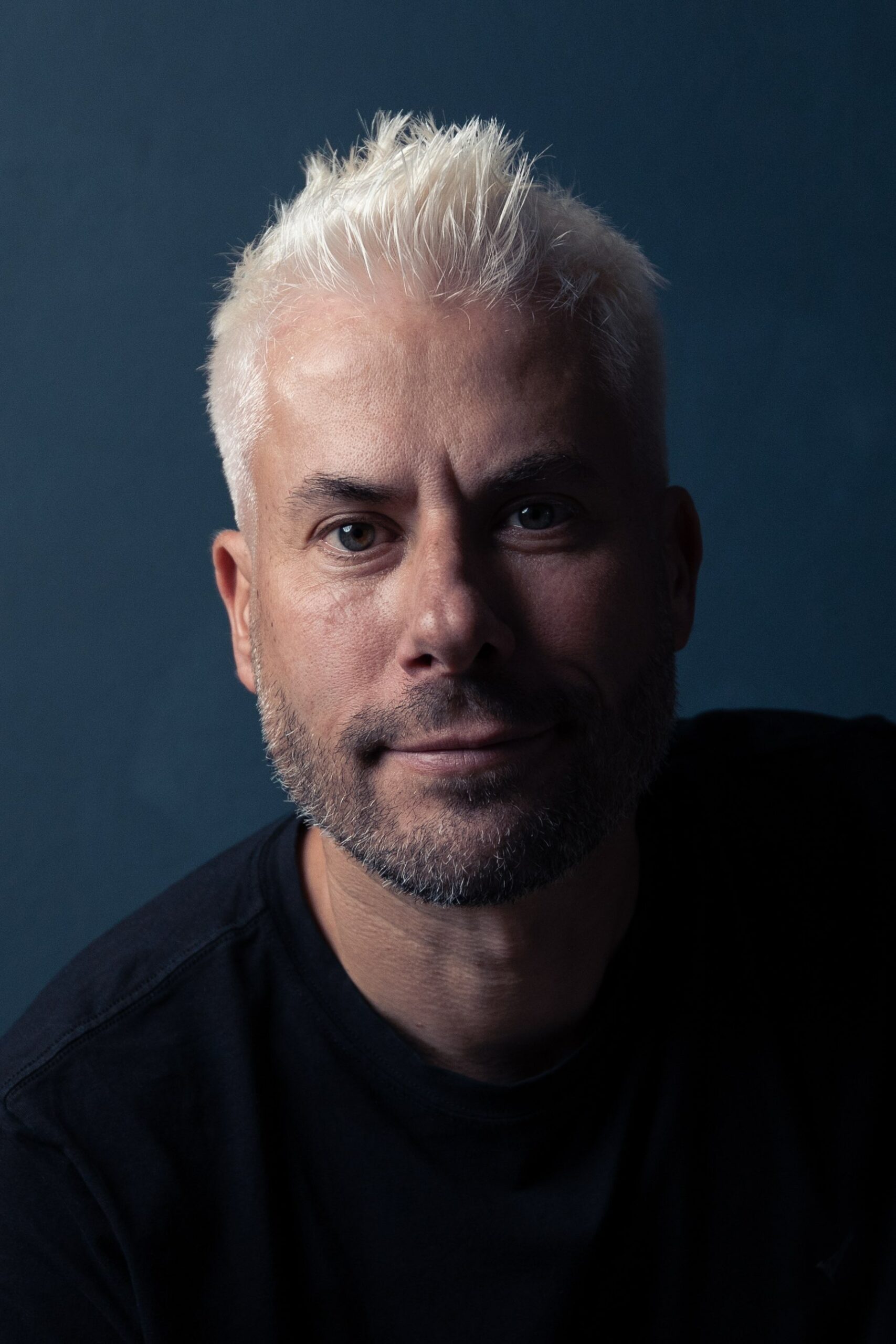
Alex Charlton
Alex Charlton is founder and Managing Director of True Stories. He specialises in qual research and previously founded two London-based insight agencies, Essential Research and Craft. Frustrated that the AI tools arriving in research were built by engineers who had never moderated a group, he spent nearly two years building the alternative himself – writing the platform alongside AI rather than briefing a development team, so that every architectural decision was made by someone who knows what good qual research looks like. True Stories launched in January 2026 and is now used by insight teams across four continents. He works from Medellín, Colombia.
True Stories
True Stories is an AI-powered analysis platform for qualitative research. It was built by a career qual researcher, and the design assumption throughout is that the researcher stays in charge: the platform does the reading, the retrieval and the structured analysis, and you lead the analysis, assisted by AI.
Where other AI tools summarise data, True Stories analyses: drawing on 200+ marketing, consumer psychology and behavioural science frameworks to build a bespoke analysis pathway for each project. Analyses draw evenly across your data rather than sampling whatever the model finds most quotable, work in your participants’ original language without translating the nuance out, and carry confidence ratings. You can interrogate any output conversationally, push on it, then fold the conversation back into a revised analysis. Once analysis is complete, your project reports are generated automatically and include: a written mini-report, a story-driven debrief narrative, and an editable PowerPoint deck.
Aakanksha runs Smart Move Ventures, a UK data and research consultancy specialising in quant and qual methodologies, with a significant part of her business currently run via AI tools. She has run all three waves of the ICG AI monitor survey, the results of which will be shared. Aakanksha will be joined by her colleague, Swaraj Hanmante, who was heavily involved in the preparation of these findings.
Sally runs Agfora Ltd – a market research consultancy that has been providing bespoke research services and strategic advice for almost 20 years.They provide qual and quant market research services for organisations operating in B2B and some of the trickier B2C sectors. Sally has been running the ICG webinar programme for many years.
This webinar is presented by ICG member Mike Wooderson, Stonewood Associates
Mike will take us through the following elements of data protection, ensuring that you’re up to speed and fully compliant;
Introducing Stonewood Associates Establishing the Controller Know the the relevant legislation for the markets you’re working in The 7 Principles and Rights Let’s look at the documents in your nest Kow the what, where, and how A quick world tour Summary of your flock Questions and discussion
In this 30 min session, Jonny Storey shares his ward-winning* presentation;
He’ll covers;
how to explain AI to clients
the best use of AI
dispelling the myths about AI
the use of AI Agents.
All of this will be within the framework of the needs of independent consultants.
We think this will be excellent precursor to our 17 Sept webinar which gives feedback about our Wave 3 AI Member survey. If you haven’t yet registered for the 17 Sept webinar, you can do so here.
*winner of the BHBIA Best of British Award 2026 ‘Best use of Ai’








 Introducing Stonewood Associates