
Article by ICG member Felicia Schwartz, China Insight
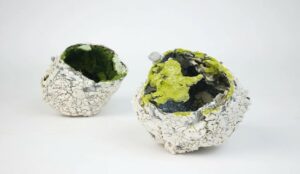
Fan Ji- Earth Nidus 1/2 – glazed earthenware, aluminium mesh, flocks. RCA website
In a world where your mug knows your preferred tea temperature and your audio speaker greets you with a smile, the lines between human and object are quietly blurring. Beneath this shift lies a subtle but growing influence: East Asian animism—the worldview that all things, living or not, possess a spirit or inner life. Once relegated to an obscure area of oriental philosophy, animist thinking is now shaping how brands design, market, and ritualize products to emotionally connect to consumers.
While Western consumer culture has long celebrated functionality and ownership, East Asian animism brings a relational lens—treating objects as beings, not tools. Increasingly, this philosophy is turning up in surprising places. Here are four emerging trends:
- Objects as Companions, Not Tools
Forget kawaii and cottagecore aesthetics—this is deeper. Designers are embedding subtle emotional cues into products, encouraging users to relate to objects like companions. Tech items like the Ember Mug, with its single glowing LED “eye,” appears watchful whilst catering to your tea mug warming needs. Italian brand Alessi has long anthropomorphized kitchen tools with smiling faces and playful gestures. This design language endows everyday objects with presence, gaze, and even personality.
- Design Philosophy from Object-Oriented Ontology (OOO)
In design schools like RCA and Parsons, Object-Oriented Ontology is moving from obscure philosophy into applied thinking. OOO argues that objects have their own essence, independent of human use—a perspective that echoes animist traditions. In practice, this has led to more emotionally complex, even “weird,” design outcomes: objects that resist human mastery and invite us into co-existence, not control.
- Emotional Sustainability: Mending Over Discarding
IKEA’s recent research into “emotionally durable” design highlights a shift from “simple” sustainability to meaningful connection. Inspired by Japanese traditions like Kintsugi—mending broken pottery with gold—brands are asking how people bond with objects over time. Consumers are not just keeping things longer; they’re treasuring the story embedded in their wear, damage, or repair. This emotional logic, rooted in reverence for impermanence, gives objects a kind of evolving “spirit.”
- Care Rituals for Products
Brands are beginning to include “care guides” with products—not just usage instructions, but ongoing rituals of maintenance. High-end knives, audio gear, and even skincare now come with instructions similar to how one might care for a plant or pet. These guides foster a sense of reciprocity: treat the object well, and it will serve you with loyalty. This shift reframes ownership as relationship, not possession.
Why It Matters for Insight Professionals
For researchers, these trends signal a deepening of emotional logic in consumption—a move from ownership to kinship, from use to care. As Western consumers adopt practices that reflect East Asian animism, we’re seeing not a fad, but a worldview shift. Objects are becoming participants in the household, the workspace, and the self. Understanding this subtle transformation opens the door to richer cultural insight—and more resonant brand strategies.
Felicia Schwartz is the founder and director of www.chinainsight.co.uk, a strategic insight consultancy offering research and strategic activation across East and SE Asia.