Topic: Client Relationships and Engagement

  • Why Businesses Need to Think About Empathy as Well as Efficiency in Their Customer Complaints Process

    Why Businesses Need to Think About Empathy as Well as Efficiency in Their Customer Complaints Process

    Article by ICG member Lindsey Annable, Free Spirit Consulting Ltd. 


    Businesses need a different focus when automating their Customer Complaint process.  They should start with the question of how to automate not only for efficiency but also for empathy.

    How a complaints procedure is structured really matters. It is an important customer touchpoint to avoid straining a potentially already fraught relationship and yet not every brand gets it right.

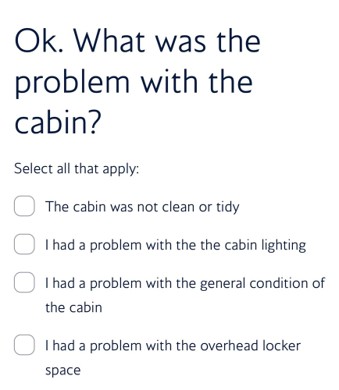
    I recently submitted a complaint to a major airline.  They have completely revamped their complaints procedure so that the customer has to submit their grievance via a series of structured multiple choice options.  Somewhat like a survey ironically.


    A few of the multiple choice options

    On the upside, communication around resolution timelines was immediate and very clear once the complaint had been submitted.  The resolution was prompt; in fact the following day. Box ticked for clear communication and speed of resolution.  The language used throughout was very simple and clear.

    However the survey style approach felt totally inadequate.  It was almost as if the airline saw complaints as an annoyance to purge off agenda as quickly as possible.  It seemed that the process had been designed with efficiency for the business in mind.

    Undoubtedly customer complaints take up considerable financial resource on the corporate balance sheet.  The more efficient the resolution process, the less costly.  Airlines also take the rap for a fair number of issues caused by problems beyond their control such as weather and airport operational difficulties.

    But it’s worth thinking about what this airline approach misses. Robert Biswas-Diener wrote about The Three Types of Complaining in Psychology Today and identified the need to ‘vent as an expression of emotional dissatisfaction.’  There is validation in receiving attention and sympathy he writes. This is where the airline complaint process fell short.  None of the options quite matched my complaint.  Given there were a number of issues on the flight, the multiple choice process was repeated for each topic.

    The end result was that rather than appease my frustration about the flight it heightened my annoyance.  The options enforced a sense of unwonted control over my own voice.  In essence it felt like I wasn’t complaining but being forced to say something I didn’t want to. It was just ‘tick box listening’.

    The approach surely has far wider reaching implications in the business. It undermines a valuable feedback loop, making the insights derived from this customer touchpoint far less rich and less authentic.   This will have consequences down the line in terms of actionability and outcomes.

    It also left me questioning why the multiple choice approach in our AI enabled world.   AI might have offered an efficient solution to analyse complaints at speed.  Perhaps not perfect but nor is the multiple choice option.

    This reveals some important lessons in designing or reshaping a complaints process.  Design for both empathy and efficiency i.e. don’t forget the importance of making the customer feel heard, however that is achieved.  Consider a more qualitative approach – free form text, voice, video combined with structured responses. I once had a smaller company ring me directly to understand the complaint first, then put it through the defined complaints process. I only received email updates subsequently but that initial call ensured the process perfectly balanced my emotional and functional needs.

    I would argue that is increasingly relevant in a world where automation risks creating emotional distance between customers and corporations.  How are you ensuring there is space for empathy in your complaints process whilst remaining as efficient as possible?

    (The Three Types of Complaining Robert Biswas-Diener Psychology Today June 2017 https://www.psychologytoday.com/gb/blog/significant-results/201706/the-three-types-of-complaining)

    Lindsey Annable | LinkedIn

  • When AI Sounds Right but the Research Feels Wrong

    When AI Sounds Right but the Research Feels Wrong

    Why cultural relevance still depends on human judgement

    By Iris Griffiths, ACROSS Research (and ICG member)


    AI can produce a questionnaire that is perfectly translated into Portuguese and still asks the wrong questions. When research moves between Asian markets and Brazil, the challenge is not simply moving between languages, but between cultural systems.

    Lately, more of my work has involved an Asian–Latin American crossover. I find this as exciting as when I moved to the UK decades ago and began conducting qualitative research in Latin America from a British and European perspective. I am again learning to see Latin American markets and behaviour; now, through the perspectives of clients and colleagues in Asia.

    It feels like a professional renaissance—a renewed opportunity to learn and share as artificial intelligence transforms both our industry and our individual roles.

    AI has transformed market research. Translation, transcription, summarisation, discussion-guide drafting and initial analysis are increasingly automated. The efficiencies are valuable. Yet language—already an important and often overlooked dimension of international research—can become a greater weakness when AI output is accepted without sufficient linguistic and cultural scrutiny.

    Fluent-looking research materials can hide rather than solve a problem. A sentence may be grammatically correct yet feel unnatural to a Brazilian participant; a response scale may be clear but culturally awkward; and words such as “premium”, “natural” or “good value” may carry associations quite different from those intended in the original brief.

    Language is not a production task to complete after the research design. Translation and interpreting shape how questions are understood, participants express themselves and international teams interpret findings. Without linguistic, research and cultural scrutiny, automation can strip away tone, context, purpose and meaning.

    A growing share of my work is for Asian end-clients, often in partnership with researchers across Asia. In recent projects, I have increasingly received research materials translated or drafted with AI, sometimes without clear evidence of human linguistic or cultural review. This is not an issue confined to Asia, but it is through this work that the risks have become especially visible to me.

    This has sharpened my interest in how insight travels between Asia and Latin America. China, Japan and South Korea are distinct markets in which I would like to deepen relationships and develop more work. Projects moving between these countries and Brazil must work naturally in both cultural contexts.

    The task requires double localisation: research materials must make sense to Brazilian participants, and Brazilian findings must make sense to decision-makers in the brand’s home market.

    With this in mind, I suggest three principles for using AI more intelligently.

    1. Examine the assumptions hidden inside the brief

    Research briefs are never culturally neutral. They carry assumptions about who decides, what convenience means, why people trust a product and whether a category solves the same problem as in the home market.

    Before fieldwork, the local researcher should turn those assumptions into questions. Is the intended user also the buyer? Does the proposed benefit have emotional relevance? Would consumers genuinely encounter the product in the situation shown? A visible assumption can be tested; an invisible one can quietly distort the whole project.

    2. Translate meanings, not merely words

    Brazilian Portuguese—or any other research language—is not simply a delivery mechanism. Vocabulary, rhythm, register and tone affect how participants understand both the question and the person asking it. Literal translation—or overreliance on AI-translated materials—can make a moderator sound remote, excessively formal or unlike someone a participant would normally speak to.

    This is where linguistic and research expertise must meet. AI output should be reviewed not only for accuracy but for research function: Will the wording prompt the intended thought? Does the scale distinguish responses naturally? Are the examples recognisable? Translation is complete only when the material helps achieve the research objectives.

    3. Design for human rapport—not just culturally fluent wording

    AI can help draft discussion guides and suggest culturally appropriate wording. But material that sounds relevant on the page may not feel natural in the research room. Cultural relevance is not something AI can certify: it is revealed through tone, timing, humour, hesitation and what remains unsaid.

    Brazilian conversations often benefit from warmth and connection. Enthusiasm may reflect interest, but also friendliness or reluctance to disappoint. Skilled moderators read these nuances and probe beyond the first “yes” through concrete occasions, trade-offs and recent behaviour. Human conversation may be less polished than AI-generated language, but its imperfections carry meaning.

    The human work between the words

    AI will continue to improve, and market researchers should use it intelligently. But speed and fluency are not the same as understanding. The more effortless automation becomes, the more important it is to examine the cultural assumptions, research purpose and meaning behind the words.

    Bringing qualitative research together with language and intercultural expertise helps international research move beyond technically correct translation towards genuine insight. It is the difference between hearing Portuguese answers and understanding Brazilian consumers.

    I am keen to connect with colleagues and clients interested in the evolving links between Asia and Latin America. If this crossover is part of your work, I would be delighted to continue the conversation and explore what we might learn together.

    Over several decades, I have built two distinctive and complementary professional paths: one as a qualitative market researcher and the other as a conference interpreter, translator and intercultural trainer. Together, they give me a distinctive perspective on what international research can lose between languages, cultures and markets—and on how to preserve the meaning that turns responses into genuine insight.

    Iris Griffiths | The ICG

    Iris Griffiths | LinkedIn

  • How Insight Functions Reclaim Strategic Agency

    How Insight Functions Reclaim Strategic Agency

    Article written by ICG member Paul Griffiths, Client Advocates



    Customer insight teams often ask for a greater seat at the table. They want more influence over decisions, stronger stakeholder engagement and a bigger role in setting organisational priorities.

    Yet many are still stuck in a reactive cycle, responding to requests rather than shaping the agenda.  The most successful insight functions break out of this pattern. They develop agency.

    Before going further, it’s worth acknowledging an important reality. Most insight teams work within constraints. Priorities are often set elsewhere. Resources are limited. Stakeholders don’t always engage. Teams are judged by how quickly they answer requests rather than how effectively they shape decisions.

    Agency does not mean having complete control. Very few teams do. It means increasing your ability to influence decisions, priorities and conversations within the constraints you operate in.

    By agency, I mean the ability to influence what gets prioritised, what gets discussed and, ultimately, the direction of the insight function itself. It’s the difference between simply responding to business questions and helping shape some of the questions being asked, while bringing greater clarity to which questions matter most.

    The good news is that agency is not dependent on organisational structure, budget or seniority. While it can’t be built overnight, it can be developed deliberately over time. The most influential insight teams are valued not because they generate more research, but because they help organisations make better commercial decisions.

    In my experience, teams that steadily build agency tend to focus on three things:

    • Aligning their work to commercial priorities.
    • Building strong relationships with key stakeholders.
    • Developing the discipline and confidence to prioritise.

    The question, of course, is how. Below are the five key ways I believe any insight function can build agency strategically, drawing on the resources and locus of control available to them.

    1. Map and Prioritise Key Stakeholders

    Not all stakeholders have the same influence over organisational priorities, nor do they have the same relationship with insight.

    The first step is to identify the individuals and teams that are most critical to organisational success and assess the strength of your current relationships with them.This creates clarity about where time, effort and attention should be invested.

    Importantly, this doesn’t require a complex stakeholder management framework. Even a simple assessment of stakeholder influence, interest and relationship strength can help decide where to focus limited time and resources.

    2. Create Clear Accountability for Stakeholder Engagement

    Stakeholder relationships should never be left entirely to chance. Whether you lead a large insight function or operate as a sole practitioner, there should be clear accountability for maintaining relationships with key decision-makers.

    The most influential teams treat stakeholder engagement as a core responsibility, not something that only happens when a project is underway.

    In practice, this may be as simple as assigning ownership of key stakeholder relationships or ensuring regular check-ins take place. The goal is not more meetings. The goal is stronger connections to the people shaping business priorities.

    3. Set Up Regular Communication and Engagement

    Agency is built through continuous conversations. Create regular opportunities to understand stakeholders’ objectives, challenges and priorities. Equally importantly, use these interactions to prove how insight is already contributing to business outcomes.

    This doesn’t need to be resource intensive. A 30-minute monthly conversation with a key stakeholder can often reveal upcoming decisions, emerging risks or strategic opportunities long before a formal request arrives.

    Done consistently, these conversations help shape priorities before they become formal requests and ensure the insight agenda stays closely aligned with business needs. Over time, they also increase the likelihood that insight is brought into discussions earlier, when influence is often greatest.

    4. Build an Evidence Base of Commercial Impact

    Many insight teams create significant value but do a poor job of documenting it. Keep a record of where insight has influenced decisions, reduced risk, driven growth, improved customer experience or created operational efficiencies.

    This can be surprisingly simple. A shared log of decisions influenced, actions taken and outcomes seen is often enough to start building a meaningful evidence base.

    In organisations where stakeholders can see a clear connection between insight activity and business outcomes, insight teams are far more likely to be viewed as strategic partners rather than service providers.
    Agency grows when stakeholders can clearly see the value insight creates.

    5. Communicate Value Relentlessly

    One-off success stories are not enough. The most influential insight teams create regular channels that reinforce the value they generate, whether through stakeholder updates, internal content, presentations or strategic reviews.

    Visibility matters.

    People are far more likely to involve insight in future strategic decisions when they are consistently reminded of its contribution to earlier ones. The goal is not self-promotion. It is helping stakeholders understand how insight contributes to organisational goals and commercial outcomes.

    The Pay-Off

    These activities are often viewed as “nice-to-have” additions to the day job. In reality, they are the work that creates agency. They strengthen stakeholder relationships, increase commercial relevance and create the foundations for effective prioritisation.

    Agency creates leverage. It enables insight teams to move beyond responding to every request and focus more energy on the work that delivers the greatest commercial value. Of course, prioritisation is rarely about saying “no” outright. More often, it is about creating visibility of trade-offs. When a new request arrives, effective teams can explain which existing activities will be delayed, displaced or deprioritised as a result.

    These conversations become much easier when priorities have already been discussed and agreed with stakeholders. Once a clear strategy and agreed set of priorities exist, teams can have far more constructive conversations about new requests, competing demands and resource allocation.

    The purpose of an insight strategy is not simply to define what the team will do. It is to create permission to make conscious choices about what the team will not do.

    Agency Is Earned, Not Granted

    Too often insight leaders wait for agency to arrive through a new executive sponsor, organisational redesign or operating model. Agency is built much more gradually. It appears from consistently aligning insight with commercial priorities, investing in stakeholder relationships and demonstrating value over time.

    The most influential insight teams are not those that simply answer the most questions. They answer important questions well, while also helping the organisation focus on the questions that matter most. Agency is rarely granted in a single moment, and it is never absolute. Most insight teams will not suddenly become the primary driver of organisational priorities.

    But they can steadily increase their influence by becoming more connected to commercial decisions, more deliberate about stakeholder relationships and more disciplined about showing value. Over time, these small shifts accumulate.


    This was by Paul Griffiths, the founder of Client Advocates. He helps leaders of Market Research and Insight Agencies grow revenues through proven strategies. He supports Heads of Insight to increase their influence and budgets by more effectively generating commercial impact.

    With 25 years’ experience growing research agencies and working with client insight teams, Paul understands the challenges of delivering great work while driving commercial value. He’s worked agency and client side, selling and commissioning research, managing commercial relationships, and advising leaders in the UK and internationally.

    If you’re looking to grow your insight agency or adapt to changing market conditions, Paul brings practical strategies that work. Find out more via the Client Advocates website or LinkedIn.
  • How Are Rising Oil Prices Affecting Your Clients?

    How Are Rising Oil Prices Affecting Your Clients?

    Full report by ICG member Kevin Simmonds, Advantage Market Intelligence Ltd


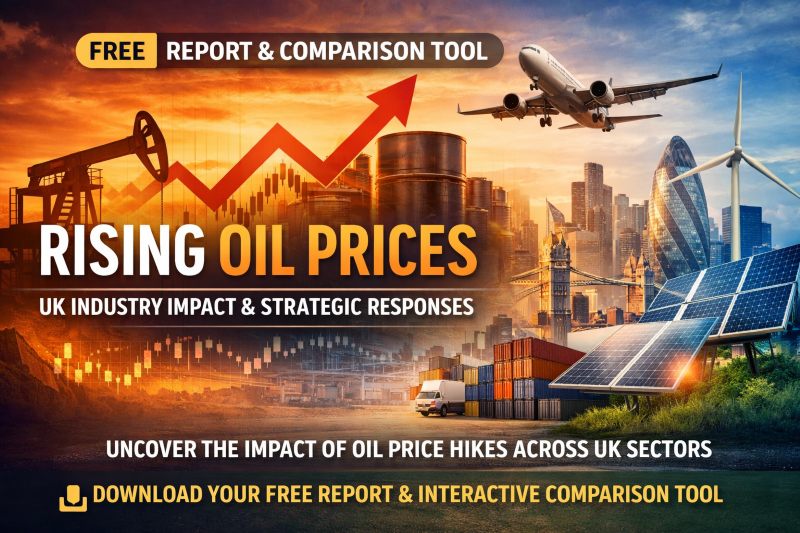
    We’ve put together a short report to help unpack the impact across the UK economy and key industries.

    It provides a clear, high-level view of where different sectors are most exposed, what it means in practice, and how businesses are likely to respond.

    While all industries are feeling the effects, the level of impact varies — with sectors like airlines, logistics, and manufacturing facing immediate cost pressure, while others such as energy and renewables see more positive momentum.

    The report also highlights the bigger picture trends shaping client challenges, including inflation, changing demand, supply chain shifts, and the move toward energy transition.

    Download the report to quickly understand where your clients may be most exposed — and what to watch next.


  • Focus groups without the friction (experience a live online focus group from both sides of the room)

    Focus groups without the friction (experience a live online focus group from both sides of the room)

    Experience a live online focus group from both sides of the room.

    High Tech Development (HTD) is running a Lunch and Learn session as an online focus group within their flagship qual platform, HT Meet. HT Meet is not a meeting platform alternative. It is a qual research environment designed for insight teams who require simplicity, reliability and strong data protection. You may join in this Lunch&Learn demo in one of two ways:
    • As a participant: Take part from the respondent’s view. 10 spots available. (No incentives or food, just good conversation 🙂  REGISTER AS A PARTICIPANT HERE (note we will email you the login a few days before) 
    • As a client observer: Watch the group as clients do, interact privately through chat, submit questions to the moderator, and join a live debrief at the end. REGISTER AS AN OBSERVER HERE (note we will email you the login a few days before) 
    What we’ll explore:
    • What slows online focus groups down and how to remove that friction
    • How the observer backroom should feel when it’s built for research, not meetings
    • Managing privacy, translation and compliance without disrupting flow
    • What moderators really need in-session (and what they don’t)
    • How remote, mobile and facility research can connect in one ecosystem
    • Mobile UX
    • Breakout rooms, Lobby and Tech rooms
    What sets HT Meet apart:
    • Purpose-built for qual: Designed for focus groups, IDIs, and client observation – not business meetings
    • True researcher backroom: Separate observer audio, private chat, timestamped markers and instant multilingual playback
    • Privacy & compliance by design: Automatic PII-redacted transcripts, GDPR/TCPA-ready workflows and IP watermarking
    • Global, multilingual research:Native multi-audio channels with live language switching for observers.
    • Zero friction:100% browser-based – no downloads, logins or IT hurdles
    • Unified ecosystem: Seamless integration with HT Mobile (UX & ethnography) and HT Facility (in-facility qual)
    • White-glove tech support: Sessions run end-to-end so moderators can focus on the conversation
    About High Tech Development High Tech Development has been building secure, purpose-built video streaming technology for qualitative research since 2015. Our flagship platform, HighTech Suite™, supports in-person and online focus groups, IDIs, ethnography, UX studies, and global streaming, all built on a foundation of security, speed, and simplicity. Our tools are designed specifically for Qual research workflows and offer advanced capabilities such as secure observer backrooms, real-time translation and multilingual audio channels, instant one-click participant access, blur and watermarking for IP protection, encrypted data transfer, and robust access controls. HighTech Suite™ brings together purpose-built products that support qualitative research wherever insight is created:
    • HT Meet: Remote live focus groups and IDIs with instant access, secure client viewing, real-time translation, built-in research tools, and immediate recordings.
    • HT Mobile: Global mobile streaming and fieldwork capture that enables teams to stream from anywhere in the world to anywhere.
    • HT Facility: High-quality in-facility and hybrid streaming with multi-camera support, multilingual audio, and a secure observer backroom.
    • HT Ethno: Mobile ethnography and in-the-wild capture including video diaries, in-home sessions, picture-in-picture, online UX recording, and multi-device streaming with real-time translation.
    • HT Insights: AI-powered analysis with automated clip generation, summaries, and smart tagging.
    Built to Wall Street-grade compliance standards (GDPR, SSAE 18, SSAE 23, TCPA), HighTech Suite™ delivers seamless streaming, multilingual collaboration, and AI-driven analysis for research teams worldwide, so teams can focus on insight, not logistics.
    “When facility streaming failed in Germany, HT Mobile delivered a secure backup in minutes, streamed from a phone and saved the project” ICG memberJeff Deighton @ Insight-Engineers
    Speaker: Tom Meyritz – Global Partnerships Director Tom has been working on the commercial side of Insight for over 20 years, and has worked client side, agency side and supplier side. An enviable black book of end client contacts has helped agency partners win business with the likes of Diageo, Amazon, Coca-Cola – so if you need introducing to a new prospect that’s where Tom fits in. Speaker: Andrei Sarbu – Founder & CEO of HighTech Development Creator of HighTech Suite™ – the privacy-first platform for qualitative research. Speaker: Belma Lugic – Engagement Consultant | Client Relationships, Communication & Growth With many years of experience across client engagement, employee engagement and business development in the market research industry, Belma brings a practical, relationship-led approach that helps businesses build trust, loyalty and clear, consistent positioning. Speaker: Vlad Climase-Catrava  – Senior Client Success & Product Specialist Vlad assists research teams and moderators with conducting seamless online and in-person studies that are both secure and engaging. He supports every aspect, from onboarding and moderator training to resolving any unforeseen issues during sessions.




    REGISTER AS A PARTICIPANT HERE

    REGISTER AS AN OBSERVER HERE 

    High Tech Development
  • RECORDING: What’s Life Really Like Inside Clientside Organisations and Bigger Agencies?

    RECORDING: What’s Life Really Like Inside Clientside Organisations and Bigger Agencies?

    This session is generously sponsored by The Lens


    This session is for ICG members only. 

    Many of us have been working for ourselves for a very long time.

    And the Insight world is changing – fast.

    So how do you keep up with really understanding what life is like for our clients in all sorts of organisations?

    And why does this matter?

    We think it matters because a more accurate understanding of their working lives means having a greater chance of winning work with them and having a smoother working relationship.

    We’ve put together a panel of ICG members who’ve recently been in those clients’ shoes. They cover a range of organisation types and will share more about how independent consultants featured in their lives and what they were looking for – and not looking for – from them.

    They’ll each give an overview of their experiences and will then be available to answer your questions.

    Our Panellists and the organisations they’ve come from 

    Nicola Charlton

    Ramona Daniel – GroupM / Choreograph (now WPP Media)

    Becky Lewis – Government departments 

    Neil Macfarlane – Pepsi Lipton 

    Ben Robins – Audible

    To watch this session please send an email to manager@theicg.co.uk to get the link)

  • Insights That Make an Impact: How Researchers Can Provide More Value to Clients

    Insights That Make an Impact: How Researchers Can Provide More Value to Clients

    Article by ICG member Jay Zaltzman


    I’m excited to announce the launch of my video series “From Insight to Impact” – conversations with leaders in marketing, strategy, and research on how to ensure research delivers meaningful business value to client companies.

    My first guest was James Forr, Head of Insights at Olson Zaltman, the firm founded by Dr. Gerald Zaltman (Harvard Business School) and Dr. Jerry Olson (Penn State University). I asked James how we can provide more value to clients, especially in the age of AI. Two of his points stood out:

    • Ask clients better questions
    • Ask research participants better questions

    On the client side, James said “it’s our job many times to try to help clients think about their problems a little bit more deeply. Sometimes the question that you as a client want to answer is not necessarily the question that you should ask.”

    He gave an example where a client was looking to reverse a decline in sales of their breakfast cereal. They originally wanted to conduct research to understand their brand better, but James and his team suggested learning more about the context in which the brand plays, specifically, breakfast. The client knew that breakfast was an important bonding time for mother and child, so they designed research to learn more about that relationship. They found there were developmental steps children go through, and moms frequently would discover the child went to the next step (e.g., made a friend independently) over breakfast. Those insights helped the client create highly effective marketing.

    Beyond reframing client questions, James also emphasized listening more deeply to participants. He gave an example of a project where a couple consumers said that it’s important to eat healthy “these days.” While it would be easy to skip over the mention of “these days,” James thought there was something behind that. Subsequent probing found that people had concerns about “big food” and “big pharma” – concerns that were shaping consumer behavior in new ways.

    AI can process vast amounts of data, but it doesn’t catch those subtle moments. Human researchers add value when we slow down, notice unexpected comments, and follow up. I’m reminded of an experience I had facilitating a board strategy session. One board member said something that made everyone else laugh uncomfortably. I continued on, because I had a lot to cover. But then I caught it and circled back. That issue turned out to be the crux of the problem of how the organization saw itself and the basis for how it would move forward. It can be difficult to note these kinds of statements because we tend to have packed discussion guides. But it’s worth making that extra effort!

    You can view the full interview with James here: https://www.youtube.com/watch?v=7tIEF546tAE


  • RECORDING: Qual Researchers’ Big Opportunity with Smaller Brands

    RECORDING: Qual Researchers’ Big Opportunity with Smaller Brands

    This Knowledge Share has been generously sponsored by Yasna.ai, the AI-powered platform that helps independent researchers, consultants, and research agencies scale in-depth interviews. Claim your free 14 days Yasna PRO free trial today – conduct ±50 interviews (worth €100), sign up at yasna.ai

    This Knowledge Share will be presented by ICG member Hugh Carling

    New technology like Generative AI is enabling smaller brands to regularly access qualitative insights for the first time. We’ll explore how and why this development will grow the industry over the coming years and as it does, provide big opportunities for independent qualitative researchers.

    Specifically, we’ll cover:

    • The scope of this growing market
    • Smaller brands and qual research – then and now
    • The technologies driving change
    • The risks in that change
    • The opportunity for independent researchers
    • How you can capitalise on it

    This will be supported by both primary and desk research, and illustrated with recent examples.

    Hugh Carling, is a founder of Liveminds, a pioneer of mobile qual and the creator of Behavioural Recruitment, the MRS award-winning service that uses social networks to engage fresh participants in 190 countries.

    Liveminds have integrated generative AI throughout their mobile qual and recruitment platform to deliver curated insight videos from global participants in just 48 hours. Their mission is to enable every business to have access to the insights they need to grow.

    Watch this session here 

  • RECORDING: Clientside Life in 2025: Closing the Empathy Gap to Work Well Together

    RECORDING: Clientside Life in 2025: Closing the Empathy Gap to Work Well Together

    This webinar has been generously sponsored by Field Sauce


    Consultation by AURA with insight clients, agencies and micro-businesses identified that lack of understanding for each others’ challenges can cause unnecessary pressure, waste and stress in research and insight work.  Both clients and agencies referenced the ‘us and them’ culture as a barrier: partners on the supply-side don’t always have sight of clientside pressures; and clients often under estimate the impact on their research partners when projects change.

    Following our webinar last year to introduce AURA’s Working Well Together campaign, AURA is returning to this topic, and this time focusing on understanding more about clientside life in 2025.  Armed with this additional context, ICG members will be better placed to develop great relationships and collaborative approaches that truly support their clients.

    Clients from AURA (the UK’s biggest community exclusively for clientside researchers) will share their experiences, plus the findings of a recent survey with AURA members – which can also give clues for when clients will or won’t be more open to working with independents; and ICG members will have the opportunity to ask questions or make suggestions.  This discussion will feed into the Working Well Together Team, who continue to develop resources and content to support this campaign.

    Our Speakers

    Ruth Hinton – Group Head of Customer Experience & Insight

    With a career in client-side consumer insight spanning over 20 years at a variety of major retail and hospitality brands, and a background in psychology, Ruth Hinton specialises in understanding the people behind the numbers and collaborating with colleagues to drive improvements for customers.

    Ruth is currently Group Head of Customer Experience at Vue International, and also Chair of AURA, the UK’s biggest community exclusively for client-side researchers – providing content, events and peer-to-peer support, to inspire insight and drive impact within organisations.

    Nick Bonney – Deep Blue Thinking (and ICG member).

    Nick has been a member of the ICG since 2018 when he set up Deep Blue Thinking. As many of us can probably relate to, Nick has seen the research industry from many different angles. He has had roles as an interviewer, a field manager, an agency exec right through to MD and worked a client for nearly 20 years, serving on the AURA Council . Based on those experiences, he saw the AURA Charter as a chance to get the industry to work more effectively together and volunteered to get involved.

    Watch this session here

    Webinar slides here 

    THIS IS FOR ICG MEMBERS ONLY – DO NOT CIRCULATE.

  • RECORDING: From Barriers to Buy-In: A Guide to Overcoming Client Resistance to Online Community Research

    RECORDING: From Barriers to Buy-In: A Guide to Overcoming Client Resistance to Online Community Research

    Ever receive pushback from a client after suggesting an online community approach? If so, you’re not alone! Even after decades of online qual research and with communities being an established methodology today, we can still see client hesitancy in making the jump to a digital solution.

    Join us at this Lunch & Learn where we’ll discuss 4 common client concerns around online communities, and how to turn those barriers into buys-ins!

    We’ll share a few pro tips around:

    • How to educate (and inspire) clients around online community use cases
    • How to address potential concerns around the richness and reliability of the data
    • How smart technology can in fact enhance multi-market research and help uncover cultural nuance
    • How online makes it easier than ever for client to immerse themselves in the research, live, as it happens

    At the end of the sessions, you’ll be equipped to help your clients understand the possibilities of online research and get excited about going online!

    About incling

    incling was founded in 2013 and since then we’ve run over 500,000 online qualitative conversations in over 30 languages with participants all over the world. Our proprietary online community platform has a range of tools which have been designed to help research and marketing teams gather in-depth and in the moment qualitative feedback (on any device). Our clients can lean on us for a wide range of methodologies – from exploratory, digital diaries to exploring customer journeys and UX experiences.

    Presenter: Anna Coombe

    Anna started her journey in market research right here at incling, initially as a community manager before transitioning to the commercial side of the company. Throughout her career, she has collaborated with a wide range of clients, brands, and agencies, managing projects ranging from quick short-term studies to long-term communities. Her extensive online qualitative experience spans FMCG, financial, retail and travel and hospitality sectors, providing her with a broad and adaptable skill set.

    Recording here