This Knowledge Share will look at the highs and lows of creative workshopping, and what the future might have in store for us. Drawing on decades (!) of experience between them Rebecca and Annabelle will grieve for what’s been left behind, share some ideas for the current day and look to future possibilities.
This session is to provide tips and tricks and open up the floor for more inspiration and sharing of ideas on how we can adopt technology to be even more creative in our workshopping techniques in future.
Our Presenters
Rebecca Harrison
30+yrs ethnographic and qual expertise, Rebecca has conducted numerous workshops across multiple disciplines, topics, countries and cultures both off and on-line. Always looking to push the boundaries of insight and engagement, she’s keen to explore how to best use new or combined techniques to up the ante and ‘bridge the divide’ when it comes to online workshops.
Annabelle Phillips
Annabelle has worked in the insight sector for nearly 30 years, and led on Innovation during her time at Ipsos. Much of her work sits at the intersection of public and private sector: communications, behaviour change, consumer understanding, and everything in between. She is a mixed method research with particular expertise in qual, ethnography and public dialogue workshops.
This Book Group will be run by the book’s author – and ICG member! – Dr Jonathan Newman.
You don’t have to have read the book but we encourage you to do so.
A relaxed 45-minute session designed to spark your thinking and join in discussions.
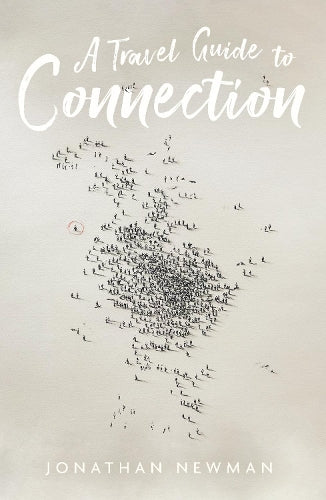
A Travel Guide to Connection is an introduction to conducting ethnography and a way to see your own life with new perspectives.
It shows routes and strategies to explore what it means to be a relational human being in a profoundly interconnected world.
Chapters consider: who we are as we meet and live among others; how bodies and senses inform our understanding of ourselves and each other; how we live together with other species and technologies or objects; and how we form relationships with time, space and transcendent experiences. It also asks readers to explore the ethical dimensions of their research journeys and the value of looking into the discomforts of their own position.
The book serves as a methodological toolkit, an unorthodox introduction to anthropology, stimuli for creatives and a hammer to break you out of your bubble.
Dr. Jonathan Newman is a social anthropologist, researcher, author and podcaster dedicated to uncovering the hidden human layers of our world. As the Director of Deep Research, he has spent years helping companies – including Amazon, TikTok, YouTube, Uber, and Adobe – connect to human lives and needs.
Jonathan’s research is as diverse as it is profound, taking him into the cultural trenches of everything from global coffee and the cannabis industry to the inner workings of education and the international arms trade.
His insights are across academic journals, trade publications and international media, and he is a speaker at global conferences, industry trade shows and festivals.
Whether navigating a corporate culture or a remote community, Jonathan lives by the core philosophy of his latest book: to let go of preconceptions, embrace the unknown with continuous empathetic curiosity and allow deep listening and kindness to lead the way.
“Newman’s brilliant book is a fun, engaging invitation to see the world afresh. With clarity and wit, it shows how an anthropological sensibility – meeting difference with curiosity rather than judgment – is exactly what we need in a time of disconnection and division.”
“This exceptional book fundamentally shifts how we experience the ordinary.
It takes us on a journey of connection with what we thought we knew. This changes everything. Few books so powerfully transform how we perceive the world around us. It is a must read.”
“This book is brilliant: humorous, thought-provoking, sensitive and surprising. It makes you think differently and challenges prejudices you may not even have realised you held. It invites you to imagine how the dragonfly perceives the world, the messages a chair sends out and what it must be like to exist using only a sense of smell. Once read it will never leave you and you will see the world differently”
AI is transforming market research, making it faster, cheaper and more scalable. But could greater automation leave us less connected with real customers? This article explores the balance between AI and human insight, and why researcher experience, curiosity, cultural understanding and commercial judgement remain vital for turning customer research into meaningful insight and competitive advantage.
Article by ICG member Iris Griffiths, Across Research
Latin America has changed enormously in the past decade. Businesses are more digital, consumers more connected and entrepreneurs more comfortable working across borders. Yet the companies that perform best still understand the people and culture behind the market—not simply the numbers in a market-size slide.
If you are entering, growing or repositioning a business in the region, these five principles remain central.
1. Latin America is not one market
Brazil is not Mexico. Mexico is not Colombia. And national borders are only the start: a strategy that works in São Paulo may need meaningful adaptation in Recife, Salvador or Manaus. Doing business in Latin America means choosing priority markets carefully, then learning the local commercial, regulatory and consumer context.
2. Build trust, not just transactions
Technology has made business faster; it has not made relationships irrelevant. Trust is built through consistency, responsiveness, personal contact and a genuine interest in the people you work with. A video call or WhatsApp message may replace a lunch, but credibility still has a human dimension.
3. Adapt the model locally
Pricing, distribution, payment behaviour, communications and purchasing decisions can vary sharply across the region. The useful question is not “How do we introduce our way of doing things?” but “How can what we offer work well in this market?” Latin America market entry is an exercise in curiosity, not copy-and-paste expansion.
4. Communicate with context
Language matters, but communication is more than vocabulary. Meetings may open with a personal conversation; decisions may need explicit follow-up. Avoid stereotypes and learn how communication works in the particular country, organisation and situation. Strong partnerships combine relationship-building with clear documentation.
5. Speak the language—and understand what sits behind it
Spanish opens doors across much of the region; Portuguese is essential for Brazil. English can be common in multinational settings, yet local-language research and communication give a company deeper access to humour, social cues, consumer language and the meaning behind a response. Cultural intelligence turns translation into insight.
The opportunity in 2026
Latin America is more mobile, connected and digitally capable than many international businesses assume. But technology does not guarantee that a company will be understood, trusted or wanted. The organisations that succeed pair speed with local learning.
About Across Research
Across Research helps organisations understand international markets through qualitative research and culturally grounded insight, with particular expertise in Brazil, Latin America and Latin American consumers worldwide.
We welcome Alex Charlton, True Stories, to this Pitch Perfect.
An LLM is a plausibility engine, not a truth engine. It hands you the most convincing-sounding answer, not necessarily the true one. Point it at your qual transcripts and it works from whatever it happens to surface – there is no stratified sampling across your dataset, no language balancing stopping the Spanish groups being drowned out by the English ones. What comes back is the middle of the distribution, fluently written, with the odd, difficult, interesting participant quietly gone.
Even qual tools that do promise stratified sampling, simply place similar quotes in piles, then label the piles. This is data summarisation, not the analysis our clients pay us for. And then there’s the question of how we combine our own (human) intelligence with the artificial intelligence we’re working with. This is a minefield in and of itself.
None of this can be fixed by better prompting. The fix has to live in the architecture around the model.
By joining this session, expect a working demonstration, some lessons learnt along the way, and a sharper set of questions to put to any vendor who tells you their tool “understands” your data.
Alex Charlton
Alex Charlton is founder and Managing Director of True Stories. He specialises in qual research and previously founded two London-based insight agencies, Essential Research and Craft. Frustrated that the AI tools arriving in research were built by engineers who had never moderated a group, he spent nearly two years building the alternative himself – writing the platform alongside AI rather than briefing a development team, so that every architectural decision was made by someone who knows what good qual research looks like. True Stories launched in January 2026 and is now used by insight teams across four continents. He works from Medellín, Colombia.
True Stories
True Stories is an AI-powered analysis platform for qualitative research. It was built by a career qual researcher, and the design assumption throughout is that the researcher stays in charge: the platform does the reading, the retrieval and the structured analysis, and you lead the analysis, assisted by AI.
Where other AI tools summarise data, True Stories analyses: drawing on 200+ marketing, consumer psychology and behavioural science frameworks to build a bespoke analysis pathway for each project. Analyses draw evenly across your data rather than sampling whatever the model finds most quotable, work in your participants’ original language without translating the nuance out, and carry confidence ratings. You can interrogate any output conversationally, push on it, then fold the conversation back into a revised analysis. Once analysis is complete, your project reports are generated automatically and include: a written mini-report, a story-driven debrief narrative, and an editable PowerPoint deck.
Blogpost by ICG member Wim Buedts, Independent Minds.
Your competitor just got the same insight.
Large research networks now deliver standard work with AI-driven tools. The output is predictable and comparable. Handy, until you realise your competitor is reading a report that looks quite a lot like yours.
It is a new kind of one-size-fits-all, nicely masked by fancy AI language, but uniform at its core. And look-alike insights quietly flatten the field: they slow a brand’s creativity and loosen its connection with the people it serves. For now, speed and low prices are winning over quality and true relevance. With this template research, clients are mostly pulling the wool over their own eyes. But they are starting to see through it.
This is where boutique agencies come into their own. They have already made the shift: speed and efficiency, without losing connection, humanity or drive. They give AI the place that fits what it is. Not an autonomous super-intelligence, but an assistant to human intelligence, there to support and strengthen it.
Because the moment your insight looks like everyone else’s, it stops being an advantage.
As AI makes customer insights easier to generate, judgment becomes more valuable.
AI may be about to give marketers a new problem: not too little customer information, but too much.
I came away from Esomar Congress 2026 wondering whether we’re beginning to see the early signs of this. A recurring theme across many of the conversations and presentations was just how much easier AI is making it to work with customer information. Interviews that once required hours of manual review can be searched and synthesized quickly. Large numbers of open-ended responses can be analyzed in minutes. Customer reviews, call-center conversations, CRM records, social media, previous research and other sources can increasingly be brought together and interrogated at the same time.
But AI isn’t only making existing information easier to analyze. It is also making some kinds of customer information cheaper and easier to collect. Automated interviewing, adaptive surveys, rapid concept exploration, synthetic respondents and other emerging approaches can dramatically reduce the time and cost required to investigate a question.
In other words: more customer evidence × easier collection × easier analysis × cheaper questioning = dramatically more plausible insights.
That made me think about an earlier technological shift. When personal computers became widespread, many people assumed they would simply allow organizations to do the same work with fewer people. But productivity improvements don’t always work that way. When something becomes dramatically easier or cheaper, organizations often start doing more of it.
Something similar could happen with research. Imagine a marketer has a relatively modest question about customers. Today, they might decide it isn’t worth spending $30,000 and six weeks to investigate. But what if an AI-enabled approach can provide a useful first answer in a few hours? Suddenly, that question gets asked. And then another one. And another.
Competitors begin doing the same thing. Eventually, being able to investigate questions that once would have been considered too small or too expensive may stop being an extraordinary capability and become table stakes.
So perhaps the biggest effect of AI on research won’t be that companies need fewer answers. It may be that they start asking vastly more questions.
And that creates a different problem. When getting an answer becomes easy, the harder questions become:
Which evidence should we trust?
Which findings actually matter?
And, ultimately, what should we do?
That suggests a useful discipline for anyone working with AI-generated insight. Before accepting an answer simply because it arrives quickly and sounds convincing, ask three more questions:
What is this conclusion based on?
What evidence would make me question it?
What decision would change if it were true?
Those questions may matter more as AI gets better, not less.
For years, researchers have worried about information scarcity – not enough data, respondents, time or budget. AI may begin to reverse that equation. If customer information becomes abundant, the scarce resource may become judgment – deciding what deserves our attention, what deserves our trust, and what it means for the business. Need help deciding which customer inputs matter – and what they mean for your business? Contact me at info at bureauwest.com.
Aakanksha runs Smart Move Ventures, a UK data and research consultancy specialising in quant and qual methodologies, with a significant part of her business currently run via AI tools. She has run all three waves of the ICG AI monitor survey, the results of which will be shared. Aakanksha will be joined by her colleague, Swaraj Hanmante, who was heavily involved in the preparation of these findings.
Sally runs Agfora Ltd – a market research consultancy that has been providing bespoke research services and strategic advice for almost 20 years.They provide qual and quant market research services for organisations operating in B2B and some of the trickier B2C sectors. Sally has been running the ICG webinar programme for many years.
You’ve probably heard the phrase in a pitch by now — an instant panel, no recruitment, no fieldwork, answers back in minutes. It sounds like one clear idea. It isn’t. Under the hood, ‘synthetic data’ covers two genuinely different techniques, aimed at different jobs. It’s worth knowing which one you’re actually being sold before you compare it to anything else — Digital Conversation Analysis (DCA) included.
No survey gets run when you ask it a question
The kind you’ll meet most often is a full synthetic panel. You write your questionnaire, submit it, and get answers back in minutes — not from real people answering today, but from an AI model trained on a large library of past survey responses. Ask it about a new topic and it isn’t hunting through its records for someone who’s spoken about that exact thing before. It’s working out what a person with those demographics would probably say, based on patterns in whatever it already knows about people like them. For well-worn topics this can be a reasonable guess. For anything genuinely new, or anything that depends on how someone actually feels rather than what they’d tick on a form, it’s extrapolating — and extrapolation drifts towards the average, not towards a real answer.
The big number on the homepage usually isn’t the number that matters
Vendors like to lead with the size of their overall library — a million profiles, and so on. That’s the total pool, not what’s actually available on your topic, for your audience, in your market. Ask about attitudes to electric vehicles, for instance, and the model may well have learnt from a real EV survey — genuinely real people, just surveyed however long ago that particular study ran. The honest question for any vendor is how much of that million actually said anything about the subject you care about, and how recently. Below a certain amount of real data on a topic, the answer stops being a calibrated read and starts being a guess dressed up as one.
The answers are dated — you just can’t see the date
Whatever real opinion the model did learn from was collected whenever that underlying survey happened to be fielded — a year ago, three years ago, nobody outside the vendor really knows. The model doesn’t flag this. It hands you a confident-sounding answer with no timestamp attached, and there’s no way to tell whether it’s reflecting this year’s attitudes or an opinion that’s since moved on.
Where this genuinely earns its place
None of this makes synthetic panels a bad idea. Used for the right job, they’re a fair one. Pressure-testing question wording, screening a shortlist of concepts down to one, or getting a quick directional read before committing budget to proper fieldwork are all sensible uses. The trouble starts when a directional tool gets sold, or bought, as if it were a decision-grade one.
Digital Conversation Analysis starts from a different place entirely
A survey captures what someone tells a researcher when asked. DCA captures what they say when nobody’s asking. That’s the gap between claimed behaviour and actual behaviour, and it’s the reason the two aren’t really substitutes for each other.
It’s built the same privacy-conscious way a synthetic panel is — the dataset reflects real conversation patterns, with nothing tied back to an identifiable person — but the resemblance stops there. A synthetic panel models a synthetic population. DCA is closer to a synthetic survey: it takes conversation that already existed and structures it so you can size it, without ever inventing an opinion nobody held.
And because there’s no panel to recruit and no fieldwork to commission, there’s no cost-per-respondent standing between you and the next question. Once a client has done the depth work — a focus group, a set of interviews — a DCA dataset is often the fastest way to put numbers behind what came out of it: sizing the themes, testing the messaging, watching sentiment shift over time, in days rather than weeks.
Show it a picture, and the guesswork doubles
Testing advertising concepts — a key visual, a proposed campaign look, a piece of creative — is one of the sharpest places the difference between the two approaches shows up. Most full synthetic panels will happily take an image and hand back a paragraph of feedback: ‘I love the modern design, it feels aligned with my values’, that sort of thing. It reads like a real reaction. But there was never a real one behind it. The model’s text-based guesswork is at least built on real survey answers, however dated or thinly matched to your topic — with an image, there’s usually no equivalent to draw on at all, because every piece of creative is new by definition. So it isn’t recalling how people felt about anything. It’s improvising a plausible-sounding description of how someone probably would, based on the sort of language people use about images that look a bit like it. That’s a guess stacked on a guess, and it’s exactly the territory where a model with no eyes and no gut struggles hardest — a felt, visceral reaction is a much harder thing to reconstruct convincingly than a stated opinion.
DCA doesn’t pretend to show a real person your unreleased concept and report back their reaction either — nobody’s seen it yet, so there’s nothing honest to claim there. What it does instead is ground the creative in what’s already real: how people in your target market have actually talked about comparable campaigns, category conventions, and past executions from you or your competitors — which visual and tonal choices have previously landed well, and which haven’t. That’s genuine evidence to work from before a concept is finalised, not a simulated verdict on the exact image.
Closing Thought
Treat any synthetic dataset — ours included — as directional rather than definitive. The honest difference between the two approaches isn’t really a claim about accuracy percentages. It’s a claim about where the words came from: a model’s best guess at what someone would say, or something a real person actually said, dated to the day they said it. Once you know which one you’re looking at, the rest of the comparison takes care of itself.
In this 30 min session, Jonny Storey shares his ward-winning* presentation;
He’ll covers;
how to explain AI to clients
the best use of AI
dispelling the myths about AI
the use of AI Agents.
All of this will be within the framework of the needs of independent consultants.
We think this will be excellent precursor to our 17 Sept webinar which gives feedback about our Wave 3 AI Member survey. If you haven’t yet registered for the 17 Sept webinar, you can do so here.
*winner of the BHBIA Best of British Award 2026 ‘Best use of Ai’