
Topic: Specialist Methods and Sectors

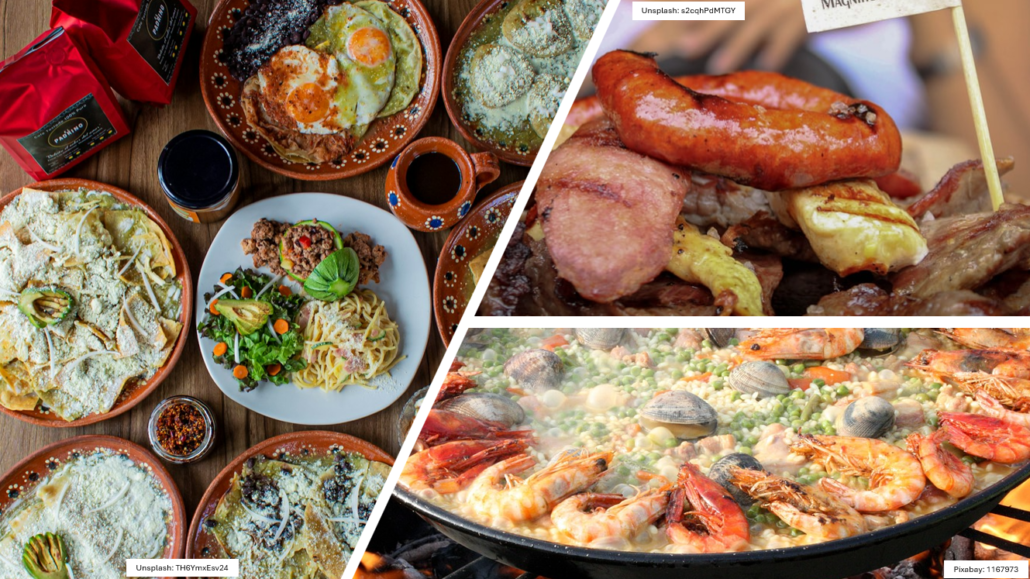
  • What’s Cooking in West-Europe? Local Expert Insights on State of the economy and Food & Beverage in France, Germany, the Netherlands and Spain

    What’s Cooking in West-Europe? Local Expert Insights on State of the economy and Food & Beverage in France, Germany, the Netherlands and Spain

    Join us for this panel discussion amongst 4 ICG members based in Western Europe.

    What will be covered?

    State of the country: ICG’s local expert researchers give a snapshot of the political, economic and social factors, and the consumer sentiment, currently at play in France, Germany, the Netherlands and Spain. Where are the similarities and differences?

    Impact on food and beverage, looking at:

    • Well-being
    • Pleasure
    • Independence
    • Constraints
    • Conviction
    • Influence
    • Performance

    Latest cross-country insights from a short online quantitative survey conducted by Research Clever on the popularity and frequency of eating vegetarian dishes and which world cuisines are seen as most up-and-coming in 2026.

    Why you should join it/what you’ll learn:

    This panel discussion will give you fresh, local and cultural insights into France, Germany, the Netherlands and Spain:

    • Get the latest snapshot of the current state of each country from ICG’s local expert researchers.
    • Discover what’s happening in food and beverage in each of these markets, including the key differences and similarities.
    • Hear the latest insights on how popular and frequent vegetarian dishes are and which world cuisines are seen as most up-and-coming in 2026, based on a short online survey conducted by Research Clever.
    Our Panellists

    Henrique Savelsberg from Savelsberg Research is Dutch native and has 25+ years experience in developing and managing international market research studies. Henrique focuses on international qualitative research for Netherlands and Belgium but also pan-Europe and pan SE-Asia together with senior local qualitative researchers. Henrique currently divides his time between Europe and SE-Asia region.

    https://theicg.co.uk/author/henrique-savelsberg

    www.savelsbergresearch.com

    https://www.linkedin.com/in/henriquesavelsberg

    Nicolas Kayser from The Insight Zoo is based in Germany and has more than 25 years’ experience in conducting qualitative research. He specialises in psychological analysis, including behavioural economics, neuromarketing and semiotics. With additional training in innovation management and Design Thinking, he helps transform consumer insights into effective marketing strategies and activities.

    https://theicg.co.uk/author/nicolas_kayser

    www.theinsightzoo-en.com

    https://www.linkedin.com/in/nicolas-kayser-63257673

    Silvia Iranzo Ferrandis from In Market Research is your reliable Spanish partner for international research projects. With over 20 years’ qualitative experience in consumer, B2B and healthcare, she builds bespoke teams from a trusted network of senior researchers across five continents. She pioneered online research in Spain and continues to lead the way with AI in qualitative research.

    https://theicg.co.uk/author/silvia-iranzo-ferrandis

    www.inmarketresearch.com

    http://es.linkedin.com/in/silviairanzoferrandis

    Nathalie Kantorowicz is a bilingual English-French professional who created the-marketing-labs in 2011 on the back of a proprietary insights community platform, and after 20 years across client-side insights, agency research and digital.

    Based between France and UK, Nathalie provides full-service research with a focus on online communities and traditional qual notably in France and also in Europe. She can also provide support on quant including face-to-face thanks to her extended network of consultants, and recruitment and fieldwork partners. Her areas of expertise include tech with consumers and businesses, food and FMCG, home.

    https://theicg.co.uk/author/nathalie-kantorowicz

    https://www.mkglabs.com

    https://linkedIn.com/in/nathalie-kantorowicz-9930421


    Register for this session here

  • Longevity – a megatrend. Fewer people but living longer – a strategic challenge for our time

    Longevity – a megatrend. Fewer people but living longer – a strategic challenge for our time

    This is a high energy, content rich webinar which looks globally at the strategic challenges and implications for developed countries of ever diminishing, but increasingly demanding populations. The webinar looks ahead at the expected new world order at the turn of the century. We then examine why we are all living longer, how we can reduce the chances of being hit in  “snipers alley” and what we can do to avoid dementia.

    Simon Culhane

    Simon is currently Vice-Chair of the Epsom and Ewell branch of Citizens Advice, Finance Director for UK-Sri Lanka Chamber of Commerce and Chair of Ashtead Tennis Club & Leatherhead Badminton Club.

    Previously, for almost 20 years, Simon was Chief Executive of the Chartered Institute for Securities & Investment, where he first researched and developed the talk as the Institute realised that increased longevity meant increased demand for financial advice and its qualifications. Before CISI, Simon was at Deutsche Bank, where he worked for four years as a Director in the Global Investment Bank.

    Simon worked in the Cabinet Office in Whitehall in the mid-90s as a Deputy Director of the Prime Minister’s Efficiency Unit. He also worked at University College London, Hospital, helping to set up the first wave of Foundation Trusts. Simon’s early working years were with Lloyds Bank Plc.

    Simon is married to Sarah; they have four adult children. As well as racquet sports, Simon also enjoys sailing, and is an active supporter of league one club, AFC Wimbledon.

    Register for this session here 

  • Build Translation into Your Project From the Start

    Build Translation into Your Project From the Start

    Article from The Language Factory, one of the ICG’s Advertisers.


    It’s easy to think of translation as the last piece of a puzzle, something to be slotted in at the end. After all, without all the work that goes into writing and curating your materials, there’d be no need for translation. The danger is that you can end up cutting corners to meet your budget and deadline, potentially risking the success of your project, campaign or research project.

    But by building translation into your project, both in terms of the budget and timeline, you can avoid the all-too-frequent pitfalls of brand inconsistencies, misrepresentation of facts and incorrect survey data.

    Translation isn’t a finishing touch. It should be a crucial part of the planning process for a smoother project and better outcomes.


    Why include translation from the start?

    • Protect timelines: by considering translation from the start, you’re building it into the schedule, ensuring you have the time and expertise in place to do it properly. Good translation takes time, so don’t leave it until the last minute.
    • Shape your content: an experienced linguist involved at an early stage can highlight concerns before they become an issue, such as cultural references that may not resonate or layouts that can’t accommodate a language running 30% longer. Accounting for these in the initial draft rather than fixing them at the end will save time in the long run.
    • Build consistency: expert translators who understand the project from its early stages, including tone, terminology and target audience, provide consistency and continuity throughout.


    Top tips for building translation into the process

    • Plan it from the start: add translation to your project brief to make sure you have the time and budget for it.
    • Treat it as non-negotiable: by making it a fixed milestone with its own timeline, it won’t just be a buffer that shrinks when other stages run over.
    • Provide context: who is it for, what is its purpose and what does success look like? This helps linguists make better judgment calls during the translation process.
    • Use a glossary: include key terms, branding guidelines and any phrases you don’t want translated.
    • Involve translators in reviews: have them flag issues in early drafts as well as final proofing, so changes are made at the right stage.
    • Keep the same translators throughout: this provides a consistent voice across your content.
    • Review format and structure early: text length, layout and design choices are all affected by the translation; reviewing them from the start can avoid a later redesign.

    Expert human translation services from TLF

    TLF combines a team of mother-tongue translators with expert Project Managers to ensure your project runs smoothly from start to finish. All our linguists have at least five years of professional experience in their chosen field, hold a Diploma, BA or MA in translation and have professional membership of a recognised translation body.

    Talk to the TLF team about how we can help you with your next translation project.


  • Gen Z and Gen Alpha: Their Values & The Future of Work and Play

    Gen Z and Gen Alpha: Their Values & The Future of Work and Play

    This Knowledge Share has been generously sponsored by The Lens, a high-specification viewing facility in the heart of Farringdon.

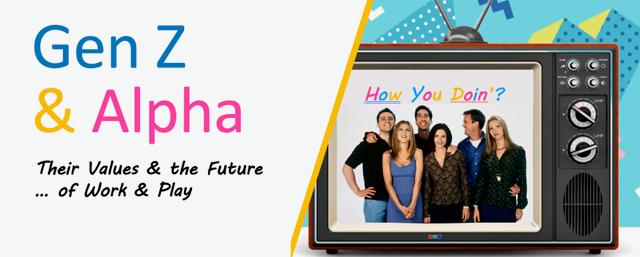
    We welcome ICG member Pam Goldfarb-Liss to run this Knowledge Share. Knowledge Shares are run by ICG members for ICG members (only). Think about this: by the year 2030 — more than 60% of the work force will be Gen Z and Millennials and by the year 2040 — as Millennials age and Gen Xers retire — more than 70% of that same work force will be Gen Z and Alpha. We already see the impact of Gen Z on the workforce as the values of work life balance build even stronger connections to support and greater overall balance. Gen Alpha promises to expand this focus into jobs that don’t even exist yet in workplaces that might connect even more to a new emphasis on work connections and support. This Knowledge Share is part of an ongoing exploration that ICG member Pam Goldfarb Liss is seeing in her conversations with so many of her Gen Z and Gen Alpha respondents around what they want for their futures and in their future workplaces. Insight she hopes will get you thinking about your own workplace and views on these two younger generations. Presented in a fun analogy to one of this generation’s favourite nostalgic TV show from the 1990’s “Friends”; Pam will share her findings from several young respondents and present them within the context of existing third party research. This will to show these future generations’ evolution towards work and play that hopes to illuminate and encourage dialogue with your personal ‘Friends’ who are Gen Z and Alphas. Pam is hoping she’ll spark some great dialogue with ICG members attending as well. About Pam Goldfarb Liss: With more than 30 years of experience, Pam loves the never-know-what’s-coming-next fun of learning from listening to consumers especially younger consumers. Pam has moderated topics from soda pop, baby bottles, refrigerators and hamburgers to travel, streaming networks, toys and diabetes and urinary tract infections. The glamorous life of a focus group moderator has brought her to see many emerging opportunities for companies and non-profits on many subject matters as it’s all interesting to her. In addition to enjoying moderating with kids and teens, Pam currently teaches and hosts — Mission Kid Possible powered by LitBrains-Igniting Ideas! — an online learning library with on-demand and live kid-sized workshops focused on training professional market researchers around the nuances of working with younger audiences. Pam is an active member and former board member of the Qualitative Research Consultants Association (QRCA), Creative Education Foundation and an industry cheerleader of all things creative and cool in market research especially the ICG. Pam lives in Minneapolis, Minnesota USA with her husband and Gen Zalpha (17-year old Gen Z/Alpha cusper) daughter. Having just turned 59 in August 2026, Pam has made it her mission to spark dialogue around the workplace of the future and how listening to the younger generations can create an incredible exchange where we all stay young and vital. (See photos of Pam in her never getting old or serious state).

    Register for this Knowledge Share here

  • RECORDING: FRACTURED: Britain’s Right Wing Populism. What It Really Is, and Why It’s Growing

    RECORDING: FRACTURED: Britain’s Right Wing Populism. What It Really Is, and Why It’s Growing

    This webinar has been generously sponsored by The Insight Zoo, founded by Nicolas Kayser, a German qualitative research agency. It was drawn to sponsor this session as it appears to reflect political movements in Germany as well as the UK. Nicolas is also an ICG member. 


    Join a fascinating panel of researchers as they draw on years of primary research to challenge some of the most common assumptions made by people working in research, policy, communications and public life. This talk offers a framework for thinking about what an effective response might actually look like as well as clues to why brands must lean back into purpose.

    Our Speakers

    Pauline McGowan is a director and Head of Strategy at The Nursery. She has worked in brand, communications and innovation research for over 20 years both in the UK and internationally. She runs the money and social team at The Nursery and speaks and writes regularly in both industry and wider conferences and press.

    Pauline leads The Nursery’s Generations Research, a broad biennial survey, now covering the UK and US, which aims to shine a light on true differences across generations and what that means for society and business.

    She’ll be presenting some fascinating and surprising data on young people’s attitudes and emerging trends from The Nursery Research & Planning ‘This is Us Generations’ research.

    Steven Lacey (ICG member) is the founder and Managing Director of The Outsiders, a cultural insight agency he established in 2016, specialising in behavioural change research, hard-to-reach audiences, and understanding cultural undercurrents in the UK and globally. A foresight specialist, commercial anthropologist and strategist, Steven has extensive experience advising governments, opposition parties, global brands and international advertising agencies. He has worked across more than 60 markets and with clients including the Home Office, Mars, Bodyform, and the award-winning ‘This Girl Can’ campaign. An MRS Research Hero (2021) and co-founder of MRS Unlimited, Steven also established the Cultural Insights Forum in 2017 and founded No Man’s Land, a research agency focused on masculinity and men.

    Steven is one of the UK’s leading research voices on the far right, populism and disinformation and has co-authored the landmark report ‘Disinformation, UK Democracy and Attitudes Toward Ukraine and Russia in the UK’ — launched in the House of Commons in January 2026.

    Steven  will be painting an incredibly vivid picture in his inimitable way on the state of the UK nation right now. He will help us to understand the Far Right, and how this is a more disparate group than you might think from research by The Outsiders and Resilience & Reconstruction.

    Annabelle Phillips (ICG member) is Founder of AP Research, Co-Chair of the MRS’ Social Equity Group, sits on the MRS EDI Council, and Diversity Lead for the ICG (Insight Consultants Group). She specialises in research at the intersection of the private and public sector, and in particular comms, branding and customer closeness research with organisations that have a social value.  She is passionate about giving a voice to often ignored audiences, breaking down barriers and dismantling biases to make sure policies, services, campaigns and strategies are relevant to everybody’s needs.

    Annabelle will be taking you through research conducted by AP Research exploring the Populist Right communication’s playbook to help understand the lessons that can be learnt across the political landscape and for all marketing and comms teams. This has been a pro bono project and shout out to Field Notes and True Stories Ltd for allowing her to use their services.

    Please note…

    The speakers are not aiming to provide a balanced comparison, but rather, are sharing their observations on the current cultural landscape.

    The findings they will be presenting are potentially challenging and certainly thought-provoking observations on a section of today’s UK society and do not aim to demonstrate any intended political allegiances.

  • Cultural Nostalgia Has Been Ceded to the Far Right, Reclaiming It Requires a New Approach

    Cultural Nostalgia Has Been Ceded to the Far Right, Reclaiming It Requires a New Approach

    This was originally written as a LinkedIn post by ICG member Hanna Chalmers.

    All thoughts are the author’s own – the ICG is apolitical and reflects the wide range of views of its individual members.


    Hanna Chalmers

    Cultural nostalgia has been ceded to the Far Right, reclaiming it requires a new approach. Reclaiming it requires the skills of people that actually live within British mainstream culture rather than awkwardly performing it from the outside.

    Last week Arsenal won their first Premier League title in 22 years. 120,000 people turned up spontaneously outside the Emirates and celebrated until 5am.  Last night the party continued with more crowds gathering – as someone said on a local news report – ‘It felt like Carnival!’. The footage reminds us how indelibly multicultural and diverse London is.

    https://www.instagram.com/reels/DYwcuEFoTVj/

    I’m from Holloway, home of the Arsenal. Holloway was always very Irish and Greek Cypriot but also Afro-Caribbean and Turkish – the fruit and veg shops on the Seven Sisters attested to that. As teenagers we all grew up together, smoked on the Heath, drove in tiny cars round the North Circular to raves in liminal outer London. I now live in that outer London, an Essex postcode, golf course at the end of the road, Epping Forest beyond. And far more multi-cultural than people might imagine. In our ward two weeks ago, neither Reform or the Greens got a look in, we remained staunchly Tory. It’s a peaceful, pretty, unremarkable corner of a huge global city.

    This vision of London—the real one, from the edges to the centre—is what enrages the far right. Sadiq Khan is a lightning rod because he epitomises embedded, multi-generational, multicultural London. What it actually means to be a Londoner.

    That fury has spawned a social media assault. Endless anonymous accounts posting videos of a London unrecognisable to those of us who live here. A city stripped of joy and community, replaced with racist tropes and rage.

    But the campaign is not working as well as they’d like. So much of this version of London is deeply at odds with what we know to be true. More people—even Piers Morgan—preferred the scenes outside the Emirates to the much smaller Unite the Kingdom rally two weeks before.

    While extremist accounts amplify hate-filled nostalgia for a “native” Britain that mostly never existed, thousands of other social media accounts quietly celebrate the rituals of everyday British life. The estate you grew up on, your neighbourhood, your school, your manor.

    Shared not as grievance but as memory—unifying and pleasurable.

    https://www.facebook.com/groups/282402631340116/permalink/913788064868233/

    Where is the progressive counter-narrative that taps into this?

    As I’ve written about before, the Far Right understands how to key into culture and nostalgia. Liberal/progressive UK strategists seem to lack the instinct entirely. Their attempts are often crude, tone-deaf, and even offensive to the people they’re trying to reach. It looks like the digital teams running these campaigns don’t really understand—or love—British culture…The image the Labour Party posted of Keir Starmer with some Tunnocks and a can of Irn Bru on Burns Night was a particular low…

    https://www.instagram.com/p/DT7zgA9iKT4/?hl=en

    But this is a serious problem for those of us, the quiet majority, who don’t want to live in a country fuelled by hate and rage.

    There are ways to engage with what I’d call “positive nostalgia”—nostalgia designed not to pit people against one another but to celebrate what we were and still are. And it requires different ways of working. Not a narrow team of social media managers looking in at British culture from the outside.

    In the music and the entertainment industry, where I have a background, we worked with “street teams”—people who were part of the culture, not observers of it. That’s what progressive politics needs now. People of all ages and backgrounds. Actual Facebook users who enjoy being on it. People who share one thing: they don’t want to live in a far-right country. This more participatory approach would ensure content was rooted in real community life, real memories and not just horribly generic and cynical.

    There is a lot to be celebrated about being British, or about being a Londoner, but no one at a political level really harnessing and telling that story. I’d argue that the Greens are, as yet, not good enough at speaking beyond their core (left wing alienated Labour voters).

    It’s sickening to see London presented to the world in a way that simply isn’t true. It’s up to us to reclaim the story of what we are, what we’ve been, and what we want to be.


  • Top Tips for Localisation

    Top Tips for Localisation


    By Katie Reed | May 21, 2026 | Blog event translation Services – Translation Translation Tips

    Speaking your audience’s language requires more than just translation. Localisation adapts your content to ensure that it resonates with international audiences who speak different versions of the same language. It ensures that cultural, linguistic and regulatory requirements of particular regions, countries or markets are respected.

    The value of localisation for business

    • Business growth: localisation opens the door to new markets and attracts new customers. With 50%* of internet users being non-English speakers, adapting your content ensures that it’s culturally appropriate and avoids misunderstandings or misinterpretation.
    • SEO and digital marketing: localised content can improve your search engine rankings in international markets by adapting keywords, metadata and content. It increases your online visibility and drives traffic to your website by enabling you to tap into local audiences.
    • Customer satisfaction: customers are more likely to engage with brands that speak their language and respect their culture. By tailoring your content to reflect local customs and cultural norms, you can ensure it resonates with your client base, boosting brand loyalty and long-term revenue.
    • Efficient market research: expert localisation in your market research helps you gain a better understanding of your market, so that you can make informed decisions about business strategy, marketing campaigns and product development.
    • Employee engagement: communicating with employees in their native language and dialect shows that they are valued and increases job satisfaction, employee engagement and retention.

    TLF’s guide to maximising localisation for your business

    • Know your target market: conduct detailed research into local customs and cultural norms before creating your localised content to ensure it resonates with your target audience.
    • Adapt your brand identity: research shows that 82% of shoppers prefer to buy from a business whose values align with their own.** Adapting your brand identity ensures that audiences connect with your business and are therefore more likely to stay engaged with your brand and products.
    • Localise your marketing: use local SEO and tailor your website, including localising imagery, currencies, date formats and contact details to provide a seamless user experience. Adapt marketing content, such as blogs and social media campaigns, to reflect local interests, humour and seasonal events.
    • Adhere to local regulations: ensure your content complies with local laws and regulations and protects your business from reputational or regulatory risk.
    • Choose an expert localisation provider: work with experienced mother-tongue linguists with extensive knowledge of your industry and the nuances of the particular language and culture. You may choose to partner with a specialist localisation agency with project managers who can manage the whole process and provide specialist expertise.

    *Statista
    **Forbes


    Partner with TLF

    At TLF, we combine a team of mother-tongue human translators with expert Project Managers to make sure your project runs smoothly. All our linguists have at least five years of professional experience in their chosen field, hold a Diploma, BA or MA in translation and are professional membership of a recognised translation body.

    Talk to the TLF team to find out how we can help you with your next localisation project.

    Top tips for localisation | Reaching global audiences – The Language Factory

    Professional Translation Services UK – The Language Factory

    The Language Factory – The ICG

    Blog | TLF UK – The Language Factory

  • SomeBOTy to Love: New Findings on Social Relationships & AI

    SomeBOTy to Love: New Findings on Social Relationships & AI

    We are delighted to welcome Brooke Schlesinger, YouGov (Australia) to talk through their work which explores AI companionship. AI chatbots have moved further into everyday life, as tools for productivity and information, and as social and emotional actors embedded within people’s routines. As these technologies become more culturally present, YouGov wanted to better understand how Australians are negotiating this shift. The first wave of research was conducted in 2025, and the second in early 2026. The 2026 wave explored more deeply the differing social roles AI chatbots are beginning to play: from companionship and emotional support to entertainment, intimacy, and everyday conversation. This research also examines the self-reported impacts of these interactions beyond the screen itself: how engagement with AI may be influencing loneliness, social connection, behaviour, relationships, and broader perceptions of human interaction in contemporary Australian life. Whilst the two waves of research focused on Australia, Brooke will also share some global findings on the subject at the end the talk. We will then conclude with a q&a and discussion. Brooke Schlesinger Brooke is an Associate Director at YouGov in Sydney, specialising in qualitative and quantitative research at the intersection of culture, politics, and society. With over a decade of experience, she has led studies on social issues, political sentiment, and cultural trends, helping clients understand what people think, and why. Her work is driven by a curiosity about how people engage with modern phenomena, and what those responses reveal about our values, our deepest desires, and the futures we may be moving toward. Brooke’s background includes roles at TED Talks and the Ad Council in New York, where she worked at the nexus of research, media and communications, and cultural insight. This experience, combined with academic training in history, gives her a distinctive ability to pair rigorous analysis with compelling storytelling. Since joining YouGov, Brooke has designed and delivered custom research for government, public sector, and other organisations, as well as leading YouGov self-initiated research. Her work bridges the granular and the global: whether understanding how Australians respond to a specific issue, behaviour, or piece of creative, or identifying the broader mindsets shaping those responses. The result is insight that is both deeply human and strategically useful. Brooke’s research has attracted national and international media coverage. Her 2025 study on Australians and AI companionship was featured across ABC platforms, reached millions of listeners, was cited in academic research, and led to an invitation to present internationally. Her analysis of Australians’ attitudes toward Artemis II also received significant coverage, including on ABC, and was featured on the Australian Space Agency’s homepage. A dual citizen of the US and Australia, Brooke brings both local expertise and a global perspective.

    Link to the first wave findings here

    Register for this webinar here 

  • Designing Presentations with Canva AI

    Designing Presentations with Canva AI

    Knowledge Shares are presented by ICG members, for ICG members only.
    Last year we did a whistlestop tour of Canva. This Knowledge Share now focusses just on creating presentations in Canva, particularly using Canva AI. We’ll start with setting up your brand kit, or your client’s brand kit, in Canva, to get consistent, reproduceable output every single time Then we’ll focus on Canva AI, what it can and cannot do, and how it compares to similar AI-presentation tools like Gamma or Beautiful.ai, and how you write effective prompts to save you time designing your slides. Our Speaker – Ramona Daniel I’m a cultural insights and research strategy consultant with over 25 years of experience at leading global agencies including Ipsos, Kantar, and across the WPP network. I now work independently, partnering with organisations that need senior-level expertise on a flexible, freelance basis. Clients value my ability to step into complex projects quickly. My work bridges strategic thinking and hands-on delivery, from designing multi-market research programmes to translating data into compelling cultural narratives. I specialise in helping businesses decode cultural shifts, optimise research processes for greater efficiencies, and upskill teams – particularly at the intersection of traditional research methodologies and AI-driven analytics tools. https://www.linkedin.com/in/ramonadaniel/ Ramona Daniel, Author at The ICG https://www.23insights.co.uk/
    Register for this session here (ICG members only) 

  • “MADE IN” Wave 2: Understanding Country-of-Origin Associations in Argentina, Mexico, Spain

    “MADE IN” Wave 2: Understanding Country-of-Origin Associations in Argentina, Mexico, Spain

    Article by ICG member Jeff Deighton, Insight Engineers.


    The second wave of our conversational AI moderated tracker in three Spanish speaking countries – Argentina, Mexico, Spain – ran at the end of May 2026, asking consumers in each country about their associations and feelings of products and goods made in each of those three countries.

    We utilised a consistent set of questions to Wave 1 (EU3) administered by our trained AI Avatar (Izabella) to probe & ladder participants in each country about: –

    • Their perceptions of products & goods made in each country.
    • What is a typical product in that country and what makes it unique to that country.
    • How they feel in general about goods made in that country (very positive to very negative) and why?
    • Which country has the best reputation for making cars nowadays (W1 – Electronic Goods), out of these 3 countries and 9 other main economies.


    Full article here