Topic: Specialist Methods and Sectors

  • RECORDING: Not Another GenZ Brief: Exploring the Older Adult Opportunity in Asia

    RECORDING: Not Another GenZ Brief: Exploring the Older Adult Opportunity in Asia

    Developed Asian markets share a defining reality: rapidly ageing societies. Yet most brands persist in chasing youth, overlooking those with longer lives, deeper pockets, and rising cultural influence.

    To shed light on this huge opportunity, join fellow ICG members Drago Djourov and Scott Percival to hear key insights from their proprietary research — “The New Contract”.

    Their qual-quant study focused on the experiences of 50+ adults in Singapore and Japan through the lens of retirement. They’re also building on the learnings via a series of expert interviews from across Asia on their podcast – Potluck.

    This session will unpack the key dimensions that define the older adult experience in Asia — and reveal how brands can authentically engage this audience. With implications for any ageing market – and a challenge to help your clients see what they’ve been missing.


    Scott Percival

    Scott is the founder of Lore Consulting, based in Singapore. Lore focuses on learning what brands must know about people, cultures and categories to help drive decisions, inspire ideas and be part of the story. We work with selected local partners and associate researchers across Asia to deliver qualitative projects – with specialisms in brand, communications and UX research.


    Drago Djourov

    Drago left post-Communist Bulgaria to go to university in post-bubble Japan, make a stop in post-reunification HK, and then start an insights agency in post-LKY Singapore. Now, with a network of partners, he conducts research across Asia for London-based MNCs, Chinese startups or New York ad agencies. Most of his work is in travel, tourism and hospitality, but has experience across categories.


    Potluck

    Born in 2019, Potluck is the podcast that stirs up a unique flavour of people, culture and brands in Asia. As co-hosts, Drago and Scott speak with guests from across the brand, marketing and academic spheres. In 2025, we’ve rebooted the show – using it as extension of our thought leadership collaboration, beginning with The New Contract.

    Watch this session here

  • FRACTURED: Britain’s Right Wing Populism. What It Really Is, and Why It’s Growing

    FRACTURED: Britain’s Right Wing Populism. What It Really Is, and Why It’s Growing

    This webinar has been generously sponsored by The Insight Zoo, founded by Nicolas Kayser, a German qualitative research agency. It was drawn to sponsor this session as it appears to reflect political movements in Germany as well as the UK. Nicolas is also an ICG member.  Join a fascinating panel of researchers as they draw on years of primary research to challenge some of the most common assumptions made by people working in research, policy, communications and public life. This talk offers a framework for thinking about what an effective response might actually look like as well as clues to why brands must lean back into purpose.

    Our Speakers

    Pauline McGowan is a director and Head of Strategy at The Nursery. She has worked in brand, communications and innovation research for over 20 years both in the UK and internationally. She runs the money and social team at The Nursery and speaks and writes regularly in both industry and wider conferences and press. Pauline leads The Nursery’s Generations Research, a broad biennial survey, now covering the UK and US, which aims to shine a light on true differences across generations and what that means for society and business. She’ll be presenting some fascinating and surprising data on young people’s attitudes and emerging trends from The Nursery Research & Planning ‘This is Us Generations’ research. Steven Lacey (ICG member) is the founder and Managing Director of The Outsiders, a cultural insight agency he established in 2016, specialising in behavioural change research, hard-to-reach audiences, and understanding cultural undercurrents in the UK and globally. A foresight specialist, commercial anthropologist and strategist, Steven has extensive experience advising governments, opposition parties, global brands and international advertising agencies. He has worked across more than 60 markets and with clients including the Home Office, Mars, Bodyform, and the award-winning ‘This Girl Can’ campaign. An MRS Research Hero (2021) and co-founder of MRS Unlimited, Steven also established the Cultural Insights Forum in 2017 and founded No Man’s Land, a research agency focused on masculinity and men. Steven is one of the UK’s leading research voices on the far right, populism and disinformation and has co-authored the landmark report ‘Disinformation, UK Democracy and Attitudes Toward Ukraine and Russia in the UK’ — launched in the House of Commons in January 2026. Steven  will be painting an incredibly vivid picture in his inimitable way on the state of the UK nation right now. He will help us to understand the Far Right, and how this is a more disparate group than you might think from research by The Outsiders and Resilience & Reconstruction. Annabelle Phillips (ICG member) is Founder of AP Research, Co-Chair of the MRS’ Social Equity Group, sits on the MRS EDI Council, and Diversity Lead for the ICG (Insight Consultants Group). She specialises in research at the intersection of the private and public sector, and in particular comms, branding and customer closeness research with organisations that have a social value.  She is passionate about giving a voice to often ignored audiences, breaking down barriers and dismantling biases to make sure policies, services, campaigns and strategies are relevant to everybody’s needs.   Annabelle will be taking you through research conducted by AP Research exploring the Populist Right communication’s playbook to help understand the lessons that can be learnt across the political landscape and for all marketing and comms teams. This has been a pro bono project and shout out to Field Notes and True Stories Ltd for allowing her to use their services.

    Please note…

    The speakers are not aiming to provide a balanced comparison, but rather, are sharing their observations on the current cultural landscape. The findings they will be presenting are potentially challenging and certainly thought-provoking observations on a section of today’s UK society and do not aim to demonstrate any intended political allegiances.

    REGISTER HERE 

  • What “Q” Reveals About Texture in Asia

    What “Q” Reveals About Texture in Asia

    Image @ Eating with Kirby


    Article by |ICG member Felicia Schwartz, China Insight 

    I still remember that “Aha” moment.

    I’d been living in China for a while, working on food projects and eating my way through markets and restaurants. And I kept noticing something distinctive. It wasn’t just about flavour or ingredients. It was about how food felt:

    The cartilaginous crunch of a chicken foot, the silky slip of a preserved egg, the precise resistance of a well-made noodle between the teeth…Texture wasn’t secondary. It was central to enjoyment.

    That realisation comes back to me in every food project I’ve worked on in the region since- most recently across whisky, biscuits and savoury foods in Greater China. I find myself once again reaching for a concept that has no adequate translation in English.

    The Chinese call it 口感 (kougan) – mouthfeel. But that barely scratches the surface. The language contains dozens of nuanced terms to describe textural sensations that Western food vocabulary doesn’t quite match.

    So what is it about texture?

    In Chinese and many Asian food cultures:

    • Texture (especially chewiness) extends and amplifies flavour perception
    • Eating is understood as a holistic sensory experience, where the physical, almost “mechanical” interaction with food is essential
    • Texture operates not just at dish level, but as a structural principle of the meal

    It also carries cultural meaning ; for instance, long, firm noodles symbolise longevity.

    And crucially – from snacks to beverages- texture is often the decisive factor in product success across China and wider APAC.

    A few examples:

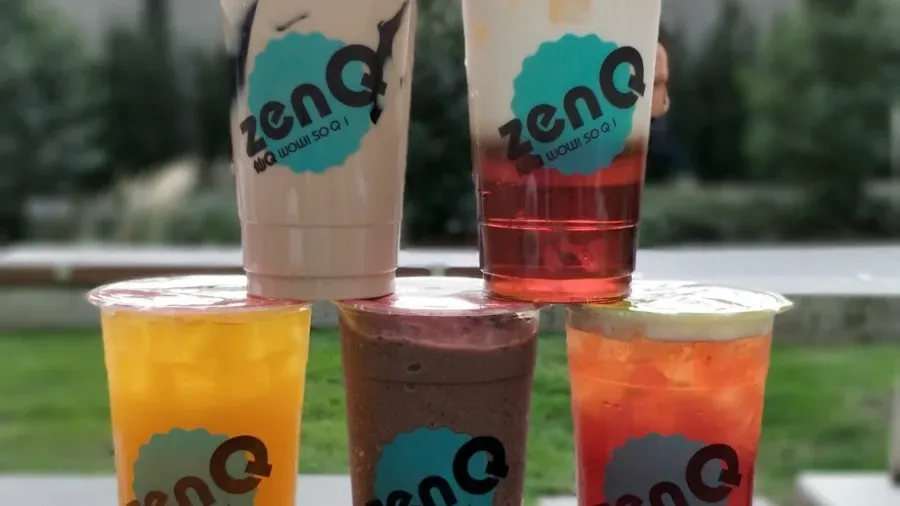
    • Bubble tea chains recently serve cheese foam or cream-topped teas because the contrast between creamy foam and lighter teaadds indulgence
    • Chinese milk bread uses tangzhong (a pre-cooked starch paste) to achieve a signature softness and elasticity, a similar light and airy feel sought after in the cake category
    • Mochi ice cream balls deliver the now highly sought-after “Q” factor -a springy, bouncy chewiness of the rice-dough combined with creamy ice cream centers.

    “Q” itself, as a term for a texture, has become a trend – visible across social media, packaging and retail language in Greater China. In a recent savoury project, it was the word consumers repeatedly used to describe what they valued texture-wise- from fish balls to tapioca pearls.

    What this means for brands:

    • Texture is non-negotiable: consumers will not trade it off-even for health or nutrition claims
    • It shapes perception subconsciously: a slightly gritty functional drink can erode trust before a consumer can articulate why
    • It’s a powerful innovation lever: to highly texture -articulate consumers in APAC, the right texture combinations like crunchy & creamy or smooth & chewy drive perceptions of freshness, indulgence and fun
    • It’s culturally specific: from delicate smoothness in East Asia to richer creaminess in Southeast Asia -one-size-fits-all doesn’t work

    Ultimately, it comes down to the questions we ask.

    In cultural consumer research, the issue is rarely a lack of rigour – it’s asking the wrong questions. When it comes to food, Western frameworks tend to focus on flavour profiles and ingredients. But in China, consumers aren’t just asking what it tastes like. They’re asking: “Does it have the right mouthfeel?” -or more simply – “Does it have Q?”

    Felicia Schwartz | LinkedIn

  • Understanding the Impact and Opportunities of the EU-India FTA

    Understanding the Impact and Opportunities of the EU-India FTA

    Article by ICG member Priti Verma

    • The EU-India FTA creates the world’s largest free trade zone. The deal covers 92 percent of EU exports to India and nearly all trade volume of Indian exports to the EU
    • Estimates have the EU saving nearly USD5 billion in duties annually while exports to India could more than double by 2032
    • Europe’s automotive, machinery and services sectors are among those that stand to benefit greatly from the trade deal

    India was once known for its relatively protectionist approach, which weighed on the economy. The situation has changed rapidly since 2014 with the country having reached 10 free trade agreements. However, the recently agreed upon EU-India FTA is one of never-before-seen size and scope. Priti Verma shares insights on what the deal means for European businesses and examines potential opportunities now available.

    Upon the conclusion of negotiations, European Commission President Ursula von der Leyen hailed the bloc’s free trade agreement with India as the mother of all deals. This was not the usual hyperbole or bluster that surrounds the conclusion of these pacts.

    Instead, it was a realisation of the EU-India FTA’s true size and scope as well as the positive impact the deal brings to both sides. The coupling of the second and fourth-biggest global economies creates the world’s largest free trade zone.

    It’s also further proof that global partnerships are in flux. As the influence of existing trade partners wanes, a strengthening of different relationships, such as the FTA between Europe and India, is requiring businesses to re-evaluate their strategies.

    The deal has been hailed as a victory for both sides. In terms of Indian exports to the EU, 97 percent of tariff lines covering more than 99 percent of current trade value is covered in the FTA. More than 70 percent of these are eligible for immediate duty elimination while a further 20 percent are slated for zero-duty access in the next three to five years depending on type.

    Conversely, about 92 percent of EU exports to India, accounting for 97.5 percent of trade value, have been included in the pact. Almost half of existing tariff lines will receive immediate duty elimination. Another 40 percent will see a phased elimination of duties over a period spanning five to 10 years.

    For European companies considering entry into India, the FTA helps level the playing field and ensures much-needed stability. Key points in the agreement include:

    • Lower or no tariffs and most goods
    • A clearer framework on both legal and competitive matters, including intellectual property rights
    • An increased number of opportunities for partnerships and investment in India
    • More streamlined market access
    What will the impact of the EU-India FTA be?

    Given the sheer size of the two economies involved, the impact of the EU-India FTA will be massive. Some of the early details highlight this reality. According to the European Commission, the EU could achieve nearly USD5 billion in annual duty savings as exports surge.

    Approximately USD220 billion in goods and services is now traded between the two annually. The volume of EU goods exported to India is projected to double by 2032. That is huge, considering the latter’s current position as the world’s fourth-largest economy and the future growth it is likely to experience. Projections for the 2027 fiscal year alone indicate the economy will expand by upwards of seven percent.

    Equally important, deeper economic integration between the two sides will not only support growth but also improve the stability of global supply chains at a time when other trading partners have become less reliable.

    Understanding opportunities of the FTA

    In order to gain widespread access to European markets, India was willing to grant several major concessions that provide companies with significant opportunities moving forward. In particular, the automotive, machinery and services sectors appear likely to benefit.

    Automotive

    India is set to reduce tariffs on European carmakers to 10 percent over the next five years. There will also be a quota-based access system in place for up to 250,000 EU vehicles each year.

    Electric Vehicles could be a potential boon given Europe’s expertise in the field and India’s state plans to reduce emissions and shift away from internal combustion engine cars, trucks and buses. EV components and infrastructure stand to benefit under the FTA.

    Machinery

    Currently, machinery and electrical equipment account for the largest share of EU exports to India. The majority of tariffs in this category will eventually fall to zero in the coming years. Key products include medical devices, chemicals and construction equipment.

    This comes at a crucial time for India. The country is scaling efforts in infrastructure, construction and healthcare which could all benefit from European machinery and equipment.

    Supply-chain diversification

    The FTA now provides a foundation for European organisations to integrate India into their supply chains as part of widespread diversification efforts.

    Nuances of a deal

    The FTA between India and the EU has been almost 20 years in the making. Discussion took place in 2007 but failed to get over the line due to various disagreements. Talks resumed in 2022, and a consensus was reached regarding several key points. Yet a few items are worth highlighting.

    For instance, the EU’s Carbon Border Adjustment Mechanism, which sees a fee levied on EU imports of steel, cement and other high-carbon goods, remains in place on Indian steel despite the FTA. Instead, Europe has committed to investing roughly USD600 million to help India reduce emissions caused by steel and aluminium producers.

    Beyond that, a few sectors in India have been protected in the FTA, including agriculture. A few items, such as apples, pears and peaches, are eligible for phased tariff reductions. Other products like spirits will be lowered slightly but remain at relatively high levels. While expected, it does highlight the need for companies to explore the nuances of the deal.

    Nowhere is that more evident than in the rules of origin, product-specific rules and other potential challenges related to supply chains. The FTA does make it easier for European companies to set up manufacturing hubs in India, but high logistics costs and some problematic customs regulations must now be addressed by the government.

    Final thoughts on Indian market entry

    The EU-India FTA will allow European companies to access opportunities in a large, rapidly growing economy. Tariff eliminations or reductions are the headline, but the deal also provides a framework for other key areas to reduce risk.


    Priti Verma | LinkedIn

  • Not another Gen Z brief: Exploring the Older Adult Opportunity in Asia

    Not another Gen Z brief: Exploring the Older Adult Opportunity in Asia

    Developed Asian markets share a defining reality: rapidly ageing societies. Yet most brands persist in chasing youth, overlooking those with longer lives, deeper pockets, and rising cultural influence. To shed light on this huge opportunity, join fellow ICG members Drago Djourov and Scott Percival to hear key insights from their proprietary research — “The New Contract”. Their qual-quant study focused on the experiences of 50+ adults in Singapore and Japan through the lens of retirement. They’re also building on the learnings via a series of expert interviews from across Asia on their podcast – Potluck. This session will unpack the key dimensions that define the older adult experience in Asia — and reveal how brands can authentically engage this audience. With implications for any ageing market – and a challenge to help your clients see what they’ve been missing. Scott Percival Scott is the founder of Lore Consulting, based in Singapore. Lore focuses on learning what brands must know about people, cultures and categories to help drive decisions, inspire ideas and be part of the story. We work with selected local partners and associate researchers across Asia to deliver qualitative projects – with specialisms in brand, communications and UX research. Drago Djourov Drago left post-Communist Bulgaria to go to university in post-bubble Japan, make a stop in post-reunification HK, and then start an insights agency in post-LKY Singapore. Now, with a network of partners, he conducts research across Asia for London-based MNCs, Chinese startups or New York ad agencies. Most of his work is in travel, tourism and hospitality, but has experience across categories. Potluck Born in 2019, Potluck is the podcast that stirs up a unique flavour of people, culture and brands in Asia. As co-hosts, Drago and Scott speak with guests from across the brand, marketing and academic spheres. In 2025, we’ve rebooted the show – using it as extension of our thought leadership collaboration, beginning with The New Contract.

    Register for this session here 

  • Customers Aren’t as Irrational as They Seem

    Customers Aren’t as Irrational as They Seem

    Article by ICG member Jay Zaltzman


    A core idea in behavioural economics is that customers don’t always behave rationally. From Dan Ariely’s Predictably Irrational onward, we’ve had a language for the ways decisions deviate from purely logical models.

    That lens has been useful, but it may also have led us, subtly, in the wrong direction. What if many of the decisions we describe as “irrational” aren’t irrational at all? What if they’re meaningful – but we’re missing the context that makes them make sense?

    In my work, I’ve found that what often sits underneath these decisions is tension. Not random inconsistency, but a structured set of competing forces that people are trying to navigate in their lives. Some of those tensions show up again and again:

    • People want to feel independent, but modern life makes them dependent on systems.
    • People want to feel disciplined, but their days are chaotic.
    • People want to express their individuality, but they also want to feel a sense of belonging.
    • People want to become a better version of themselves, but change is difficult.

    When we only look at the customer’s specific decision, it can seem inconsistent or even contradictory. But when we look at the tension the decision is helping resolve, a different kind of logic appears.

    Take a familiar example: the pickup truck. Drive through almost any suburban neighborhood in the U.S., and you’ll see them – large pickup trucks parked in driveways, often spotless, their beds empty. For many of these owners, the truck is rarely used for hauling or towing. Day to day, it’s used for commuting, errands, and school drop-offs. From a purely functional standpoint, it’s more vehicle than most people need. It’s harder to park, more expensive to run, and less efficient than many alternatives.

    And yet, it’s a remarkably common choice. If we look at that through a purely logical lens, it’s easy to see the decision as inefficient, or even irrational. But look at it through the lens of tension, and something else comes into view.

    For many buyers, the pickup truck sits at the intersection of independence and dependence. Even if daily life rarely demands it, the truck carries the possibility of self-sufficiency – the sense that “I could handle it if I needed to.” In a world where so much of life depends on systems, services, and other people, that feeling has real value.

    At the same time, the truck often navigates a tension between individuality and belonging. It signals a certain identity – capable, practical, grounded – while also connecting the driver to a broader cultural narrative that feels familiar and shared.

    Seen this way, the choice isn’t irrational. It’s helping the customer navigate tensions that aren’t visible if we only focus on features, price, or stated needs.

    Once you start looking at customer behaviour through this lens, patterns begin to emerge. Decisions that once felt inconsistent start to feel structured. What looked unpredictable starts to feel, in many cases, surprisingly coherent.

    I explore this lens more fully in my new book, The American Customer: The Hidden Forces That Shape Choice, which is now available. The book looks at how culture and identity shape the way people interpret their choices – and why those choices carry meaning that isn’t always immediately visible. It offers a way to move beyond describing behaviour to actually decoding it.

    Jay Zaltzman, Author at The ICG

    Jay Zaltzman | LinkedIn


  • How Are Rising Oil Prices Affecting Your Clients?

    How Are Rising Oil Prices Affecting Your Clients?

    Full report by ICG member Kevin Simmonds, Advantage Market Intelligence Ltd


    We’ve put together a short report to help unpack the impact across the UK economy and key industries.

    It provides a clear, high-level view of where different sectors are most exposed, what it means in practice, and how businesses are likely to respond.

    While all industries are feeling the effects, the level of impact varies — with sectors like airlines, logistics, and manufacturing facing immediate cost pressure, while others such as energy and renewables see more positive momentum.

    The report also highlights the bigger picture trends shaping client challenges, including inflation, changing demand, supply chain shifts, and the move toward energy transition.

    Download the report to quickly understand where your clients may be most exposed — and what to watch next.


  • What Do Women Want?

    What Do Women Want?

    Article written by ICG members Hanna Chalmers and Kym Loeb – first published in Research Live Feb 2026


    Brands must re-dimensionalise women beyond the flattened identities presented in mainstream culture. Hanna Chalmers and Kym Loeb discuss how research can better reflect this complexity.

    Since the cultural watershed moment of #MeToo, the backlash against women’s voices has been intensifying.

    We have seen increasing levels of physical violence against women and girls, described by Keir Starmer as a ‘national emergency’ as he launched a national strategy1 to focus on the issue. This sits alongside an alarming growth in what has been described as “recreational misogyny”2 on social media: harassment en masse designed to silence, coerce and limit women’s aspirations in public life3.

    It’s not hard to see, and feel, this recreational misogyny in everyday life:

    • The explosion of AI deepfake tools such as Grok and AI girlfriends as a replacement for dating real women.
    • Views previously confined to misogynistic subcultures are now mainstream (see Steve Bartlett and Chris Williamson blaming “women’s socio-economic emancipation” for population decline on Diary of a CEO).
    • The rise of the ‘trad wife’ influencer, rejecting the achievements made towards gender equality.
    • The so-called ‘pornification’ of women’s empowerment which celebrates Only Fans as a route to wealth and entrepreneurship.
    • The aestheticisation of self-care which reduces wellbeing to consumption rituals and performance.
    • The medicalisation of beauty which celebrates ever more extreme efforts to meet narrow and impossible standards (see ‘morning sheds’, celebrity Ozempic, Skims’ ‘face wrap’).

    All of this threatens to shrink women in public life both figuratively and quite literally.

    It’s a mainstream culture that seems to have flattened down so-called women’s empowerment into individual, aesthetic, sexualised and consumption-led lifestyle choices over an emphasis or celebration of systemic and organisational progress.

    It can seem like an unfathomable landscape – hard to chart and difficult to find the right points of entrance.

    How should brands make sense of it all in order to successfully engage women?

    We must first emphasise that social media feeds are not reliable barometers of women’s wants, needs, aspirations and desires. Alongside powerful algorithmic design, that certainly doesn’t prioritise female joy, there must also be a factoring in of ideological influence. As far right political strategist Steve Bannon said, ‘politics runs downstream of culture’ – and social media is evidently the key battleground for ideas,4 where seemingly anodyne social content is underpinned by political motivation.

    In sharp contrast, data demonstrates the degree to which women are getting on with making choices that challenge the representations of women we are seeing and feeling in popular culture – both explicitly and implicitly.

    “Social media feeds are not reliable barometers of women’s wants, needs, aspirations and desires.”

    Women are rejecting the pushback against equality by voting more progressively than their male counterparts.5 More young women are choosing stem (Science, Technology, Engineering, and Mathematics) A-levels, traditionally dominated by boys, than ever before in the UK.6 More women are buying property on their own7, going on holiday on their own8 and increasingly investing in friendships and communities, rather than romantic relationships9.

    Brands must re-dimensionalise women beyond the flattened digital, hyper sexualised identities we are presented with in mainstream culture. Rather, we see that women want and need to be engaged more effectively around solidarity, autonomy, community and the power of female friendship. The question isn’t just about what women want, it’s about how women are responding to the world they’re navigating, and research must reflect this complexity:

    • Triangulate research: Social media analysis, while great for scale and speed, can be misleading. Use it alongside other research tools to build a richer, deeper and more nuanced view of women’s lives.
    • Go deeper: Ethnography remains a key tool in gaining an understanding of how women feel. Use research to enable women to tell their own stories and observe how they commune with other women in private, informal spaces.
    • Listen for what’s unsaid: Women are under constant pressure to perform control, empowerment and aesthetic perfection. Create a space for women to express their fears, uncertainties and exhaustion without judgement.

    Rather than seeing women’s representation in popular culture as a reflection of women’s needs, explore what impact that representation is having on women and girls, then ask how your brand or organisation can more accurately represent the wider world of women’s and girls’ needs and interests today.

    Addressing these questions can supersize marketing impact: effectively engaging women while simultaneously challenging the deleterious effect that current representations of women in culture are having on all of us. This should be a topline priority.

    Hanna Chalmers is founder of The Culture Studio and and Kym Loeb is an insight and strategy consultant

    Reference:

    [ 1 ] https://www.gov.uk/government/news/vawg-strategy-to-better-protect-children-from-misogyny-and-abuse

    [ 2 ] Sophie Gilbert Girl on Girl: How Pop Culture Turned a Generation of Women Against Themselves

    [ 3 ] https://www.theguardian.com/media/2024/feb/06/social-media-algorithms-amplifying-misogynistic-content

    [ 4 ] https://www.wired.com/story/the-most-powerful-politics-influencers-barely-post-about-politics/

    [ 5 ] https://www.newstatesman.com/politics/uk-politics/2026/01/young-women-are-radicalising

    [ 6 ] https://www.theiet.org/media/press-releases/press-releases-2025/press-releases-2025-july-september/14-august-2025-a-level-uptake-in-stem-grows-but-calls-for-greater-gender-equity

    [ 7 ] https://www.embracefs.co.uk/blog/more-women-are-buying-solo-and-the-market-needs-to-catch-up#

    [ 8 ] https://www.theguardian.com/travel/2025/nov/24/are-you-one-of-women-solo-holiday

    [ 9 ] https://www.pewsocialtrends.org/wp-content/uploads/sites/3/2020/08/PSDT_08.20.20.dating-relationships.final_.pdf


  • What Runners Actually Think about Their Shoes

    What Runners Actually Think about Their Shoes

    Article by ICG member John Habershon, PhD, AI Assisted Qualitative and Quantitative Research

    Attitudes, Preferences and the Technology Debate: Insights from Organic Consumer Conversation


    What do runners really think about their shoes? Not what the brands tell them to think — what do they say to each other, unprompted, in specialist forums and on social media at 10pm after a long run?

    That is the question our Digital Conversation Analysis (DCA) programme is designed to answer. Wave 1 analysed 1,256 genuine consumer posts and tweets across Twitter/X and three specialist Reddit communities, after filtering out promotional content, influencer posts, and non-English language material. What remains is organic voice: runners talking to other runners, with no commercial agenda.

    The findings reveal a running footwear market in a moment of genuine intellectual ferment. Consumers are more technically literate than ever, more sceptical of marketing claims, and increasingly prepared to interrogate the assumptions behind the technology that brands are selling them. This is what they told us.

    Article content

    1. The Runners’ Mindset: Forensic, Loyal, and Increasingly Sceptical

    The first thing that strikes you when you read through thousands of genuine running shoe conversations is the level of technical literacy. This is not a consumer group that passively accepts product descriptions. They test, compare, document, and debate with the rigour of product engineers.

    “I’m currently about 400 miles in on a pair of ASICS Gel Nimbus 26s. I liked them, but recently I’ve been getting some pain in the balls of my feet and some lower leg (soleus) issues. I think they’re just out of juice.” r/runningshoes — experienced road runner

    This level of granularity is the norm in specialist running communities. Consumers track mileage meticulously, document transitions, and self-diagnose with reference to specific shoe characteristics. They are not asking whether a shoe is good. They are asking whether it is still good at 400 miles, for their gait, at their pace, on their terrain.

    Loyalty is Earned, Not Given

    Brand loyalty in the running category is remarkably strong — but it is performance-contingent rather than emotional. Brooks demonstrates the clearest loyalty signal in Wave 1. Multiple posts reference returning to the brand after trialling competitors, with the Glycerin and Ghost functioning as default choices.

    “I have been running in them since about October — favourite shoe hands down, and I’m a loyal Brooks runner. I have a high arch and use arch support. Neutral runner. They are very responsive. I have a second pair waiting to be used.” r/runningshoes — regular Brooks customer

    But loyalty is fragile in the face of change. One of the most resonant negative signals in Wave 1 concerns what happens when a brand alters a shoe that a customer has trusted for years:

    “Ran in the same model of shoes for over 10 years — each generation was basically the same except for some styling changes — and then ASICS dramatically changed them. I tried the new version and ended up with plantar fasciitis.” Twitter / X — long-term ASICS customer

    This is the loyalty trap that established brands face. The very consistency that builds a devoted following creates fragility: any significant change risks breaking the contract with customers who have built their running identity around a specific shoe. A notable attitudinal shift visible in the Reddit communities is the normalisation of shoe rotation. High-frequency runners — those running five or more times per week — now routinely maintain two or more pairs in active use, treating each shoe as a tool for a specific training context rather than a single do-everything solution.

    “What are the best daily trainers that can support about 40 miles per week at around 6:50–7:20 per mile average pace without compromising on speed? I really prefer lightweight shoes that can get to pace and keep it without causing pain on longer runs. r/runningshoes — high-mileage road runner

    2. Preferences: What Runners Are Actually Looking For

    When Wave 1 data is interrogated for the underlying purchase criteria that drive recommendation and advocacy, five attributes emerge consistently across both platforms and all brand conversations.

    Comfort and Cushioning: Dominant but Contested

    Cushioning is the most discussed product attribute in Wave 1, accounting for the largest cluster of technology-related conversation. But the consensus around what ‘good’ cushioning means is fracturing.

    The maximal-cushioning category — popularised by HOKA and now embraced by most major brands — commands strong advocacy from daily trainers and long-distance runners seeking fatigue management. HOKA’s debut in the Wave 1 tracker is built almost entirely on this foundation, with its 75.6% positive sentiment score driven by runners praising comfort, stack height, and recovery properties.

    “Hoka has become the world leader in comfortable running shoes by far exceeding Brooks. You sacrifice longevity for comfort though — that’s just the way it is right now. Twitter / X — experienced runner comparing HOKA and Brooks

    Note the embedded tension in that observation: comfort acknowledged, but at a cost. The durability-versus-cushioning trade-off is one of the most active debates in running communities right now, and it maps directly onto one of the most pressing brand challenges in the category.

    Durability: The Metric Brands Are Losing On

    Durability concern is the highest-volume genuine consumer issue in Wave 1, cutting across brand and product tier. Runners are documenting mileage with precision and drawing sharp conclusions when foam compounds fail to deliver on promised longevity.

    Saucony bears the most concentrated negative signal on this dimension. The brand enters Wave 1 with the joint-highest share of voice (17.9%) but the lowest positive sentiment score (45.6%), a gap almost entirely explained by PWRRUN foam durability criticism.

    “Adidas, Saucony and HOKA make better daily trainers and race-day shoes. Nike only has one shoe the pros like, and that’s super expensive and not durable at all.” Twitter / X — comparing brands on durability

    The durability conversation has a sustainability dimension that brands have not yet fully grasped. Multiple Reddit posts frame longevity explicitly as an environmental consideration: a shoe that lasts 600 miles has a lower carbon cost per mile than one that lasts 300. This reframes durability from a pure value argument into an ethical one — and makes it a harder issue to brush aside.

    Fit: The Foundational Non-Negotiable

    Beneath all the technology discussion, fit remains the most fundamental purchase criterion. Toe box width, last shape, and heel security dominate injury and recommendation threads in a way that no foam compound or plate technology can override. The on running conversation — limited as it is in Wave 1 — appears in a health-and-injury thread where the Cloudmonster is considered specifically because of its fit characteristics for a runner with plantar fasciitis.

    “I’m stuck between the Saucony Endorphin Speed 5, ASICS Superblast 2, and On Cloudmonster 2. Context: mild plantar fasciitis. Injury prevention first. Some low back sensitivity.” r/runningshoes — runner managing chronic injury

    This post is instructive: a runner making a high-consideration purchase decision is not choosing primarily on brand, performance, or price. They are choosing on fit and biomechanical compatibility. Brands that position their technology in health and injury contexts — rather than purely in performance terms — are speaking to a real and underserved consumer need.

    Value: Reframed as Cost-Per-Mile

    Price sensitivity in the running category is more sophisticated than a simple willingness-to-pay question. Experienced runners calculate value on a cost-per-mile basis, making them willing to pay more for a shoe that lasts longer but deeply hostile to premium pricing on shoes with poor durability.

    “I want the Megablast but can’t justify the price when my Superblast 2 is currently going strong.” r/RunningShoeGeeks — experienced ASICS customer

    This cost-per-mile logic is rational and data-driven — exactly what you would expect from a consumer segment that tracks mileage obsessively. It creates a very different pricing conversation than the one most brands are equipped to have, and it further amplifies the damage caused by durability failures.

    3. The Technology Debate: Where Runners Are Genuinely Divided

    Running footwear technology has entered a period of accelerated development that has outpaced the ability of the average consumer to evaluate it. Carbon plates, nitrogen-injected foams, maximal stack heights and rocker geometries have all arrived in quick succession, and runners are actively working out what they think about each of them.

    Carbon Plates: Respected but Specialist

    Carbon plate technology commands respect in specialist communities but sits at the edge of mainstream conversation rather than at its centre. The Adizero, Alphafly, and Metaspeed are discussed with genuine technical seriousness in Reddit’s performance communities — but the consumers engaging with them are a distinct, self-aware segment.

    “Purchased both the Adizero and Alphafly 3s but never used a super shoe before. Running a marathon in six weeks. First time I finished in 3:54:00. Trying to hit sub-3 this time. Any recommendations on what to wear?” r/runningshoes — competitive amateur marathoner

    The carbon plate conversation is notably comparative rather than brand-loyal. Runners evaluate Nike, Adidas, and ASICS options against each other on functional grounds, with limited emotional attachment to any particular brand’s version of the technology. This suggests the carbon plate category is more price-and-performance driven than the daily trainer market — margins may be harder to sustain as the technology matures.

    Foam Technology: Where the Real Debate Is

    If carbon plates are the glamorous end of the technology conversation, foam compounds are where the substance is. PWRRUN (Saucony), Nitrogen Nitro (ASICS), Boost (Adidas), and ZoomX (Nike) are discussed in terms that would not be out of place in a materials science journal.

    “I find that perceived speed and actual speed are weirdly disconnected in a negative way in the Megablast. I feel fast, but then I look at my watch and I’m running slower than expected. I think it’s because the midsole has a huge bounce but not a lot of forward propulsion — I wish ASICS would give it more of a rocker.” r/RunningShoeGeeks — technical critique of ASICS Megablast

    This is the quality of feedback that brand R&D teams should be reading. It distinguishes between subjective feel (bouncy, fun, engaging) and objective performance (forward propulsion, pace data), and it identifies a specific design gap. The runners generating this kind of commentary are not reviewers or influencers — they are paying customers.

    The PWRRUN durability concern that drives Saucony’s negative sentiment represents the other end of this conversation: what happens when foam technology is perceived to fail. Multiple posts describe the foam losing responsiveness within normal usage ranges, creating a credibility problem that extends beyond the individual shoe to the brand’s wider compound platform.

    Stack Height: The ‘Comfort vs Control’ Fault Line

    Stack height is the technology dimension that generates the most genuine disagreement. The maximal-cushioning argument (protect the body, extend comfortable running range, reduce fatigue) is directly contested by a performance and biomechanics counter-argument.

    “Consider that in the running community a lot more Achilles injuries started popping up when HOKA and the supercush shoes started to get popular. Long-term effect of cushioning: weakened, less-engaged lower leg musculature.” Twitter / X — discussing the biomechanical case against high-stack shoes

    This is not a fringe position. The relationship between maximal cushioning and lower-limb injury risk is a genuine area of biomechanical debate, and it is filtering into mainstream consumer conversation. HOKA’s high positive sentiment in Wave 1 coexists with a small but growing set of posts questioning the long-term biomechanical consequences of high-stack running. This is a signal that the brand — and the category — should be monitoring carefully.

    Sustainability: From Messaging to Scrutiny

    Sustainability is the highest-volume technology-adjacent discussion category in Wave 1, with 68 combined mentions across both platforms. But the nature of the conversation is not what most brand sustainability teams would hope for.

    Consumers are not celebrating brands’ environmental initiatives. They are doing their own calculation — equating product longevity with environmental responsibility and holding durability failures against brands on sustainability grounds. Two Reddit posts in the dataset use the term ‘greenwashing’ explicitly. This is an early but directionally significant signal.

    “Basically no supplements actually help. Same concept for shoes. ON, Nike, Saucony — just pick any four and have a rotation. The brand tribalism is largely marketing.” Twitter / X — 700-day running streak veteran, 3,500+ miles

    The scepticism encoded in that observation extends to sustainability claims as much as to performance claims. A consumer who has run 3,500 miles and tested multiple brands has earned their cynicism. Brands whose sustainability credentials rest on marketing language rather than product decisions are increasingly exposed to this audience.

    4. The Brand Landscape Through the Consumer Lens

    Wave 1 presents a market where brand reputation is being actively constructed and reconstructed by consumer conversation, not by marketing spend. The brands with the strongest positive signals are those whose product performance has earned advocacy in specialist communities — and the brands with the weakest signals are those where product reality has diverged from brand promise

    HOKA: A Strong Debut, With One Question

    HOKA enters the tracker with 75.6% positive sentiment and 17.5% share of voice — a Leader-quadrant performance on its first wave. The brand’s cushioning advocacy is genuine, community-led, and coming from technically credible runners rather than casual comfort-seekers. The one question mark: a small but notable cluster of posts beginning to associate maximal-stack shoes with Achilles issues. It is too early to call this a brand-level problem, but it is precisely the kind of signal that requires monitoring before it scales.

    Brooks: Consistent Advocacy, Deep Loyalty

    Brooks achieves the highest sentiment score among the fully tracked brands (79.5%), driven by consistent daily trainer advocacy. The brand’s consumer positioning — reliable, for-runners, not-fashionable — is a source of genuine pride among its community.

    “Brooks people are better than both — we actually use our shoes for running.” Twitter / X — Brooks advocate in a brand comparison thread

    The dry affection in that comment captures something real about Brooks’ consumer relationship. The brand is trusted precisely because it does not try to be anything other than what it is.

    Saucony: High Volume, Low Advocacy — A Warning Sign

    Saucony’s position is the most strategically concerning finding in Wave 1. The brand appears in more conversations than almost any other tracked brand, but the ratio of positive to negative signal is the worst in the cohort. New customers are being recruited — the Endorphin Speed is generating genuine first-time advocacy — but existing customers are expressing durability concerns loudly enough to undermine the acquisition signal.

    “Got my new shoes. It’s very comfy, light, bouncy and stable at the same time somehow. I never had this good running shoes before. The brand is Saucony — didn’t even know it existed.” Twitter / X — first-time Saucony customer

    That first-time buyer enthusiasm, if not supported by long-term durability, will become next wave’s negative signal. The pattern is already visible in the data.

    Nike and Adidas: Volume Without Conviction

    The two largest global sportswear brands generate substantial conversation volume but relatively weak advocacy. Nike in particular appears frequently in comparison constructs (‘better than Nike’, ‘I switched away from Nike’) rather than as the subject of standalone positive recommendation. This is a subtle but important erosion of aspiration that financial metrics alone will not capture.

    5. Questions for Wave 2: What We Still Need to Understand

    Wave 1 provides a clear picture of current attitudes and preferences. It also raises a set of questions that the data cannot yet answer — either because the signal is too early-stage, or because the methodology needs development. These are the questions we will be addressing in Wave 2.

    Article content

    Closing Thought

    Running is a sport built on data. Runners track splits, monitor heart rate zones, log mileage, and analyse their own biomechanics with tools that would have been unimaginable a decade ago. It should surprise no one that they bring the same forensic rigour to the shoes they wear.

    The brands that thrive in this environment will be those that treat consumer conversation not as a reputation management problem but as a product intelligence source. The signals are all there in the data — durable foam compounds, honest fit engineering, longevity that earns cost-per-mile respect, sustainability that lives in the product rather than in the press release.

    Wave 2 will tell us whether the patterns emerging from this first wave are consolidating into trends or resolving into something more nuanced. The questions are already better than the answers — which is usually the sign that the research is asking the right things.

    Article content

    Ana-Cristina Peter Insight Consultants Group Hattie Martin Thomas Earl Monica Solano-Molina Ben Franks


  • Global Marketing Research: Gains, Gaps, and Guardrails

    Global Marketing Research: Gains, Gaps, and Guardrails

    Article co-written by ICG member Preriit Souda and other academics in the Journal of Global Marketing 

    Abstract

    Global marketing research has grown up arguing with itself about standardization versus adaptation, global versus local brands, culture as constraint versus culture as resource, and methods that generalize across markets versus those that do not. While these arguments have advanced the field, they have also fostered settled habits of thinking. In response, this article takes a deliberately critical stance in its narrative review that revisits the field’s familiar arguments and default assumptions in order to highlight where accepted wisdom is fragile and to propose a forward agenda. To this end, the Journal of Global Marketing is inarguably the right venue for this conversation, as its mission is to advance research that addresses international marketing challenges and strategies worldwide.

    Full article here 


    Preriit Souda, Author at The ICG

    (4) Preriit Souda | LinkedIn