
Resource Type: Article

  • How Insight Functions Reclaim Strategic Agency

    How Insight Functions Reclaim Strategic Agency

    Article written by ICG member Paul Griffiths, Client Advocates



    Customer insight teams often ask for a greater seat at the table. They want more influence over decisions, stronger stakeholder engagement and a bigger role in setting organisational priorities.

    Yet many are still stuck in a reactive cycle, responding to requests rather than shaping the agenda.  The most successful insight functions break out of this pattern. They develop agency.

    Before going further, it’s worth acknowledging an important reality. Most insight teams work within constraints. Priorities are often set elsewhere. Resources are limited. Stakeholders don’t always engage. Teams are judged by how quickly they answer requests rather than how effectively they shape decisions.

    Agency does not mean having complete control. Very few teams do. It means increasing your ability to influence decisions, priorities and conversations within the constraints you operate in.

    By agency, I mean the ability to influence what gets prioritised, what gets discussed and, ultimately, the direction of the insight function itself. It’s the difference between simply responding to business questions and helping shape some of the questions being asked, while bringing greater clarity to which questions matter most.

    The good news is that agency is not dependent on organisational structure, budget or seniority. While it can’t be built overnight, it can be developed deliberately over time. The most influential insight teams are valued not because they generate more research, but because they help organisations make better commercial decisions.

    In my experience, teams that steadily build agency tend to focus on three things:

    • Aligning their work to commercial priorities.
    • Building strong relationships with key stakeholders.
    • Developing the discipline and confidence to prioritise.

    The question, of course, is how. Below are the five key ways I believe any insight function can build agency strategically, drawing on the resources and locus of control available to them.

    1. Map and Prioritise Key Stakeholders

    Not all stakeholders have the same influence over organisational priorities, nor do they have the same relationship with insight.

    The first step is to identify the individuals and teams that are most critical to organisational success and assess the strength of your current relationships with them.This creates clarity about where time, effort and attention should be invested.

    Importantly, this doesn’t require a complex stakeholder management framework. Even a simple assessment of stakeholder influence, interest and relationship strength can help decide where to focus limited time and resources.

    2. Create Clear Accountability for Stakeholder Engagement

    Stakeholder relationships should never be left entirely to chance. Whether you lead a large insight function or operate as a sole practitioner, there should be clear accountability for maintaining relationships with key decision-makers.

    The most influential teams treat stakeholder engagement as a core responsibility, not something that only happens when a project is underway.

    In practice, this may be as simple as assigning ownership of key stakeholder relationships or ensuring regular check-ins take place. The goal is not more meetings. The goal is stronger connections to the people shaping business priorities.

    3. Set Up Regular Communication and Engagement

    Agency is built through continuous conversations. Create regular opportunities to understand stakeholders’ objectives, challenges and priorities. Equally importantly, use these interactions to prove how insight is already contributing to business outcomes.

    This doesn’t need to be resource intensive. A 30-minute monthly conversation with a key stakeholder can often reveal upcoming decisions, emerging risks or strategic opportunities long before a formal request arrives.

    Done consistently, these conversations help shape priorities before they become formal requests and ensure the insight agenda stays closely aligned with business needs. Over time, they also increase the likelihood that insight is brought into discussions earlier, when influence is often greatest.

    4. Build an Evidence Base of Commercial Impact

    Many insight teams create significant value but do a poor job of documenting it. Keep a record of where insight has influenced decisions, reduced risk, driven growth, improved customer experience or created operational efficiencies.

    This can be surprisingly simple. A shared log of decisions influenced, actions taken and outcomes seen is often enough to start building a meaningful evidence base.

    In organisations where stakeholders can see a clear connection between insight activity and business outcomes, insight teams are far more likely to be viewed as strategic partners rather than service providers.
    Agency grows when stakeholders can clearly see the value insight creates.

    5. Communicate Value Relentlessly

    One-off success stories are not enough. The most influential insight teams create regular channels that reinforce the value they generate, whether through stakeholder updates, internal content, presentations or strategic reviews.

    Visibility matters.

    People are far more likely to involve insight in future strategic decisions when they are consistently reminded of its contribution to earlier ones. The goal is not self-promotion. It is helping stakeholders understand how insight contributes to organisational goals and commercial outcomes.

    The Pay-Off

    These activities are often viewed as “nice-to-have” additions to the day job. In reality, they are the work that creates agency. They strengthen stakeholder relationships, increase commercial relevance and create the foundations for effective prioritisation.

    Agency creates leverage. It enables insight teams to move beyond responding to every request and focus more energy on the work that delivers the greatest commercial value. Of course, prioritisation is rarely about saying “no” outright. More often, it is about creating visibility of trade-offs. When a new request arrives, effective teams can explain which existing activities will be delayed, displaced or deprioritised as a result.

    These conversations become much easier when priorities have already been discussed and agreed with stakeholders. Once a clear strategy and agreed set of priorities exist, teams can have far more constructive conversations about new requests, competing demands and resource allocation.

    The purpose of an insight strategy is not simply to define what the team will do. It is to create permission to make conscious choices about what the team will not do.

    Agency Is Earned, Not Granted

    Too often insight leaders wait for agency to arrive through a new executive sponsor, organisational redesign or operating model. Agency is built much more gradually. It appears from consistently aligning insight with commercial priorities, investing in stakeholder relationships and demonstrating value over time.

    The most influential insight teams are not those that simply answer the most questions. They answer important questions well, while also helping the organisation focus on the questions that matter most. Agency is rarely granted in a single moment, and it is never absolute. Most insight teams will not suddenly become the primary driver of organisational priorities.

    But they can steadily increase their influence by becoming more connected to commercial decisions, more deliberate about stakeholder relationships and more disciplined about showing value. Over time, these small shifts accumulate.


    This was by Paul Griffiths, the founder of Client Advocates. He helps leaders of Market Research and Insight Agencies grow revenues through proven strategies. He supports Heads of Insight to increase their influence and budgets by more effectively generating commercial impact.

    With 25 years’ experience growing research agencies and working with client insight teams, Paul understands the challenges of delivering great work while driving commercial value. He’s worked agency and client side, selling and commissioning research, managing commercial relationships, and advising leaders in the UK and internationally.

    If you’re looking to grow your insight agency or adapt to changing market conditions, Paul brings practical strategies that work. Find out more via the Client Advocates website or LinkedIn.

  • What a World Cup Goalkeeper Can Teach PR Teams about Earning Coverage

    What a World Cup Goalkeeper Can Teach PR Teams about Earning Coverage

    Article by ICG member Nik Harta, Yolo Communications

    Picture the scene: penalty shootout, World Cup final, New York/New Jersey Stadium, 80,000+ people holding their breath. The goalkeeper has roughly 0.3 seconds to guess which way the ball is going.

    What a World Cup Goalkeeper Can Teach PR Teams About Earning Coverage

    Here’s what most people don’t see: that guess isn’t really a guess. It’s the output of weeks of research — footage of the shooter’s last 20 penalties, notes on how their run-up changes under pressure, scouting reports built up over years of preparation.

    The dive looks instinctive. It isn’t. It’s earned.

    That’s the part of PR that doesn’t get enough credit: the story doesn’t start with the pitch. It starts with the research.

    Journalists don’t cover guesses. They cover insight.

    A good story needs a reason to exist — a genuine shift in behaviour, an unexpected number, a tension between what people say and what they actually do. That reason rarely comes from a brand’s internal opinion of itself. It comes from properly understanding the market: the audience, the trends, the gap nobody’s named yet.

    That’s what effective market research gives a PR campaign:

    • A real finding, not a claim. “We think our customers care about X” is forgettable. “Our research shows 62% of X actually do Y” is a headline.
    • A story with legs. Solid data travels — journalists build on it, other outlets pick it up, and it keeps generating conversation well past the original send date.
    • Credibility under scrutiny. When a reporter asks “how do you know that?”, a well-designed study is the answer that keeps the story standing.

    In other words, research isn’t a step before the PR campaign. Done well, it is the campaign — the same way the keeper’s preparation isn’t separate from the save, it’s what makes the save possible.

    The data has to feel like something

    Numbers alone don’t create traction. People share stories that feel true to their own life — the finding that makes a reader think “that’s exactly what I do” or “I had no idea that many people felt this way too.”

    That’s the real value of well-planned market research: it doesn’t just produce a statistic, it surfaces a human pattern the reader recognises in themselves. A stat about “changing consumer habits” is easy to scroll past. A finding that shows people quietly worrying about the same thing they thought only they worried about — that’s the one that gets read to the end, screenshotted, and sent to a colleague with “this is so true.”

    Before a campaign goes out, it’s worth asking three questions of the research behind it:

    • Does it show real understanding of the audience? Not the brand’s audience in the abstract — the specific people the story is meant to reach, described in a way they’d recognise themselves in.
    • Does it add value, not just column inches? A reader should walk away knowing something useful or true they didn’t before, not just a brand name attached to a big number.
    • Is it thought-provoking? The findings that travel are the ones that make people reconsider something, argue about it, or want to know more — not the ones that simply confirm what everyone already assumed.

    Research that clears those three bars doesn’t just inform the pitch. It gives the journalist a reason to believe their own readers will care — and it gives the reader a reason to feel understood.

    Good research, done badly, still misses

    Not all research earns its place, though. A rushed survey with leading questions, a sample too small to mean anything, a “study” that exists purely to justify a press release — audiences and journalists both see through it quickly, and it can do more damage to a brand than saying nothing at all.

    The research that gets picked up is considered: the right questions, asked of the right people, analysed honestly — including when the findings aren’t the ones the brand hoped for. That’s what separates a genuine media moment from a press release nobody trusts.

    Why this matters for PR teams specifically

    Media coverage and brand awareness aren’t won in the moment a pitch is sent. They’re won in the weeks of preparation before it — the same weeks a goalkeeper spends studying tapes before the ball is ever placed on the spot.

    For PR teams, that means research shouldn’t sit in a separate department, delivered as a data dump with no story sense. It works best woven into the campaign from day one, shaped by people who understand what makes a journalist stop scrolling — and what a client actually needs the coverage to achieve.

    Saving the penalty makes the goalkeeper a hero. Good research can do the same for you.

    Nobody remembers the shootout for the shootout. They remember the keeper who read it right, dived the correct way, and became the hero of the story. The preparation happens quietly, for weeks, out of view — the moment is what everyone sees.

    PR works the same way. The client doesn’t see the questionnaire design, the sampling, the weeks of analysis. They see the headline, the coverage, the campaign that landed. Done well, research is what turns a PR team from the people who sent a press release into the people who found the story nobody else had — the ones who made the save.

    This is where we come in

    At Yolo Communications, we build market research specifically to power PR outcomes — not research for its own sake. We work as an extension of your team, understanding your client’s goals and the realities of pitching, so the findings we uncover are built to travel: newsworthy, defensible, and genuinely useful to the audiences you’re trying to reach.

    Good research doesn’t just inform a campaign. It becomes the campaign — the headline, the hook, the reason a journalist says yes, and the reason a reader stops scrolling to say “that’s exactly right.”

    If you’re a PR professional who wants your next campaign to earn coverage rather than chase it, let’s talk about what Yolo Communications can uncover for your brand — and help make your team the hero of the story.

    Home – Yolo Communications

  • The Say/Do Gap: Are We Focusing on the Wrong Problem?

    The Say/Do Gap: Are We Focusing on the Wrong Problem?

    Article by ICG member Iona Carter, Tracer Insight Consultancy.


    The phrase “say/do gap” has become one of the most common criticisms of consumer research. If you’re a consumer or shopper insight user (or provider), you’ll have heard it all before…

    • Consumers say one thing and do another.
    • Only behaviour reveals the truth.
    • Self-reported data can’t be trusted.

    But I think the industry has become so focused on proving the say/do gap exists that we’ve stopped asking a more interesting question: Are we focusing on the wrong problem?

    Firstly, some so-called say/do gaps are actually research design gaps. Researchers are often asking consumers to perform surprisingly difficult tasks: predict future behaviour or explain past behaviour.

    Secondly, what consumers say isn’t necessarily wrong simply because it doesn’t show up in behaviour.  In fact, understanding what consumers say may be just as important as understanding what they do – the gap often becomes a goldmine of valuable insight.

    Behaviour, Motivation and Barriers

    I like to think of the say/do gap using three lenses:

    Behaviour What happened?

    Motivation What was the consumer trying to achieve?

    Barriers What prevented those motivations translating into behaviour?

    The mistake is assuming that if motivations don’t show up in behaviour, they must be irrelevant.

    So let’s think of an example: consider sustainability.

    A consumer tells us sustainability is important when buying laundry detergent.  But, behavioural data then shows they bought the cheaper alternative.

    The conventional interpretation is often:

    “They said sustainability mattered, but their behaviour proves it didn’t.”

    I’m not convinced that’s the right conclusion.

    Perhaps sustainability genuinely mattered… but it simply lost the battle in the complex trade-offs between multiple goals that we all make when making decisions.

    Behaviour tells us which of these goals or motivations  won…. it doesn’t tell us which goals or motivations existed.

    And, it certainly doesn’t tell us why one goal defeated another… and that is where understanding barriers becomes important.

    Whereas the conventional interpretation of the ‘say/do gap here might be:

    “They said sustainability mattered, but their behaviour proves it didn’t.”

    An experienced researcher might conclude…

    “Sustainability is important, but is currently constrained by something else”

    Those constraints (or barriers) might be price, trust, availability, convenience or something else entirely.

    Understanding those barriers may be more commercially valuable than simply observing the outcome.

    Why Gaps Occur

    There are two broad reasons why what consumers say and what they do don’t always align.

    The first is prediction.

    When consumers tell us what they will do in the future, they’re making forecasts: any behavioural scientist will confirm that humans are notoriously poor at forecasting their future behaviour.  Not because they’re dishonest, but because future decisions are made in future contexts that do not yet exist.

    The second is explanation.

    When consumers tell us why they did something, they’re reconstructing a decision after the event.

    But…

    • memory is imperfect.
    • some (a lot) of what influences behaviour is non- conscious

    Yet, people naturally create explanations that are coherent, rational and (depending on the case in point) socially acceptable.

    In short…  consumers are often imperfect predictors of their future behaviours and imperfect witnesses to their past behaviour.

    But imperfect doesn’t mean useless.

    The Limitation of Behaviour Alone

    Over recent times, there are those in the marketing community that have moved from

    “Behaviour is important.”

    to:

    “Behaviour is the only truth.”

    That’s a much harder claim to defend.

    Behaviour tells us what happened, but it often struggles to tell us:

    • What almost happened
    • What alternatives were considered
    • What the consumer was trying to achieve
    • What tensions existed
    • What barriers prevented a different outcome
    • What opportunities might emerge if those barriers were removed

    Behavioural insight is inherently backward looking – it looks at what happened.  Yet, growth depends on understanding what could happen under different conditions.

    And that’s why understanding motivations and barriers still matter… not because they always predict or explain observed behaviour, but because they often reveal future opportunity.

    The Role of Research Design

    If consumers struggle to answer some questions directly, the solution isn’t necessarily to stop asking them, as has unfortunately become the fashionable thing to claim in some circles.

    The solution is to ask better question, and use more intelligent analysis and interpretation.

    For example…

    When exploring past behaviour, good qualitative researchers will avoid jumping straight to the “why?”

    Instead, they help consumers reconstruct past events and behaviours.  They reinstate context.  They allow insights to emerge through conversation and observation not just questions. They explore rejected alternatives and uncover tensions and trade-offs. And, they use techniques that help consumers explore motivations, barriers and associations that may otherwise be difficult to articulate or access.

    In short, the goal is not simply to collect explanations – it is to help consumers access explanations that may not be immediately available.

    In the same vein, good quantitative research often avoids relying solely on direct questioning.

    Key Drive Analysis, for example, infers what matters from the relationship between attitudes and outcomes rather than simply asking consumers what’s important.

    Implicit and other behaviourally informed techniques can help uncover associations that are difficult to consciously articulate.

    Similarly, when predicting likely future behaviour, the best researchers often improve prediction by introducing realistic constraints, trade-offs and competitive choices rather than asking consumers to evaluate ideas in isolation.  And they don’t look at respondent answers in isolation, they benchmark against historical outcomes, combine multiple measures and so on.

    Many of the most valuable research techniques exist for exactly the same reason:

    To reduce reliance on consumers’ ability to perfectly explain or predict their own behaviour in response to an overly simplistic question.

    What This Means for Modern Research

    One implication of all this is that the quality of research design matters enormously.

    If predicting future behaviour and explaining past behaviour are inherently difficult tasks for humans, then simplistic questioning becomes particularly risky.

    The growth of DIY platforms, automated surveys and rapid insight tools has made research faster, cheaper and more accessible than ever before.

    In many ways, that’s a positive development.  But it has also become easier than ever to “collect answers” without fully considering whether we’re asking the right questions, let alone interpreting the answers correctly.

    A question such as “How important is sustainability?” may appear straightforward. Yet experienced researchers immediately start considering issues such as social desirability, trade-offs, predictive validity and whether direct questioning is even the best way to answer the business problem.

    A Better Way to Think About the Say/Do Gap

    The most common interpretation of the say/do gap is that consumers are unreliable.

    But rather than throwing the baby out with the bath water, and ignore what consumers say completely – I believe that an altogether better solution is to acknowledge that human behaviour is inherently complicated.

    Behaviour tells us what happened.

    Motivations tell us what consumers are trying to achieve.

    Barriers explain why the two don’t always align.

    Great insight comes from understanding all three.

    The solution to the say/do gap isn’t choosing between what consumers say and what consumers do.

    It’s understanding what each can tell us, and what insight gold dust lies in the very gap that we’ve come to fear so much.


    Iona Carter CMRS | LinkedIn

  • How to Read TikTok Creators for Early Signals of Category Change

    How to Read TikTok Creators for Early Signals of Category Change

    Article by ICG Advertiser, Tiger Finder 

    A client brings you a question about their category. Something has shifted in high-protein food. Cottage cheese sales are climbing, recipes for it are everywhere, and nobody is sure whether this is a short TikTok joke or a deeper change in how people think about protein and what counts as healthy comfort.

    This is a research question. Answering it means reading the category where the change is visible, and for many consumer categories that place is now TikTok. Creators there show a new habit forming while it is still finding its language, often before it appears in sales data or survey results.

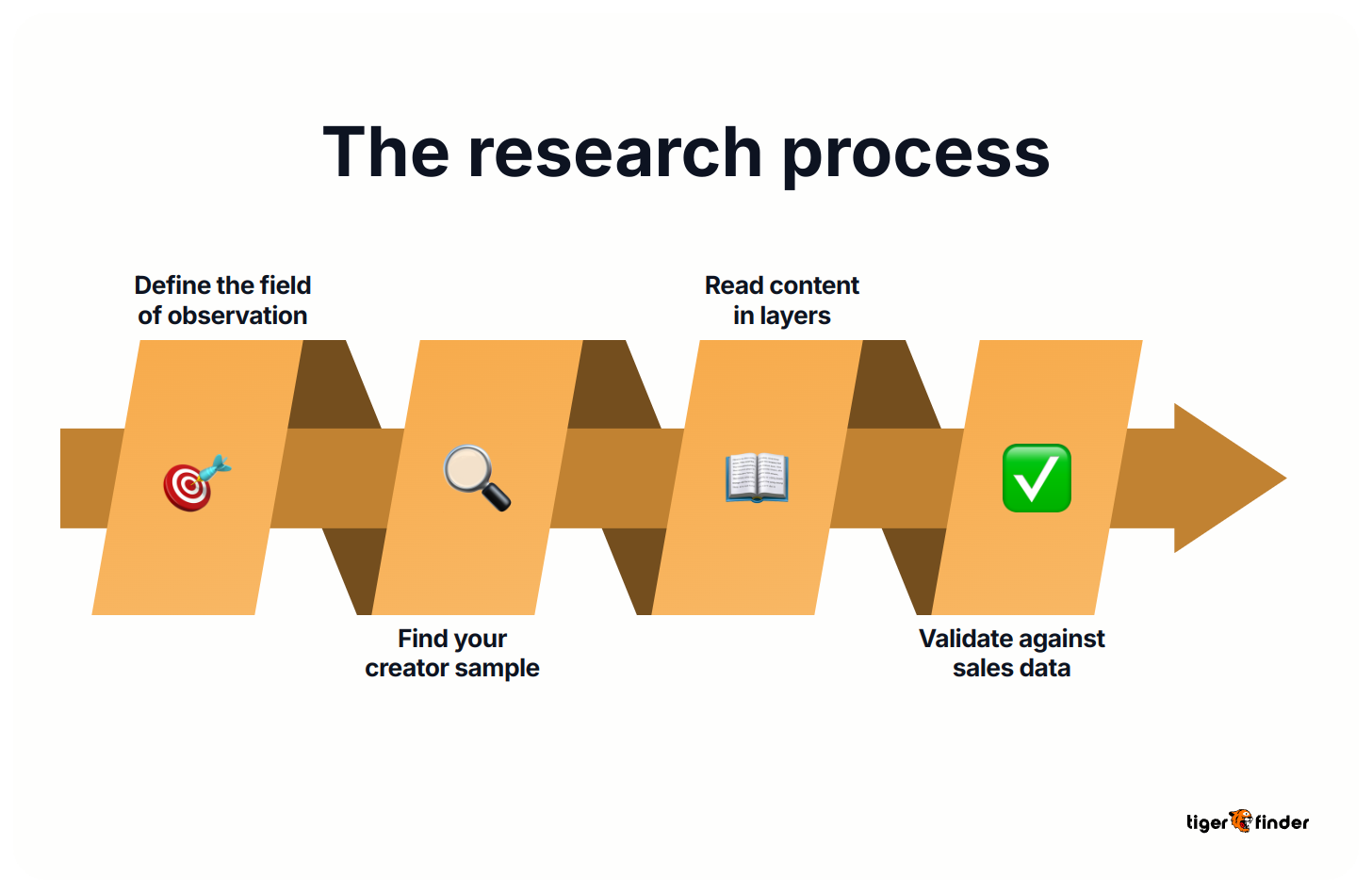
    The method below walks through how to do that reading properly, step by step.

    Where TikTok works as an early signal

    TikTok is not a reliable early indicator everywhere. It works best in categories where behaviour is easy to show on camera, like food, beauty, fitness, and the home. In those categories, a new habit often appears in creator content while it is still forming, before it has a name in the wider market.


    A note of caution belongs here. You do not get a forecast out of this. You get an early view of which behaviours and stories are starting to take shape, ahead of the point where they reach your usual trackers. Some of what you see stays niche. Some of it is noise. Telling the difference is part of the judgment the method asks for.

    Here is how the method works, step by step.

    1. The researcher defines the field of observation

    Before you look at anyone, you set the frame. This is the researcher’s step, and it is where the rigor comes from:

    • The behaviour you are studying.
    • The markets and the time period.
    • Which creators belong in the field, and which sit outside it.
    • The audience size that matters for the question.

    For an early-signal study you usually want smaller creators, in the 10,000 to 100,000 follower range, where a niche audience is engaged and a new habit tends to surface first. Write down what counts as a relevant signal, so you can tell later whether you found one.

    Setting the frame is what makes this qualitative research rather than scrolling with a purpose. The frame decides what your study is able to claim.

    2. A tool finds your starting sample

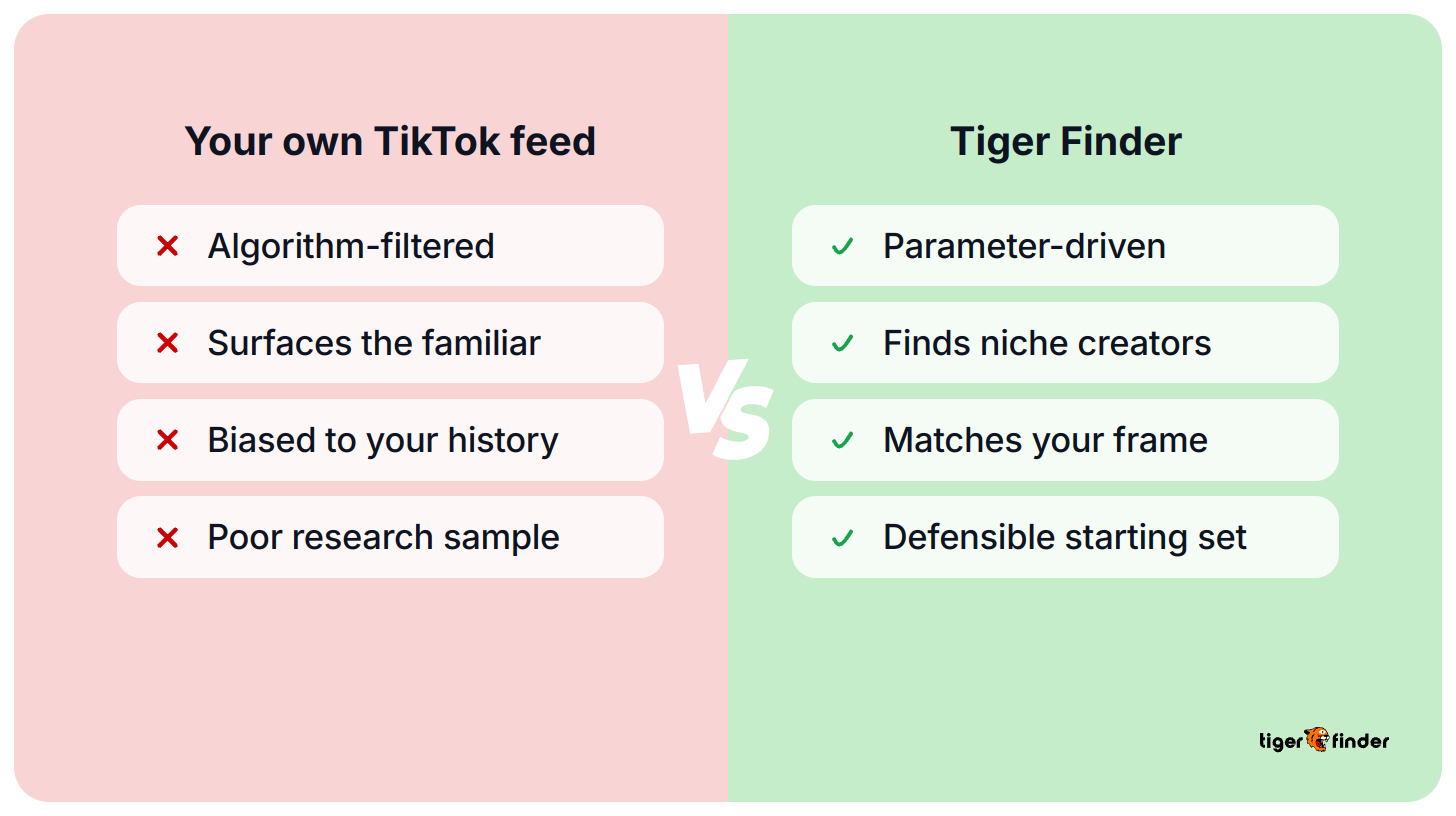
    When you search TikTok yourself, the feed shows you what the algorithm has already learned you like. It is tuned to your history, so it surfaces the loud and the familiar and quietly buries everything outside your habits. That makes your own feed a poor sampling instrument for research.

    An AI tool called Tiger Finder helps here. It lets you step outside your own feed and find creators by the parameters you set, the niche, the market, the audience size, and the content type. It assembles a starting sample that matches your frame, which gives you a defensible group of creators to study.


    3. The researcher reads the content

    This is the heart of the work, and it is entirely human. Take the cottage cheese case and read it in layers:

    1. Format. Look at what repeats across the videos. The same shapes come up again and again: the bowl, the blender, the macros written into the caption, the recipe filmed as part of a daily routine.
    2. Language. Look at the words and numbers people use to describe the food. High protein. 40 grams of protein. 500 calories. Creamy. Easy. These are the terms that make the choice feel allowed.
    3. Tension. Look at the conflict the content is quietly resolving. People want comfort food, and they want to feel that the food is doing something good for them. The recipes hold both at once.
    4. Insight. Read what the pattern adds up to. The protein number is doing a job. It lets people choose comfort food and feel the choice makes sense. That permission is the real change in the category.

    What the reading turns up

    Put the layers together and the pattern resolves. The same food keeps getting filmed as a treat, then captioned with its protein count. Cottage cheese blended into ice cream, posted as dessert, labelled 40 grams of protein. The protein number is what lets people post the treat as a health choice. That pairing of indulgent food and high protein count repeats across the videos, and it points to permission as the thing that moved the category.

    The behaviour shows up in the numbers. US retail sales of cottage cheese rose 20% in the 52 weeks to mid-June 2025, according to Circana data reported by CNN, after annual growth near 17% in 2023 and 2024. Some producers reported struggling to keep up with demand.

    The growth came from several forces, including the wider protein boom and GLP-1 diets. TikTok made the new permission visible early, before it was easy to describe in standard category language.

    The same logic shows up in newer brands entering the space. Alterego, a UK cottage cheese brand founded by Rose Hancock, builds on the same tension, health-conscious food that still feels like a treat. The brand launched in April 2025 and moved into Sainsbury’s the same year. 

    Its quick move onto shelves shows how fast the signal becomes commercially legible once the behaviour has a clear language around it.

    A conventional survey would struggle to reach this on its own. Ask people why they buy high-protein snacks and they report health and fitness goals, because that is the acceptable answer to give. 

    Their content shows the comfort motive on its own, in what they cook and how they caption it. The gap between the stated reason and the visible behaviour is the finding a brand pays for.

    The TikTok read is a starting hypothesis with cultural texture. You then check it against sales data, search behaviour, reviews, and follow-up qualitative work. The platform shows you the shape of the change early. Validation tells you whether it holds.

    What you give the client

    What you hand over is a clear picture of a new behaviour while it is still forming, before it reaches the usual data. You can show the client who is driving it, the words people use to make it feel normal, and what that shift means for the category.

    Tiger Finder does the part that is hard to do by hand. It reaches past your own feed and assembles a sample of creators that matches the frame you set, so you start from a defensible group rather than whatever the algorithm decided to show you. That is real time saved, and it is time saved on the work that adds the least value, the sorting and the searching.

    The reading is where the value sits, and that stays with the researcher. You are the one who sees the same recipe filmed as a treat and captioned by its protein count, names the tension underneath it, and works out that the protein number is granting permission. 

    The tool gathers the field so you can spend your time turning it into a finding the client can act on.


    Learn more about Tiger Finder

    Tiger Finder: TikTok Influencer Discovery with AI – The ICG

  • Market Sizing – Why a Hybrid Approach Produces Better Results

    Market Sizing – Why a Hybrid Approach Produces Better Results

    Article by ICG member Kevin Simmonds, Advantage Market Intelligence UK & Peru


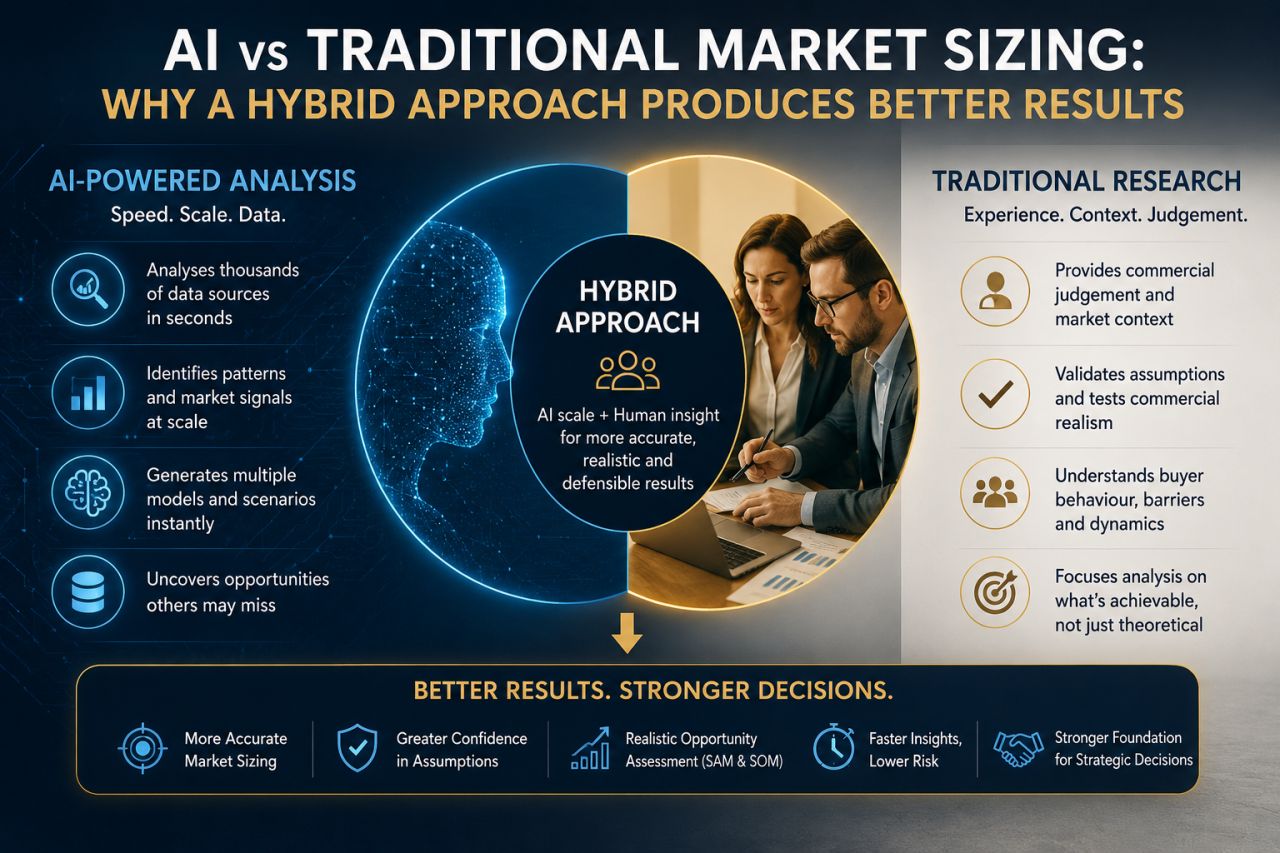
    Artificial intelligence is transforming market sizing and market research, but AI alone cannot determine whether an opportunity is commercially achievable.

    This article (below) explores why combining AI-powered market analysis with expert human validation delivers more accurate TAM, SAM and SOM assessments. Learn how a hybrid Human + AI approach improves market opportunity assessment, reduces uncertainty, and supports better strategic decision-making.

    Full Article

    Kevin Simmonds | LinkedIn

  • AI and Tech for Sustainability and the Environment

    AI and Tech for Sustainability and the Environment


    Article by ICG member Brian Loeb, LeapVision.

    As a researcher / strategist who is a big fan of tech and innovation, but who also treasures the environment, I’m on a mission to better understand the perspectives of consumers, businesses, policy makers, innovators, etc. on tech, AI and their impact on sustainability initiatives and the environment.

    Especially, I want to explore how we can switch the conversation from doom-saying (and doom-scrolling) to highlighting the many ways AI and tech are having positive impacts on sustainability and environmentally friendly goals and initiatives.

    The potential benefits are many and varied and with the list below I’m just scratching the surface of what is being done and what could potentially be done:

    • Optimization of resource management, including electricity, water, gas, etc.
    • Smarter cities and more effective urban planning for transport, mobility, and better recycling and waste management systems
    • Better building management systems (BMS) for more efficient energy and resource management
    • More accurate and transparent carbon footprint tracking and reporting
    • Discovery and design of new sustainable, recyclable or biodegradable materials, industrial equipment and processes for better management over the whole product lifecycle
    • Better models for forecasting the environmental impact of business activities, real estate developments, and public projects, as well as better models for valuing natural assets and ensuring that this value (or loss of) is factored into financial forecasts and investment decisions
    • Better models for valuing real estate which take more adequately into account climate risk, climate-related resiliency, and a whole array of risks ranging from ESG reputational to insurance underwriting
    • Optimization of electricity grids, including location of renewables and the timing of their collections, storage and distribution activities
    • More efficient supply chain management (SCM) and better tracking to ensure sustainable practices along the whole supply chain
    • Better understanding of ecosystems, facilitating the spread of regenerative agriculture and agroforestry systems
    • More effective irrigation systems that conserve water while improving soil health, and better soil management systems that help reduce the need for fertilizer, pesticide and herbicide
    • Analysis of satellite data to track and analyze deforestation, unauthorized industrial activities, pollution, water quality and the impacts of climate change
    • Better systems for tracking and understanding wildlife migration patterns

    I’m going to dive deeper, exploring key concerns relevant to consumers, businesses, NGOs, associations, public entities, agencies, consultants, entrepreneurs, investors, etc. such as:

    • How can we best use tech and AI in conjunction with our own human intelligence for advancing sustainability and benefiting the environment? And crucially, how can these benefits be amplified enough to outweigh the detrimental impacts (massive amounts of energy and water to run data centers, exploitative mining of rare earth minerals, mountains of tech waste that tech…)?
    • How can we better understand what customers and audiences worry about regarding the negative impacts of AI on the environment?
    • How can we educate consumers on how to best identify which products and services are more sustainable, as well as how to most sustainably use and recycle products?
    • How can companies, organizations, government entities and trade bodies communicate effectively and honestly their initiatives and generate buy-in from stakeholders, employees and consumers?
    • How can we create and program tech and AI that will naturally seek to optimize the well-being of social and natural systems, instilling in their very nature the mission to create positive outcomes and minimize detrimental ones?

    Please feel free to get in touch with me to discuss, provide feedback, offer suggestions, examples, etc. via LinkedIn or emailing brian@leapvision.com

    * Notes: The leading image was made with Copilot (I requested several and chose the ones I liked best – some were creepy like the planet Earth in a robot’s hand!), but the overall content was researched and the text written by myself. I did ask Copilot to write an article on the same topic and incorporated a phrase here and there, but I’m happy to report that overall mine was more complete and better written (at least to my taste). That said, it took me a few days and it took Copilot a few seconds!

    Brian Loeb | LinkedIn

  • Complexity

    Complexity

    This is part of a series of short pieces by ICG member Stefania Gogna that she wrote on LinkedIn. They explore emerging cultural signals and semiotic perspectives on marketing and consumer behaviour.


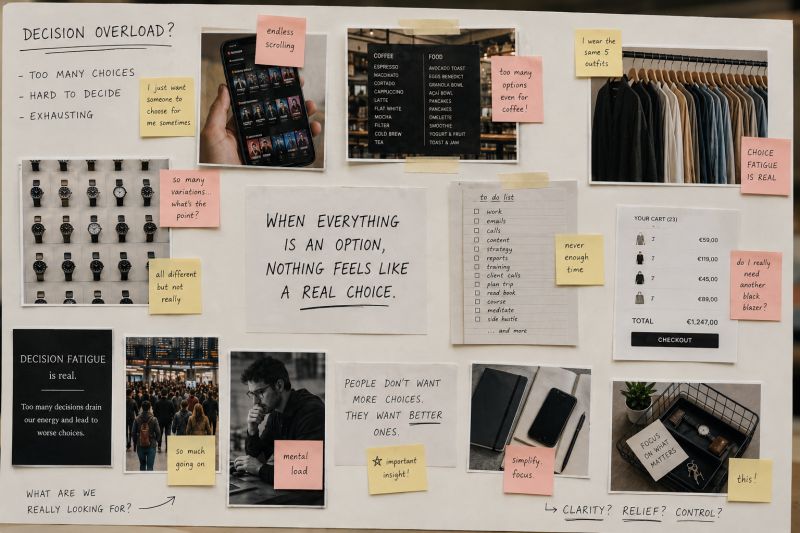
    Consumers say they want freedom, but culturally, they increasingly seek reduction.

    For years, markets celebrated abundance: that means more options, more customisation, more content, more access.

    But across categories, the most desirable experiences are becoming simpler, narrower and more curated.

    For example:

    Apple reduces complexity through its ecosystem. Fashion is shifting toward uniforms and quiet luxury. Food trends reward short ingredient lists and “clean” labels. Hospitality increasingly sells calm, silence and disconnection.

    Even social status is moving from displaying abundance to displaying control.

    What once felt liberating now often feels exhausting.

    In a culture overwhelmed by possibilities, reduction starts feeling premium.

    Maybe people are no longer searching for freedom: They’re searching for relief.

    This image shows the experimental board created during a focus group on decision fatigue.


    More insights from Stefania along these lines can be found on LinkedIn here.

  • Cultural Nostalgia Has Been Ceded to the Far Right, Reclaiming It Requires a New Approach

    Cultural Nostalgia Has Been Ceded to the Far Right, Reclaiming It Requires a New Approach

    This was originally written as a LinkedIn post by ICG member Hanna Chalmers.

    All thoughts are the author’s own – the ICG is apolitical and reflects the wide range of views of its individual members.


    Hanna Chalmers

    Cultural nostalgia has been ceded to the Far Right, reclaiming it requires a new approach. Reclaiming it requires the skills of people that actually live within British mainstream culture rather than awkwardly performing it from the outside.

    Last week Arsenal won their first Premier League title in 22 years. 120,000 people turned up spontaneously outside the Emirates and celebrated until 5am.  Last night the party continued with more crowds gathering – as someone said on a local news report – ‘It felt like Carnival!’. The footage reminds us how indelibly multicultural and diverse London is.

    https://www.instagram.com/reels/DYwcuEFoTVj/

    I’m from Holloway, home of the Arsenal. Holloway was always very Irish and Greek Cypriot but also Afro-Caribbean and Turkish – the fruit and veg shops on the Seven Sisters attested to that. As teenagers we all grew up together, smoked on the Heath, drove in tiny cars round the North Circular to raves in liminal outer London. I now live in that outer London, an Essex postcode, golf course at the end of the road, Epping Forest beyond. And far more multi-cultural than people might imagine. In our ward two weeks ago, neither Reform or the Greens got a look in, we remained staunchly Tory. It’s a peaceful, pretty, unremarkable corner of a huge global city.

    This vision of London—the real one, from the edges to the centre—is what enrages the far right. Sadiq Khan is a lightning rod because he epitomises embedded, multi-generational, multicultural London. What it actually means to be a Londoner.

    That fury has spawned a social media assault. Endless anonymous accounts posting videos of a London unrecognisable to those of us who live here. A city stripped of joy and community, replaced with racist tropes and rage.

    But the campaign is not working as well as they’d like. So much of this version of London is deeply at odds with what we know to be true. More people—even Piers Morgan—preferred the scenes outside the Emirates to the much smaller Unite the Kingdom rally two weeks before.

    While extremist accounts amplify hate-filled nostalgia for a “native” Britain that mostly never existed, thousands of other social media accounts quietly celebrate the rituals of everyday British life. The estate you grew up on, your neighbourhood, your school, your manor.

    Shared not as grievance but as memory—unifying and pleasurable.

    https://www.facebook.com/groups/282402631340116/permalink/913788064868233/

    Where is the progressive counter-narrative that taps into this?

    As I’ve written about before, the Far Right understands how to key into culture and nostalgia. Liberal/progressive UK strategists seem to lack the instinct entirely. Their attempts are often crude, tone-deaf, and even offensive to the people they’re trying to reach. It looks like the digital teams running these campaigns don’t really understand—or love—British culture…The image the Labour Party posted of Keir Starmer with some Tunnocks and a can of Irn Bru on Burns Night was a particular low…

    https://www.instagram.com/p/DT7zgA9iKT4/?hl=en

    But this is a serious problem for those of us, the quiet majority, who don’t want to live in a country fuelled by hate and rage.

    There are ways to engage with what I’d call “positive nostalgia”—nostalgia designed not to pit people against one another but to celebrate what we were and still are. And it requires different ways of working. Not a narrow team of social media managers looking in at British culture from the outside.

    In the music and the entertainment industry, where I have a background, we worked with “street teams”—people who were part of the culture, not observers of it. That’s what progressive politics needs now. People of all ages and backgrounds. Actual Facebook users who enjoy being on it. People who share one thing: they don’t want to live in a far-right country. This more participatory approach would ensure content was rooted in real community life, real memories and not just horribly generic and cynical.

    There is a lot to be celebrated about being British, or about being a Londoner, but no one at a political level really harnessing and telling that story. I’d argue that the Greens are, as yet, not good enough at speaking beyond their core (left wing alienated Labour voters).

    It’s sickening to see London presented to the world in a way that simply isn’t true. It’s up to us to reclaim the story of what we are, what we’ve been, and what we want to be.


  • Top Tips for Localisation

    Top Tips for Localisation


    By Katie Reed | May 21, 2026 | Blog event translation Services – Translation Translation Tips

    Speaking your audience’s language requires more than just translation. Localisation adapts your content to ensure that it resonates with international audiences who speak different versions of the same language. It ensures that cultural, linguistic and regulatory requirements of particular regions, countries or markets are respected.

    The value of localisation for business

    • Business growth: localisation opens the door to new markets and attracts new customers. With 50%* of internet users being non-English speakers, adapting your content ensures that it’s culturally appropriate and avoids misunderstandings or misinterpretation.
    • SEO and digital marketing: localised content can improve your search engine rankings in international markets by adapting keywords, metadata and content. It increases your online visibility and drives traffic to your website by enabling you to tap into local audiences.
    • Customer satisfaction: customers are more likely to engage with brands that speak their language and respect their culture. By tailoring your content to reflect local customs and cultural norms, you can ensure it resonates with your client base, boosting brand loyalty and long-term revenue.
    • Efficient market research: expert localisation in your market research helps you gain a better understanding of your market, so that you can make informed decisions about business strategy, marketing campaigns and product development.
    • Employee engagement: communicating with employees in their native language and dialect shows that they are valued and increases job satisfaction, employee engagement and retention.

    TLF’s guide to maximising localisation for your business

    • Know your target market: conduct detailed research into local customs and cultural norms before creating your localised content to ensure it resonates with your target audience.
    • Adapt your brand identity: research shows that 82% of shoppers prefer to buy from a business whose values align with their own.** Adapting your brand identity ensures that audiences connect with your business and are therefore more likely to stay engaged with your brand and products.
    • Localise your marketing: use local SEO and tailor your website, including localising imagery, currencies, date formats and contact details to provide a seamless user experience. Adapt marketing content, such as blogs and social media campaigns, to reflect local interests, humour and seasonal events.
    • Adhere to local regulations: ensure your content complies with local laws and regulations and protects your business from reputational or regulatory risk.
    • Choose an expert localisation provider: work with experienced mother-tongue linguists with extensive knowledge of your industry and the nuances of the particular language and culture. You may choose to partner with a specialist localisation agency with project managers who can manage the whole process and provide specialist expertise.

    *Statista
    **Forbes


    Partner with TLF

    At TLF, we combine a team of mother-tongue human translators with expert Project Managers to make sure your project runs smoothly. All our linguists have at least five years of professional experience in their chosen field, hold a Diploma, BA or MA in translation and are professional membership of a recognised translation body.

    Talk to the TLF team to find out how we can help you with your next localisation project.

    Top tips for localisation | Reaching global audiences – The Language Factory

    Professional Translation Services UK – The Language Factory

    The Language Factory – The ICG

    Blog | TLF UK – The Language Factory

  • Adapt with Intent: What Should Agency Leaders Do Next?

    Adapt with Intent: What Should Agency Leaders Do Next?

    Article first written for Research Live May 2026 by ICG member Paul Griffiths.


    Market research agencies don’t lack opportunity – but they do face an urgent question: how do we remain indispensable in a world reshaped by AI, data abundance and new competitors?

    At the MRS Leaders Forum on 20th May, one theme came through clearly: success won’t come from reacting to change, but from adapting with intent.

    Transformation is no longer optional – it is a commercial imperative. The marketplace offers huge opportunity, but also real disruption. The agencies that thrive will be those that make conscious choices about how they evolve – building consultative capability and stepping forward with confidence to seize what this new environment offers.

    A growing opportunity, if we choose to own it

    The demand for data, research and insight continues to expand rapidly. Much of this may sit outside what we traditionally label “primary research”, but it is firmly within our industry’s heartland.

    Large parts of the commercial world are only now beginning to systematically listen to and understand their customers. Technology is unlocking this at pace. As highlighted in the MRS Business of Evidence report (as introduced by Jane Frost, chief executive at MRS), this shift is not marginal – it is structural.

    For agency leaders, this reframes the challenge. Our role is not shrinking; it is broadening. The opportunity is to define our place at the centre of this expanding ecosystem, rather than defending a narrower, historical definition of research.

    From insight provider to decision partner

    The most consistent thread throughout the forum was the shift from research delivery to advisory partnership.

    As an industry, we can own the space of decision confidence – helping clients make better, evidence-led commercial decisions. This goes beyond providing high-quality, validated data. It means embedding insight into how decisions are made, increasingly within AI-enabled environments.

    However, making this shift requires more than intent – it requires repositioning.

    Nicole Duckworth of 4twenty2 made a particularly important point: if over 80% of decisions about advisory partners are made before a formal buying process begins, then agencies competing at pitch stage are often already too late.

    For leaders, this demands a rethink of commercial strategy. Winning work is no longer just about conversion; it’s about presence earlier in the client’s thinking – shaping problems, not just responding to them.

    Transformation is a continuous journey

    In conversation, Paul Hudson of FlexMR reflected on a 20-year journey that has already involved two major business model transformations – with a further shift now underway towards a more consultancy-led model.

    The lesson here is clear: transformation is not a one-off event. It is an ongoing process of reinvention, driven by deliberate choices about where to play and how to win.

    Similarly, Dr Matilda Andersson’s experience of scaling and selling Truth Consulting reinforced the attractiveness of a consultancy-led model – but also the importance of a clear, focused and well-communicated plan. Investors are drawn not just to growth, but to clarity of direction.

    Building the capabilities to deliver change

    If the ambition is clear, the next question is capability.

    Rachel Fraser’s session on developing “future leaders by design” highlighted the need for intentional investment in leadership and skills. Transformation does not happen by accident – it is built through deliberate capability development over time.

    This is perhaps one of the biggest challenges for agency leaders: balancing short-term delivery with long-term capability building. The shift to consultancy, advisory and influence requires different skills – commercial, relational and strategic – as much as technical.

    An industry already reshaped

    Change is not just ahead of us – it has already been happening at pace.

    As Lucy Davison of Keen as Mustard Marketing and Kahren Kersten of Cambiar Consulting highlighted, the ownership structure of the industry has shifted significantly over the past two decades. Where once private and public ownership dominated, today more than 50% of capital comes from private equity and venture capital.

    This has profound implications:

    • Greater expectations of growth and scalability
    • Increased focus on commercial strategy
    • More disciplined approaches to transformation.

    The experiences shared by industry leaders (Ginny Monk of Motif, Jonathan Williams of One Strategy Studio and Dave Phillips of Kantar) who have navigated these transitions reinforced a consistent message: clarity of objective and decisive execution are critical. Change is rarely comfortable – but it is manageable when approached with intent.

    A collaborative and resilient community

    One of the most striking aspects of the forum was the openness of the discussions. Agency leaders sharing challenges, comparing approaches and working through common problems together.

    Despite the disruption many are feeling, there is also a sense of confidence. Our industry combines intellectual rigour, professional standards and a deep commitment to putting real people at the heart of decision-making.

    Those fundamentals remain highly relevant.

    Moving forward: adapt with intent

    The agencies that thrive in the next phase of our industry will not be those that simply keep up with change.

    They will be those that:

    • Make clear choices about their future role
    • Invest deliberately in new capabilities
    • Position themselves as partners in decision-making, not just providers of data.

    The opportunity is there. The demand for insight, evidence and understanding is only increasing.

    The question for agency leaders is simple: are we adapting by default – or are we adapting with intent?

    Paul Griffiths is growth consultant at Client Advocates

    The MRS Leaders Forum is a network for agency leaders.