

Resource Type: Article

  • What Runners Actually Think about Their Shoes

    What Runners Actually Think about Their Shoes

    Article by ICG member John Habershon, PhD, AI Assisted Qualitative and Quantitative Research

    Attitudes, Preferences and the Technology Debate: Insights from Organic Consumer Conversation


    What do runners really think about their shoes? Not what the brands tell them to think — what do they say to each other, unprompted, in specialist forums and on social media at 10pm after a long run?

    That is the question our Digital Conversation Analysis (DCA) programme is designed to answer. Wave 1 analysed 1,256 genuine consumer posts and tweets across Twitter/X and three specialist Reddit communities, after filtering out promotional content, influencer posts, and non-English language material. What remains is organic voice: runners talking to other runners, with no commercial agenda.

    The findings reveal a running footwear market in a moment of genuine intellectual ferment. Consumers are more technically literate than ever, more sceptical of marketing claims, and increasingly prepared to interrogate the assumptions behind the technology that brands are selling them. This is what they told us.

    Article content

    1. The Runners’ Mindset: Forensic, Loyal, and Increasingly Sceptical

    The first thing that strikes you when you read through thousands of genuine running shoe conversations is the level of technical literacy. This is not a consumer group that passively accepts product descriptions. They test, compare, document, and debate with the rigour of product engineers.

    “I’m currently about 400 miles in on a pair of ASICS Gel Nimbus 26s. I liked them, but recently I’ve been getting some pain in the balls of my feet and some lower leg (soleus) issues. I think they’re just out of juice.” r/runningshoes — experienced road runner

    This level of granularity is the norm in specialist running communities. Consumers track mileage meticulously, document transitions, and self-diagnose with reference to specific shoe characteristics. They are not asking whether a shoe is good. They are asking whether it is still good at 400 miles, for their gait, at their pace, on their terrain.

    Loyalty is Earned, Not Given

    Brand loyalty in the running category is remarkably strong — but it is performance-contingent rather than emotional. Brooks demonstrates the clearest loyalty signal in Wave 1. Multiple posts reference returning to the brand after trialling competitors, with the Glycerin and Ghost functioning as default choices.

    “I have been running in them since about October — favourite shoe hands down, and I’m a loyal Brooks runner. I have a high arch and use arch support. Neutral runner. They are very responsive. I have a second pair waiting to be used.” r/runningshoes — regular Brooks customer

    But loyalty is fragile in the face of change. One of the most resonant negative signals in Wave 1 concerns what happens when a brand alters a shoe that a customer has trusted for years:

    “Ran in the same model of shoes for over 10 years — each generation was basically the same except for some styling changes — and then ASICS dramatically changed them. I tried the new version and ended up with plantar fasciitis.” Twitter / X — long-term ASICS customer

    This is the loyalty trap that established brands face. The very consistency that builds a devoted following creates fragility: any significant change risks breaking the contract with customers who have built their running identity around a specific shoe. A notable attitudinal shift visible in the Reddit communities is the normalisation of shoe rotation. High-frequency runners — those running five or more times per week — now routinely maintain two or more pairs in active use, treating each shoe as a tool for a specific training context rather than a single do-everything solution.

    “What are the best daily trainers that can support about 40 miles per week at around 6:50–7:20 per mile average pace without compromising on speed? I really prefer lightweight shoes that can get to pace and keep it without causing pain on longer runs. r/runningshoes — high-mileage road runner

    2. Preferences: What Runners Are Actually Looking For

    When Wave 1 data is interrogated for the underlying purchase criteria that drive recommendation and advocacy, five attributes emerge consistently across both platforms and all brand conversations.

    Comfort and Cushioning: Dominant but Contested

    Cushioning is the most discussed product attribute in Wave 1, accounting for the largest cluster of technology-related conversation. But the consensus around what ‘good’ cushioning means is fracturing.

    The maximal-cushioning category — popularised by HOKA and now embraced by most major brands — commands strong advocacy from daily trainers and long-distance runners seeking fatigue management. HOKA’s debut in the Wave 1 tracker is built almost entirely on this foundation, with its 75.6% positive sentiment score driven by runners praising comfort, stack height, and recovery properties.

    “Hoka has become the world leader in comfortable running shoes by far exceeding Brooks. You sacrifice longevity for comfort though — that’s just the way it is right now. Twitter / X — experienced runner comparing HOKA and Brooks

    Note the embedded tension in that observation: comfort acknowledged, but at a cost. The durability-versus-cushioning trade-off is one of the most active debates in running communities right now, and it maps directly onto one of the most pressing brand challenges in the category.

    Durability: The Metric Brands Are Losing On

    Durability concern is the highest-volume genuine consumer issue in Wave 1, cutting across brand and product tier. Runners are documenting mileage with precision and drawing sharp conclusions when foam compounds fail to deliver on promised longevity.

    Saucony bears the most concentrated negative signal on this dimension. The brand enters Wave 1 with the joint-highest share of voice (17.9%) but the lowest positive sentiment score (45.6%), a gap almost entirely explained by PWRRUN foam durability criticism.

    “Adidas, Saucony and HOKA make better daily trainers and race-day shoes. Nike only has one shoe the pros like, and that’s super expensive and not durable at all.” Twitter / X — comparing brands on durability

    The durability conversation has a sustainability dimension that brands have not yet fully grasped. Multiple Reddit posts frame longevity explicitly as an environmental consideration: a shoe that lasts 600 miles has a lower carbon cost per mile than one that lasts 300. This reframes durability from a pure value argument into an ethical one — and makes it a harder issue to brush aside.

    Fit: The Foundational Non-Negotiable

    Beneath all the technology discussion, fit remains the most fundamental purchase criterion. Toe box width, last shape, and heel security dominate injury and recommendation threads in a way that no foam compound or plate technology can override. The on running conversation — limited as it is in Wave 1 — appears in a health-and-injury thread where the Cloudmonster is considered specifically because of its fit characteristics for a runner with plantar fasciitis.

    “I’m stuck between the Saucony Endorphin Speed 5, ASICS Superblast 2, and On Cloudmonster 2. Context: mild plantar fasciitis. Injury prevention first. Some low back sensitivity.” r/runningshoes — runner managing chronic injury

    This post is instructive: a runner making a high-consideration purchase decision is not choosing primarily on brand, performance, or price. They are choosing on fit and biomechanical compatibility. Brands that position their technology in health and injury contexts — rather than purely in performance terms — are speaking to a real and underserved consumer need.

    Value: Reframed as Cost-Per-Mile

    Price sensitivity in the running category is more sophisticated than a simple willingness-to-pay question. Experienced runners calculate value on a cost-per-mile basis, making them willing to pay more for a shoe that lasts longer but deeply hostile to premium pricing on shoes with poor durability.

    “I want the Megablast but can’t justify the price when my Superblast 2 is currently going strong.” r/RunningShoeGeeks — experienced ASICS customer

    This cost-per-mile logic is rational and data-driven — exactly what you would expect from a consumer segment that tracks mileage obsessively. It creates a very different pricing conversation than the one most brands are equipped to have, and it further amplifies the damage caused by durability failures.

    3. The Technology Debate: Where Runners Are Genuinely Divided

    Running footwear technology has entered a period of accelerated development that has outpaced the ability of the average consumer to evaluate it. Carbon plates, nitrogen-injected foams, maximal stack heights and rocker geometries have all arrived in quick succession, and runners are actively working out what they think about each of them.

    Carbon Plates: Respected but Specialist

    Carbon plate technology commands respect in specialist communities but sits at the edge of mainstream conversation rather than at its centre. The Adizero, Alphafly, and Metaspeed are discussed with genuine technical seriousness in Reddit’s performance communities — but the consumers engaging with them are a distinct, self-aware segment.

    “Purchased both the Adizero and Alphafly 3s but never used a super shoe before. Running a marathon in six weeks. First time I finished in 3:54:00. Trying to hit sub-3 this time. Any recommendations on what to wear?” r/runningshoes — competitive amateur marathoner

    The carbon plate conversation is notably comparative rather than brand-loyal. Runners evaluate Nike, Adidas, and ASICS options against each other on functional grounds, with limited emotional attachment to any particular brand’s version of the technology. This suggests the carbon plate category is more price-and-performance driven than the daily trainer market — margins may be harder to sustain as the technology matures.

    Foam Technology: Where the Real Debate Is

    If carbon plates are the glamorous end of the technology conversation, foam compounds are where the substance is. PWRRUN (Saucony), Nitrogen Nitro (ASICS), Boost (Adidas), and ZoomX (Nike) are discussed in terms that would not be out of place in a materials science journal.

    “I find that perceived speed and actual speed are weirdly disconnected in a negative way in the Megablast. I feel fast, but then I look at my watch and I’m running slower than expected. I think it’s because the midsole has a huge bounce but not a lot of forward propulsion — I wish ASICS would give it more of a rocker.” r/RunningShoeGeeks — technical critique of ASICS Megablast

    This is the quality of feedback that brand R&D teams should be reading. It distinguishes between subjective feel (bouncy, fun, engaging) and objective performance (forward propulsion, pace data), and it identifies a specific design gap. The runners generating this kind of commentary are not reviewers or influencers — they are paying customers.

    The PWRRUN durability concern that drives Saucony’s negative sentiment represents the other end of this conversation: what happens when foam technology is perceived to fail. Multiple posts describe the foam losing responsiveness within normal usage ranges, creating a credibility problem that extends beyond the individual shoe to the brand’s wider compound platform.

    Stack Height: The ‘Comfort vs Control’ Fault Line

    Stack height is the technology dimension that generates the most genuine disagreement. The maximal-cushioning argument (protect the body, extend comfortable running range, reduce fatigue) is directly contested by a performance and biomechanics counter-argument.

    “Consider that in the running community a lot more Achilles injuries started popping up when HOKA and the supercush shoes started to get popular. Long-term effect of cushioning: weakened, less-engaged lower leg musculature.” Twitter / X — discussing the biomechanical case against high-stack shoes

    This is not a fringe position. The relationship between maximal cushioning and lower-limb injury risk is a genuine area of biomechanical debate, and it is filtering into mainstream consumer conversation. HOKA’s high positive sentiment in Wave 1 coexists with a small but growing set of posts questioning the long-term biomechanical consequences of high-stack running. This is a signal that the brand — and the category — should be monitoring carefully.

    Sustainability: From Messaging to Scrutiny

    Sustainability is the highest-volume technology-adjacent discussion category in Wave 1, with 68 combined mentions across both platforms. But the nature of the conversation is not what most brand sustainability teams would hope for.

    Consumers are not celebrating brands’ environmental initiatives. They are doing their own calculation — equating product longevity with environmental responsibility and holding durability failures against brands on sustainability grounds. Two Reddit posts in the dataset use the term ‘greenwashing’ explicitly. This is an early but directionally significant signal.

    “Basically no supplements actually help. Same concept for shoes. ON, Nike, Saucony — just pick any four and have a rotation. The brand tribalism is largely marketing.” Twitter / X — 700-day running streak veteran, 3,500+ miles

    The scepticism encoded in that observation extends to sustainability claims as much as to performance claims. A consumer who has run 3,500 miles and tested multiple brands has earned their cynicism. Brands whose sustainability credentials rest on marketing language rather than product decisions are increasingly exposed to this audience.

    4. The Brand Landscape Through the Consumer Lens

    Wave 1 presents a market where brand reputation is being actively constructed and reconstructed by consumer conversation, not by marketing spend. The brands with the strongest positive signals are those whose product performance has earned advocacy in specialist communities — and the brands with the weakest signals are those where product reality has diverged from brand promise

    HOKA: A Strong Debut, With One Question

    HOKA enters the tracker with 75.6% positive sentiment and 17.5% share of voice — a Leader-quadrant performance on its first wave. The brand’s cushioning advocacy is genuine, community-led, and coming from technically credible runners rather than casual comfort-seekers. The one question mark: a small but notable cluster of posts beginning to associate maximal-stack shoes with Achilles issues. It is too early to call this a brand-level problem, but it is precisely the kind of signal that requires monitoring before it scales.

    Brooks: Consistent Advocacy, Deep Loyalty

    Brooks achieves the highest sentiment score among the fully tracked brands (79.5%), driven by consistent daily trainer advocacy. The brand’s consumer positioning — reliable, for-runners, not-fashionable — is a source of genuine pride among its community.

    “Brooks people are better than both — we actually use our shoes for running.” Twitter / X — Brooks advocate in a brand comparison thread

    The dry affection in that comment captures something real about Brooks’ consumer relationship. The brand is trusted precisely because it does not try to be anything other than what it is.

    Saucony: High Volume, Low Advocacy — A Warning Sign

    Saucony’s position is the most strategically concerning finding in Wave 1. The brand appears in more conversations than almost any other tracked brand, but the ratio of positive to negative signal is the worst in the cohort. New customers are being recruited — the Endorphin Speed is generating genuine first-time advocacy — but existing customers are expressing durability concerns loudly enough to undermine the acquisition signal.

    “Got my new shoes. It’s very comfy, light, bouncy and stable at the same time somehow. I never had this good running shoes before. The brand is Saucony — didn’t even know it existed.” Twitter / X — first-time Saucony customer

    That first-time buyer enthusiasm, if not supported by long-term durability, will become next wave’s negative signal. The pattern is already visible in the data.

    Nike and Adidas: Volume Without Conviction

    The two largest global sportswear brands generate substantial conversation volume but relatively weak advocacy. Nike in particular appears frequently in comparison constructs (‘better than Nike’, ‘I switched away from Nike’) rather than as the subject of standalone positive recommendation. This is a subtle but important erosion of aspiration that financial metrics alone will not capture.

    5. Questions for Wave 2: What We Still Need to Understand

    Wave 1 provides a clear picture of current attitudes and preferences. It also raises a set of questions that the data cannot yet answer — either because the signal is too early-stage, or because the methodology needs development. These are the questions we will be addressing in Wave 2.

    Article content

    Closing Thought

    Running is a sport built on data. Runners track splits, monitor heart rate zones, log mileage, and analyse their own biomechanics with tools that would have been unimaginable a decade ago. It should surprise no one that they bring the same forensic rigour to the shoes they wear.

    The brands that thrive in this environment will be those that treat consumer conversation not as a reputation management problem but as a product intelligence source. The signals are all there in the data — durable foam compounds, honest fit engineering, longevity that earns cost-per-mile respect, sustainability that lives in the product rather than in the press release.

    Wave 2 will tell us whether the patterns emerging from this first wave are consolidating into trends or resolving into something more nuanced. The questions are already better than the answers — which is usually the sign that the research is asking the right things.

    Article content

    Ana-Cristina Peter Insight Consultants Group Hattie Martin Thomas Earl Monica Solano-Molina Ben Franks


  • Campaigning for Improved Public Procurement

    Campaigning for Improved Public Procurement

    Article by ICG member Liz Montgomery, Sharp Research

    Back in summer 2025 I participated in a survey run by the FSB (Federation of Small Business) about public procurement, which also covered procurement by large organisations more generally.  It had a decent number of  open ends, and I added my views on public procurement in quite a direct way.  A couple of months later they contacted me (and a number of other small businesses for a follow up interview, which was moderated (very well) by one of the FSBs policy specialists.

    The report, Signed, Sealed, Delivered was published  towards the end of 2025  (free to download here https://www.fsb.org.uk/resources/policy-reports/signed-sealed-delivered-MCGXDJ3J475NEPFOLCT6WGFAHFVU), and contains a mix of positive proposals, but also quite damning findings about public procurement processes.  Several striking stats emerge

    • the number of SMEs directly invoicing the public sector has fallen since 2020 (and was already pretty low at well under 150,000;
    • A national ambition to grow procurement spending with SMEs to reach 33% by 2020, but is reported to have been stuck at around 20% of the total spend by central government, and even including indirect spend in some departments is less than 13%!

    The report is also pretty damning on the experience of the RFP process.

    Late in December I was surprised to be invited to participate in a round table with the Parliamentary Secretary for the Cabinet Office, Chris Ward MP, to whom, among others the report had been presented.  This was held in January of this year, and in advance of the session I asked members of the ICG to submit their experiences and comments so I could hopefully share them at the Round Table.

    I  had a super amount of input from many people.   The comments that from other ICG members really reflected a lot of the findings in the report, and I shared an anonymous version of this with the policy team at the FSB, which they found very helpful and interesting.  Our experiences included

    1. Issues with payment terms and financial pressures on micro and small research insight businesses , including extended and unilateral payment terms, cashflow vulnerability, and psychological impacts, plus undermining the value of the work delivered, especially at the bidding stage
    2. Barriers to accessing public sector work – too many complex processes which are biased to large organisations, excessive focus on price and they simply take too much time and effort with often a zero success rate (sometimes over many years). Incumbent suppliers seem to be favoured at every point. And then there is unhelpful or no feedback on why the bid was unsuccessful.
    3. Structural issues in procurement culture included impersonal and inaccessible processes, plus examples of lack of guidance and clarity. One ICG member reported attending a supposed pre-tender webinar that was completely confusing rather than enabling, and often it was felt that public sector buyers simply did not understand the nature or value of the services  they are procuring!

    The round table itself, held on 27th January, was well attended, and I felt initially it might not be a very open session.   But, in fact, it was very lively, the minister was very engaged, and those of us attending as SMEs (all of whom I think had been quoted in the report), were not shy in any  way in pitching in  with our views.  Well chaired by Tina McKenzie, the FSB’s Policy Chair (a small business owner herself), she made sure we all had our say.

    Apart from other SMEs, there were also attendees from the rest of the Cabinet office, the Department for Business and Trade, Tech Nation, and Technology UK plus the JP Morgan Chase  Foundation who funded the research (I was sitting between their 2 reps!)

    The input from those of us there as SMEs focused on

    • the ridiculous nature of the procurement processes themselves (impersonal, complex, time consuming, why bother?!)
    • the apparent bias towards incumbent providers
    • the need for improved terms and conditions (especially that primary contractors should not over-ride 30 day payment terms) – payment terms are a massive issue, as we all know.
    • a need for increased and more helpful pre bid engagement
    • there are still too many different government bid platforms, and a lot of bids not going on, for example, Contracts Finder and various questions were raised as to whether the Crown Commercial Service is actually doing a decent job on this
    • emphasizing that often those doing the procurement lacked the knowledge to do so effectively
    • also the importance of social value, and the focus on local employment and driving local change
    • it also contradicted the finding reported that local authorities are good at prompt payment!

    A strong and interesting theme was that by excluding small businesses, government and other public procurers were often stymying the innovation that SMEs can provide, and that there is a perception that there is a strong tendency to stay with the safe option, which may not necessarily be the most effective (or cost effective) option.

    Many of these are common to the issues we highlighted, and I was able to reinforce the arguments about current processes apparently supporting incumbent suppliers, as well as the challenges of the procurement processes.  But it was definitely evident that our experiences are by no means unique to us.  Which is a very helpful finding.

    The minister seemed very engaged and open, as did other government representatives there.  I was seated near a DBT mandarin, who clearly recognised the issues of lack of understanding in his teams of these procurement issues, although I was not convinced he would be in a position to do anything about them

    What were the conclusions from this lively and very open discussion?  The chair summarised these quite succinctly, and here are the elements I think most relevant to us as a community:

    • A strong argument for focusing on solutions-based tendering rather than solely price based tendering
    • Highlighting issues with local authority payments
    • A need to protect the supply chain – i.e. to make sure that those of us that are not primary contractors get treated fairly (and paid on time not 90 days…)
    • That the government needs to think about a better contract/bids information platform than the current solution it offers (and, yes, the FSB did float the idea that they could operate one for SMEs!

    It was a very interesting 90 minutes, and the Minister and his team even stayed on for a while after.

    On reflection, I am not sure that “Signed, Sealed, Delivered” has been achieved.   It has certainly been delivered, and the Minister and his team made reassuring comments and seemed engaged.   Apparently two government departments, including the MoD have now made commitments to increase their use of SMEs.   However it is going to take a massive effort for the dial to be moved, and that effort will be required by all parties, especially all governmental organizations.

    I should also add everyone agreed that the catering at the event (another FSB) was some of the best we have ever had.   Freshly made eggs benedict, various healthy mini muffins, croissants, fruitiness, home made compote, juices… I was impressed.  If you need caterers in London go to these guys – Piptree   https://www.piptreecatering.com/  Very impressive ! If you go to the website, the husband was looking after the eggs benedict and others on the pic were also there.


    Liz Montgomery | LinkedIn

  • Conceiving Business Twins

    Conceiving Business Twins

    Article by ICG member Lian Mico – Founder & CEO, Pentalian

    In many ways – like when planning for human babies – planning business babies doesn’t always go the way you thought. You have it in your mind for some time when would be a good time to start trying for this (business) baby, saving financially for it, a good time to stop having a guaranteed full time income and generally you plan for the arrival of one (business) baby… as was my intention.

    For many years now, I’ve been toying with the idea of setting up my own research practice – I’ve known from a young age I wanted my own business, though like many people ending up in market research was somewhat of a happy accident (in drafting this I didn’t even mean for that pregnancy pun – it just fell out of my brain!). It took me over 15 years in the industry to finally feel like I had the experience and knowledge required in our field to do it, as well as the financial means.

    The money I had to setup the business is modest – it will cover me for a few months at most – but, as I’ve been told for planning a child(ren), if you wait until you feel you’ve got enough money, you’ll never do it. And so, last November I made the decision to quit “working for the man” and prepare to go it alone (once my three months’ notice period was up of course).

    This meant a lot of prep – getting access to / accreditation from various relevant business organisations, from the ICG, to the FCB, to the MRS (so many acronyms!). It meant deciding on a company name, branding, ethos and website. It meant months of anxiety knowing I couldn’t legally contact any current clients for 6 months after I left the business, and couldn’t begin contacting prospects at all really until I left my current position. It meant sorting an accountant, setting up my Limited company, preparing templates, a ‘Nice to meet you’ deck and so much more. Plus, the day job was popping off (don’t we all love that annual pre-Christmas rush), so it was a busy time!

    But, over Christmas my husband spotted a local bar business for sale. Getting into hospitality is something we’ve always had an interest in, and we know this local bar well – it’s right up our street and the asking price was reasonable. And so, over a beer (where most great business ideas and decisions are made) during the Christmas break, we decided to go for it. Before our pint was finished, the loan money was in my partner’s account, and we went for a more detailed look around the bar the next day and signed a conditional agreement to buy the bar just as the new year came around.

    As with parental planning, we had a chat about how our business babies would work in practice. My research business is still my main baby – it’s what (we hope) will pay our mortgage, and we discussed how I will need the time and space to make it work… marketing, networking, financials, and so on as well as doing the work when it’s won. I agreed to help with the bar baby (I was a big advocate of its conception) though said my husband would have to put more of his time into that, and that my time would become progressively less invested.

    And so, then all the bar prep came in a flurry (luckily most of my research business setup was done, and I just had 6 weeks left of the day job to go). So whilst my husband was doing deep cleans, personal licence exams and many hours of cocktail research, I carried on with my day job, my (thankfully dwindling) to-do list for my business setup and ultimately also supported the bar business, more so on the staff and socials side, as well as getting up to speed myself on cocktail making (I’m a dab hand now!).

    The bar baby was born first – Pink Rhino – we got the keys on the 1st Feb and had our opening night on the 6th (which I worked, after a full day of market research). Then the research baby come soon after – my last day at my previous company was 10th Feb (including a debrief that finished at 5pm – ouch!), and I already had work to do under my new business – Pentalian – on Feb 11th.

    And so, February was a very interesting month; a massive life shift and a steep learning curve, with lots of adapting including some sleepless nights / adapting to new bedtime schedules. Whilst I know (from speaking to new parents, not my own experience) this is not actually anywhere near as tiring and trying as having a new baby – you can hopefully see why I draw the comparison. In fact, for many people when telling them about either new business I often couldn’t get to the end of the phrase “We have some exciting news…” out of my mouth quick enough – being a woman of a certain age who is already married, most people expect the human, rather than business, baby news.


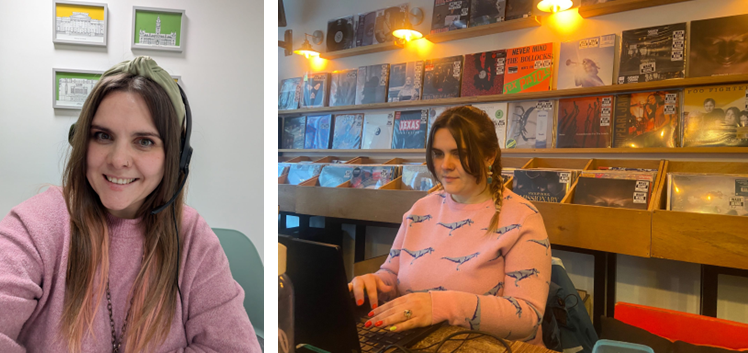
    Some days, I’m being a researcher and it might look a little something like this


    Some days, I’m being a bar tender and instead it looks like this


    And some days – because I’m a twin business owner – there are days when I hybrid work, doing research in the bar (for example when we have deliveries or workmen in) and it looks a little more like this


    So, how has the business setup compared for each?

    Pentalian – research agency
    • Longer time to setup
    • A longer contingency time, with some “wages” set aside
    • I know I am really good at this (though of course imposter syndrome hits everyone at some point – like 3am on a Wednesday)
    • I have lots of supporting allies in the industry already (and am blown away about how willing people are to share their knowledge and time with me)
    • …And lots of freelancing friends I know I can call upon as/when the work requires who are top quality researchers
    • Anxiety focussed on getting clients to even speak to me/consider my business for briefs (I’m a researcher, not a saleswoman) and of course wondering if/when I will be able to pay my wages (and mortgage)
    • It can sometimes feel very intangible and timelines are longer; it takes time to win projects, build a prospect list and then maintain and grow a client base
    • Main social platform is LinkedIn, with focus on building my personal and business profile – though I’d like to further strengthen my marketing strategy and am planning some offline/non-social media approaches to attract prospects
    Pink Rhino – cocktail bar
    • Lots of setup done in a short time
    • No contingency time – the bills must be paid (lease, staff wages, energy, stock, etc.) and we knew we would open the next weekend, almost as if no change in ownership had occurred / “business as usual” (with a DJ and everything!)
    • We know what makes a good drink, but with little hands-on experience we didn’t know if we’d be good enough
    • No allies in the industry
    • Didn’t know the staff, hadn’t trained them ourselves and had no idea how good they were
    • Anxiety focussed on getting enough people into the bar and buying drinks to meet the bills in the first month (and of course all the months after) and making sure we don’t do anything illegal (!) – aiming to breakeven, not pay ourselves a wage, and just make it through financially, whilst simultaneously providing a top quality experience for customers
    • It’s a very physical, tangible thing; we know when we’re open each week, who’s working, and we see our clients walk through the door and the service we provide is instant – we have some regulars who’ve stuck with us, and people totally new to the bar who have only discovered it since we took over
    • Main social platform is Facebook, and a little bit of Instagram – though we’d like to get some printed marketing materials and are already starting to get better looped in with local business an event groups to further strengthen our local presence

    Conclusively, I’d definitely recommend setting up either – or both – of these types of businesses. I’ve never felt so excited, gratified and proud of myself since being a child… albeit very tired (!). But it’s also worth noting, before we even considered the bar and I decided to go out on my own in the research field me and my husband had a chat about “if the worst should happen” and I want to be frank the answer was “I make no money, we can’t pay our bills and we lose the house” and that was the risk we were jointly willing to take.

    Neither of us come from money, neither of us got any external investment (and never will – it’s not in our game plan to become puppets to external forces… that’s an article for a different day!), our savings are ok at best and we have put a lot on the line to follow our business dreams this year – but we’re at a unique cross roads in having “just enough”… Enough life experience to trust ourselves; enough financial experience that the banks want to give us money (this one still bewilders me – I think we’re considered “real adults” now); enough support around us that we know losing our house wouldn’t mean being homeless (for us and our family); enough determination/work-ethic (and willingness to be tired) to push ourselves hard physically and mentally; and enough courage to go for it.

    Setting up a business isn’t right for many people for many reasons – I’m having to work on current research projects, whilst trying to find more potential clients, whilst working in a bar at the weekend, whilst I work out how I pay my monthly bills now as well as how I might be able to afford my own (and hopefully other people’s) mat leave in years to come, whilst also managing all of life’s normal stuff (bills, chores, step children, elderly dog, friends, family, home improvements) – the list goes on… and this isn’t realistic for everyone. Even the kids being a few years younger would have made this impossible.

    But I’m really glad to be in the privileged position I am today to “be my own boss” and really give this “new way of life” a go.

    I worried the business balance would be tricky the first few weeks, but setting my own working schedules has meant a much less stressful approach to managing research projects (and wider business admin) where I can tweak my sleep schedule and working patterns to suit my energy levels and have even found more time to cook healthy meals too! So, despite working in and co-managing a bar, I have never felt more effective (and healthy) in my role as a researcher than I have these last few weeks.

    Funnily enough, this article is aimed at the research world – but most researchers I speak to about the two businesses are, possibly unsurprisingly, most excited about the bar. And whilst it is exciting – a real “pinch me” moment! – my baby is Pentalian and it still needs a lot of love and nurture to grown into a successful, lasting business and so it’s where the majority of my energy and love lies. So whilst I encourage you to pop into the Pink Rhino for a cocktail if you’re passing by the cute market town of Ramsbottom (~ between Manchester and Blackburn) for the best value cocktails around (and I truly mean that) – I encourage you most of all as allies, potential research buyers, friends/colleagues of people who may be in the market for research services… to help me get the word out there about Pentalian. It’s a research company founded on strong principles and with bold ambitions, but that first foot in the door is much more difficult in this industry than it is in a cocktail bar (where there is a literal door!) and every recommendation, word of mouth recommendation, and so on makes a difference.

    In return I offer you, dear reader, an open door of my own – firstly a research door – I am happy to chat to anyone from any walk of life, not only about their potential research needs (though I’d of course love to help with those!), but also anything you may want to know about a career in market research or qualitative research specifically, business setup advice, training needs you might have, research process problems and solutions… literally nothing is off the cards. I want to be a part of a thriving industry, and we do that by lifting up and supporting each other. And secondly, (the one I know a few cheeky readers will have been hoping for the most) a cocktail bar door – show this article in The Pink Rhino Rammy to receive your first drink half price, or reach out to me directly if you want to talk bar-business.

    If you’re reading this as someone about to commence your own business baby(ies) – then I wish you good luck and invite you to collaborate/reach out for support.

    Lian Mico – Founder & CEO, Pentalian

    March 2026

  • ChatGPT, Claude, or Gemini? Decide by User Experience

    ChatGPT, Claude, or Gemini? Decide by User Experience

    Article by ICG member John Habershon

    John Habershon PhD

    Introduction

    This is the first of three waves of research in this fast moving market, based on 1,264 genuine conversations by informed users on Reddit and X. Although the process is enabled by AI, there is no synthetic data – these are real people exchanging views, based on real experience.

    Timeline

    The online conversations are up-to-date – drawn from the first week of February 2026 for Wave 1.


    Overall Sentiment Ranking

    Article content

    Most suitable for Market Research Professionals

    Article content

    Themes

    10 Primary Themes Tracked:

    USE CASES – 303 mentions (24.0%) Practical applications: Coding, Content creation, API integration; PRICING / ACCESS – 259 mentions (20.5%) Subscription costs (107), Free tier limits (74), API pricing (45); LEARNING / TUTORIALS – 119 mentions (9.4%) How-to guides, community knowledge sharing; API / INTEGRATION – 92 mentions (7.3%) Developer workflows, automation; ISSUES / PROBLEMS; FEATURES; PRIVACY / SAFETY; PERFORMANCE – Speed, quality, accuracy; USER EXPERIENCE Interface, workflow, ease of use; COMPARISON – Tool-to-tool evaluations


    Verbatim Comments

    30 verbatim comments on each theme:

    Provides texture for report

    “There’s a ceiling every serious Claude user hits, and it has nothing to do with prompting skills. If you use Claude regularly for real work, you’ve probably gotten good at it. Detailed system prompts, rich context, maybe projects with carefully curated knowledge files.” Reddit user


    Personas

    Persona 1: The Technical Architect

    Persona 2: The Pragmatic Professional

    Persona 3: The Disappointed Explorer

    Persona 4: The Cost-Conscious Switcher

    Persona 5: The Workflow Optimiser

    Persona 6: The Reddit Community Supporter


    Improvements for each tool

    Implementation Priority Matrix:

    URGENT (0-30 days):

    • X: Emergency quality fixes
    • Y: Pricing strategy revision
    • Z: Pricing communication

    HIGH (30-90 days):

    • X: Privacy + features
    • Y: Differentiation + quality
    • Z: Learning curve reduction

    MEDIUM (90-180 days):

    • All tools: Community improvements
    • All tools: Platform-specific strategies

    Subscribe and gain access to a full report and spreadsheet. You will receive two further waves to track developments and improvements in each tool in this fast developing market.

    johnhabershon@icloud.com

  • Dr StrangeQual, or How I Learned to Stop Worrying and Love AI Analysis

    Dr StrangeQual, or How I Learned to Stop Worrying and Love AI Analysis

    By ICG member Arthur Fletcher


    For years I loved interviewing people and quietly dreaded everything that came afterwards. AI didn’t replace my craft – it gave it back to me.

    Most qualitative researchers I know love the same part of the job:

    • The interviews
    • The focus groups
    • The moments when someone says something that genuinely matters.

    I believe there’s an intimacy in good qualitative work that isn’t always acknowledged.  It’s a temporary contract between two people: one asking thoughtful questions, the other being given permission to share what they really think and feel.  The best qualitative researchers are great communicators, careful listeners and instinctive analysts.  We ask, listen, notice what’s missing and adapt our questions in real time.

    For me, a qualitative enquiry feels like detective work.  You don’t accept the first answer you’re given – you probe, circle back, test assumptions – following threads until something deeper reveals itself.   When a session ends well, you have a quiet sense of achievement:

    I did my job properly. I learned something useful, something insightful that will help my client understand their customers more clearly.

    And then comes the part I dread – the analysis.

    Re-watching recordings can feel like reliving your life, only slower. Transcripts are unforgiving – slabs of text stripped of tone and warmth. Making notes is laborious. Cutting, tagging and condensing hours of rich personal conversation into something coherent and insightful is hard work, and not always the good kind:

    • What should I keep?
    • What should I leave out?
    • How do I decide, with deadlines looming and energy fading?

    The irony is that this is exactly when we should be at our best. But the pressure doesn’t help interpretation and the grind doesn’t encourage curiosity. If I’m honest, there were times when the sheer weight of analysis dulled the joy I felt during fieldwork. If it weren’t for the analysis, I’d happily interview all day long.

    But then comes the presentation, the part we all look forward to.

    This is where everything comes together – where great questions and response driven probing turn into insights.  This is where clients see something they hadn’t fully understood before, the knowing nods of appreciation feel earned.  I have to admit there’s a sort of performative pleasure to it, even a little preening. We bask briefly in our feathered glory… before returning to our desks and the next round of transcripts.

    This is where AI changed everything for me:

    • Not as a shortcut
    • Not as a replacement
    • But as a partner

    I now analyse my qualitative work with AI beside me – tireless and attentive with a perfect memory of every word spoken in every session.  I can start at a high level, understand the overall landscape, and then choose where to go deeper. I can follow themes, test interpretations, explore contradictions and revisit ideas with fresh eyes.

    This is where the detective in me solves the crime – method, motive and opportunity.

    Working with my little AI friend feels less like trawling through material and more like continuing the conversation.  It’s an opportunity to question my respondents again, this time where I can see the whole picture at once.

    Crucially, AI gives me back the time I lost in lengthy and sometimes laborious video/transcript reviewing.  It gives me the time to think and reflect on the responses and do the parts of the job that made me fall in love with qualitative research in the first place – sense-making, interpretation and recommendation.

    My analysis is more comprehensive because nothing is forgotten and my thinking is sharper because I’m not exhausted by the mechanics.  I feel more like a researcher again and less like a data janitor.

    So no, AI doesn’t make qualitative research colder or more mechanical for me, it liberates me to produce work which is more comprehensive, more insightful and more valuable to my clients.

    It also did something far more surprising.

    It helped me stop worrying and start loving analysis again!


    (1) Arthur Fletcher | LinkedIn

    Arthur Fletcher, Author at The ICG

  • Global Marketing Research: Gains, Gaps, and Guardrails

    Global Marketing Research: Gains, Gaps, and Guardrails

    Article co-written by ICG member Preriit Souda and other academics in the Journal of Global Marketing 

    Abstract

    Global marketing research has grown up arguing with itself about standardization versus adaptation, global versus local brands, culture as constraint versus culture as resource, and methods that generalize across markets versus those that do not. While these arguments have advanced the field, they have also fostered settled habits of thinking. In response, this article takes a deliberately critical stance in its narrative review that revisits the field’s familiar arguments and default assumptions in order to highlight where accepted wisdom is fragile and to propose a forward agenda. To this end, the Journal of Global Marketing is inarguably the right venue for this conversation, as its mission is to advance research that addresses international marketing challenges and strategies worldwide.

    Full article here 


    Preriit Souda, Author at The ICG

    (4) Preriit Souda | LinkedIn

  • In a Comms Crisis, Speed Matters — but So Does Knowing What You’re Talking About (Why Market Research Matters)

    In a Comms Crisis, Speed Matters — but So Does Knowing What You’re Talking About (Why Market Research Matters)

    Article by ICG member Nik Harta

    There are few things more heart-stopping than a communications crisis – it rarely arrives politely but comes crashing through the door, demanding an immediate response.

    Your phone lights up.
    Leadership wants answers.
    Legal wants reassurance.
    Social wants to know whether to pin a comment or hide under the desk.

    The instinctive response is to do something. Say something. Anything. Quickly.

    The pressure to act is intense — and understandable. But acting fast without understanding the landscape is one of the quickest ways to turn a difficult situation into a reputational mess.

    This is where market research comes in — not as a slow, academic exercise, but as a rapid, practical tool for sense-checking reality before you open your mouth.

    First rule of a crisis: understand what’s actually happening

    In the early moments of a crisis, comms teams are often expected to be both firefighter and fortune teller. What’s going to happen next? How angry are people? Is this a storm or a drizzle?

    The default response is usually to draft something quickly — a statement, a post, a holding line — based on gut feel, anecdotal feedback, or the loudest voices on social.

    Sometimes that works.
    Sometimes it really, really doesn’t.

    Without insight, you’re relying on instinct at precisely the moment when emotion (internally and externally) is at its highest. That’s how brands end up:

    • Over-apologising for issues that haven’t landed
    • Sounding defensive when reassurance was needed
    • Amplifying a story that would otherwise have fizzled out

    Market research gives you a pause button — not to delay action, but to ground it in reality.

    Market research helps you separate noise from signal. Before drafting a statement or filming an apology video in front of a neutral background, research lets you answer some critical questions:

    • Who is aware of the issue — and who isn’t?
    • How strongly do they feel?
    • What specifically are they concerned about?
    • What do they expect you to do next?

    Without those answers, you’re effectively guessing — and guessing in public is rarely a winning strategy.

    That insight changes everything. It allows you to respond to real concerns and to prioritise clarity over noise.

    Listening before speaking (a radical concept)

    Most crises escalate not because a brand did nothing, but because it did the wrong thing.

    A tone-deaf response.
    An over-apology for something people don’t care about.
    A defensive statement when audiences wanted reassurance.

    The most effective crisis responses often start with listening. Research allows you to listen at scale before responding. It’s like pausing the argument to say, “Hang on — what are you actually upset about?” rather than launching straight into a prepared speech.

    By understanding the emotional drivers behind the reaction — anger, confusion, disappointment, fear — you can tailor your response to address real concerns instead of perceived or imaginary ones.

    Or, to put it another way: you stop shadow-boxing and start engaging with the actual opponent.

    Speed is no longer an excuse

    One of the biggest myths around market research in a crisis is that it’s “too slow”.

    Today, that excuse doesn’t really hold up.

    Modern research methods mean you can:

    • Launch rapid polls or surveys within minutes
    • Get directional insight back in hours
    • Sense-check messaging before it goes live
    • Track sentiment shifts in near real time

    This doesn’t mean waiting days before responding — it means making a better response within the same news cycle.

    In practice, this often occurs in parallel with drafting statements, rather than instead of them. By the time leadership asks for a recommendation, you’re bringing evidence to the table — not just opinion.

    The budget elephant in the room

    Here’s a slightly uncomfortable truth: when a comms crisis hits, budgets often become remarkably flexible.

    Overtime is approved without hesitation.
    External advisors are brought in at speed.
    Campaigns are paused, reworked, or scrapped entirely.

    And yet, research is still sometimes seen as a “nice to have”.

    A small, pre-agreed allocation for rapid insight — or even the willingness to approve one quickly — can be one of the smartest investments a comms team makes in a crisis.

    Why? Because a few thousand spent on understanding the situation can:

    • Reduce internal panic (“It’s bad, but not that bad”)
    • Prevent costly missteps
    • Reduce the need for repeated corrections
    • Avoid escalating an issue through poorly judged messaging
    • Help leadership feel more confident in the response
    • Save time, energy, and reputational capital

    In a world where one wrong sentence can dominate headlines, insight is relatively cheap insurance.

    It helps you say the right thing, not just a thing

    When brands get crisis responses wrong, it’s often not because they didn’t care — it’s because they misunderstood expectations.

    Research helps answer questions like:

    • Do people want an apology, or an explanation, or action?
    • Are they looking for immediate action, or a long-term commitment?
    • Which words or phrases are landing badly?
    • Which messages actually rebuild trust?

    This insight is gold when crafting statements, FAQs, internal comms, and spokesperson briefs. It turns messaging from “what we want to say” into “what they need to hear”.

    Think of it as the difference between turning up with a megaphone and turning up with a translator.

    A reality check: research isn’t a magic wand

    All that said, research isn’t a silver bullet — and pretending it is would be irresponsible. There are some important watch-outs.

    First, timing still matters.
    Research should inform your response, not delay it indefinitely. Silence can be interpreted as avoidance, so sometimes an initial holding statement is necessary while insight is gathered.

    Second, bad questions lead to bad answers.
    Crisis research needs careful design, even when done fast, rushed, leading questions can do more harm than good.

    Third, data doesn’t remove accountability.
    If you’ve genuinely made a mistake, research won’t talk your way out of it. Insight helps you respond better, not dodge responsibility.

    And finally, beware confirmation bias.
    If you’re only looking for data that supports what you already want to say, you’re not doing research — you’re just shopping for justification. Research should challenge assumptions, not simply validate the response you’ve already written.

    The smart middle ground

    The most effective crisis responses tend to strike a balance:

    • Move quickly, but not blindly
    • Be human, but informed
    • Act decisively, but with evidence

    Market research sits neatly in that middle ground. It doesn’t slow comms teams down — it stops them from running in the wrong direction.

    In high-pressure moments, insight buys you clarity — and clarity buys you credibility.

    Final thought

    A comms crisis isn’t the time to wing it; teams are judged not just on how fast they respond, but on how well they read the room.

    Sometimes research reveals that the best course of action is a low-key clarification, not a full public acknowledgement of fault. Other times it confirms that a stronger response is needed — but at least you’re acting with intent, not fear.

    Done right, market research doesn’t slow you down — it stops you from tripping over your own response. because when the pressure’s on, the goal isn’t just to respond quickly. It’s to respond wisely.

    Ask yourself one simple question:
    If this happened tomorrow, would we be ready to listen before we speak?

    If the answer is no, that’s your starting point.


    Nik Harta, Author at The ICG

    (6) Nik Harta | LinkedIn


  • Lost in Translation: Why Technology Can’t Replace the Human Touch

    Lost in Translation: Why Technology Can’t Replace the Human Touch

    Article by ICG Advertiser, The Language Factory 


    Translation is crucial for international business growth. As AI tools become more sophisticated, the question is: can machine translation replace human translators? The brief answer is no. While technology is a valuable tool, it can’t replicate the linguistic expertise, cultural insight and in-depth understanding that expert human translators bring to every project.

    In this blog, we examine why human translation remains the gold standard for communicating clearly and engaging with diverse audiences.

    Culture shapes success

    Professional human translators do more than just just swap words between languages – they understand the cultural nuances and linguistic subtleties that shape the meaning of those words. They ensure that your translation includes both the tone and humour of the original content and ensures references to specific local customs will resonate with your target audience.

    Navigating the complexity of language

    Language is far more than a collection of words – it’s an intricate tapestry of emotions, subtext and layered meanings. Experienced human translators recognise and navigate these complexities to ensure that each message is communicated with precision and clarity.

    Machine translation works differently by relying on pattern recognition. While it can handle straightforward content well enough, it struggles with complex material that needs contextual understanding. Subtle shifts in tone, implied meanings or nuances in context can easily slip away when translation relies on algorithms with no human insight.

    Sector expertise

    Most professional translators specialise in particular industries and develop an in-depth knowledge of sector-specific terminology, jargon and technical language. This expertise is invaluable for sectors where precision is crucial, such as legal and medical documentation, technical manuals and financial reports. It ensures all specialised terms are interpreted correctly and reduces the risk of misunderstandings or compliance issues. Even advanced machine translation tools don’t have this level of industry-specific knowledge, particularly for new and fast-moving technologies. They may mishandle acronyms, technical terms or words with specialised meanings which can lead to confusion for the target audience. Similarly challenging for machine translation are creative texts, carefully crafted to invoke feelings, emotions and reactions, where the wrong choice of word can change the outcome entirely.

    Confidentiality and ethics

    In today’s world, confidentiality is no longer just the domain of international business. Human translators work within strict professional codes of conduct, usually  including confidentiality agreements to protect sensitive information and ensure data remains secure. However, machine translation systems, especially free or cloud-based services, can present a risk to data security. If source materials and translations are stored or shared without the knowledge of the user, it presents a serious risk to privacy and data protection.

    The environmental impact

    The environmental cost of machine translation is sometimes overlooked. If we look at AI translation tools, they come from an energy and resource-intensive process based on large data centres that use enormous amounts of electricity. Human translators, on the other hand, most often freelance and home-based, have a much lower energy consumption, usually limited to a computer and an  internet connection. For businesses focusing on sustainability, the hidden energy costs of AI translation should be looked at alongside other perceived benefits.

    Expert human translation services from TLF

    TLF combines over 30 years of specialist translation experience with a network of more than 1,000 native-speaking (human!) translators. They are supported by a team of dedicated (human!) Project Managers who ensure quality, accuracy and cultural relevance in every project.

    Talk to the TLF team about how we can support you with your next translation project.

    Contact The Language Factory: Translation & Localisation Experts – The Language Factory

    The Language Factory – The ICG

  • Power of Presence (PoP) Campaign – Results from Survey

    Power of Presence (PoP) Campaign – Results from Survey


    During the Covid Pandemic of 2020/21, whilst in-person research was completely suspended, viewing facilities came together as an Action Group. During 2025, the group has evolved from coordination into collaboration (the ‘Collective’), working together to further strengthen their sector.

    The Power of Presence (POP),  the brainchild of iView, with a healthy dose of AI and has been embraced and promoted by the Collective.

    The Collective do not reject technology – like most in the industry, they regularly use AI to accelerate workflows and efficiencies.

    Their point is that they see AI as a partner, not a replacement. It enables speed – but POP is about people bringing the soul!

    The Collective believe that participants, moderators and researchers, feel and connect … noticing and understanding the things that data alone cannot.

    Results of the industry-wide survey here 

  • Using Customer Immersion to Build Top & Bottom Lines and Reduce ‘Lost Sales’

    Using Customer Immersion to Build Top & Bottom Lines and Reduce ‘Lost Sales’

    Article by ICG member Jeff Deighton, Insight Engineers


    In the last 4 to 5 years, we have seen an increase in customer immersion projects to better understand category and brand entry points as clients face pressure on sales volume and retail buyers want more profitable shelf or web site space.

    This increase comes from two main reasons: –

    1. A realisation that customer and prospect behaviour continue to evolve in a client’s category. There is a real desire to better inform the sales strategy and future brand communication.
    1. Senior stakeholders want to improve customer lifetime value by reducing the level of ‘lost sales’ and increasing the frequency of purchasing.

    For over 20 years, insight engineers, has been working with UK and International clients to better understand their respective customer & prospect journeys, finding opportunities to prevent ‘lost sales’ by strengthening the client’s value proposition.

    Even though there isn’t a one-size-fits-all solution, below are six common key areas we would be happy to help you explore for your organisation.

    ———————————————————————————————————————————————————————————————————————————-

    1. Better understand category entry points and purchase triggers

    Understanding why people buy your category, the entry points, needs, drivers, and underlying motivations is key to launching a new product.

    Post launch, identifying what triggers people to buy, drink, eat, or use your category and what they look for, is important to keep a brand relevant.

    How people use your product in their daily life, whether it’s a routine or a special occasion etc, helps to identify the best times and situations to engage. Such occasions can be key in finding more sales volume.

    Our usual approach starts with an online diary for two full weeks, including photos and videos of usage at home/work and outside. In the consumer world, this helps us understand where, when, and why people use products — from being alone versus with friends, during weekdays versus weekends, at home versus on the go.
    Such information is useful for ideas around premium cues to switch from competitors and where and when people will pay more or choose a bigger or smaller pack.

    In recent projects, we’ve seen how store location and merchandising in front of the store compared to the back of store impacts on willingness to pay. This becomes clear to clients who join us on home visits or retail visits to the local stores people buy from.

    2. Most customers and prospects are pre-disposed to receive a follow-up

    We hear a common myth that following up with someone who hasn’t responded creates a negative situation. We’ve found the opposite — most existing customers and prospects have opted in to receive marketing from a brand, or service, and are open for follow-ups.

    Treating everyone as an individual with a suitable frequency of dialogue and relevant content, refreshes the relationship and help to create brand warmth and opportunities that help move people through your purchase process.

    Building a relationship takes effort. Not everyone can be contacted during the workday and especially for big purchases, it’s best to use a variety of follow-up methods (phone calls, email, text, e-mail) to reach people to establish their position with you.

    3. Measuring the potential sales opportunity by identifying who is still interested

    As the world moves towards AI and automated marketing, people who don’t respond to such digital contact can be considered as ‘lost’. However, some of the research we have conducted has shown that up to 2/3rd of these ‘lost’ people are still willing to consider buying from our client.

    For example, in the automotive industry, we’ve found that at least half of those who go beyond a simple brochure request to a more concrete step of visiting a dealer and to book a test drive, are still interested two to three months later. Some salespeople do send an impersonal text or curt e-mail, but also some salespeople don’t follow up at all, feeling these warm candidates will have gone cold if nothing happens within six weeks.

    Reaching out to people who’ve taken a positive step in researching your product helps determine the size of your potential uplift, identifies the profile of people who are likely to buy, understand the competitors and figure out what offers or promotions will work best when the time is right.

    4. Understand why sales are ‘lost’?

    By understanding the good and bad moments in the customer journey and the profile of people who don’t buy, sales strategies and tactics can be improved to remove barriers and ensure needs are fully met, helping to improve the ‘conversion ratio’ and protect market share.

    A typical approach across countries is to invite 25-30 candidates per country to a 3-day community panel to spend the first day working on challenges, issues and needs; the second day on solutions and ideas; and the third day on response to key brand visuals and messaging concepts.

    This approach works exceptionally well across cultures. Studies across DE, FR and UK can be especially revealing around underlying motivations and cultural influences.

    This information is then used to strengthen the future marketing material, which often we evaluate monadically on a quantitative basis to provide the board with a confident go-no-go decision for a solution to maximise sales.

    Such focussed research helps the organization take ownership of the leaky sales pipe & low engagement, follow through on solutions, and importantly demonstrate to key shareholders that it is solving this issue.

    5. Sales processes can often be improved or fixed

    Sometimes, the customer journey does not go smoothly through the organization’s touchpoints as planned. There is no substitute for contacting your customers to hear, or see, first-hand that the intended sales process and customer journey is not being followed as prescribed and promised.

    Examples of early warnings signs of a leaky sales process include an online quotation tool that doesn’t work properly for a specific selection, a requested holiday brochure that does not arrive, the car model that isn’t available for a test drive, or an offer that isn’t relevant, clear, or available.

    Lack of availability in a pressurised moment, such as when desperately trying to find a place in a care home for an elderly relative, can lead to a strong emotional dissonance. Such issues are found through contacting customers, who then often suggest improvements when we interview them.

    Implementing solutions for customers builds a positive experience for them, and if managed well, creates a strong brand advocate.

    6. An opted-in and well-managed client database is a real asset

    A well-managed and compliant client database can be used to target existing customers, warm prospects, and candidates to take part in research.

    We like to choose consumers people based on their attitudes as well as behaviour & demographics. Attitudes such as being more creative or willing to challenge a view they do not agree with.

    In the B2B world, it is more common to have a 121 conversation and compliant databases are super valuable in providing warm contact to high-volume ambassadors such as distributors and larger clients.

    If there is no client database or a ‘control’ sample is needed, customers and prospects can also be reached using online marketplaces.

    Useful business insights & classifications can be added back into the database to help improve targeting strategies, for example attitude to risk in financial services.

    And finally, we have found it is often important to understand how your people, your staff really feel about your organisation, products and services too.

    ———————————————————————————————————————————————————————————————————————————-

    If you think insight engineers could help you, please email me, Jeff Deighton at: insights@insight-engineers.com or call +44 (0) 1832 618 005

    Delivering insights since 2003, we answer marketing and business questions through superior understanding.
    We conduct independent expert market research and do our utmost to ensure our clients never fail-forward. We will help you optimise, and develop, your product, service, and brand, without knocking down hard-won internal progress: www.insight-engineers.co.uk