Topic: Innovation, New Thinking & Awards

  • QualMinds and the rise of Ai moderation – part 2

    QualMinds and the rise of Ai moderation – part 2

    By ICG member Hugh Carling

    Hot (ish) on the heels of the ICG’s fascinating panel on AI,  QualMinds was launched.

    Expert views on hot topics

    QualMinds is a small panel of expert independent researchers who each month will be sharing their views on a topical question about the developments shaping qualitative research, particularly around AI. It features:

    We’re using Liveminds Now to capture, curate and share the experts’ views in a short video report each month.

    AI tool wish list

    In the future, what AI powered research product or feature would you most like to see developed and why? We asked our QualMinds panel of ICG members, and they shared a fascinating wish list (sadly not available in time for Christmas…)

    Their ideas include:

    – AI with “bionic memory” for deeper analysis
    – Culturally aware AI
    – Tools for better visual storytelling
    – Holistic innovation platforms
    – Truth telling in participant screening

    You can hear highlights of their ideas in full in this video.


    (Earlier video: How do you feel about the rise of AI-mediated moderation? here)


  • RECORDING: The Perfect AI Partner to Supercharge Your Research Projects

    RECORDING: The Perfect AI Partner to Supercharge Your Research Projects

    We welcome Motives.ai to this 30-min Lunch&Learn session.


    Motives.ai brings the consumer to life through AI-moderated, video interviews – It is a project gamechanger in terms of speed, depth, breadth, value and client engagement, by optimizing flexibility in terms of regionality, timelines, sample size, analysis and insight on a video-based platform

    In the session, the Motives team will talk you through the Motives.ai platform discuss the benefits, run through a live demo and field any questions.

    More specifically….

    Motives is the new way for brands to get in-depth consumer insight.

    Powered by an AI qualitative researcher, you can use Motives to run entire qualitative projects or as a super-smart AI partner on the project. It can help you make projects faster, more scaleable and more affordable than traditional methods. Motives is there as your research partner for the entire research process, from brief generation and discussion guide development through to recruitment, fieldwork and in-depth, respondent-led analysis. Our expert AI works as your research partner – super fast, insightful and getting everything you need before your next meeting.

    Our speakers

    Sean Conley – Motives.ai founder and CEO


    Founder & CEO – after spending years building and scaling AI products, and leading teams at Google, Dataiku, and Truelayer, Sean launched Motives.  The Motives vision is to bring human researchers and the latest AI models together to deliver excellent qualitative insights.

    John Jones


    An insight specialist of over 30 years, working agency-side for Added Value Company (now Kantar), Informer Interactive Research, the Blinc Partneship and Firefish, client-side at the BBC, Levi Strauss Europe and ITV, plus creative strategy roles at St Lukes, Red Bee Media and Sky Creative. For the last 8 years, I have been running Fabric Insight and consulting for Motives. John is also an ICG member.

    https://www.motives.ai/

    Special deal for ICG members:

    Our normal price for brands is £200/completed interview, but we’re offering ICG members a 20% discount: £160/completed interview. That also covers the recruiting and there aren’t any additional fees to use the platform.

    Watch this session here 


    Contact: Sean Conley 

  • Award for Independent Consultants 2025 – We Have a Winner (and a Highly Commended)

    Award for Independent Consultants 2025 – We Have a Winner (and a Highly Commended)

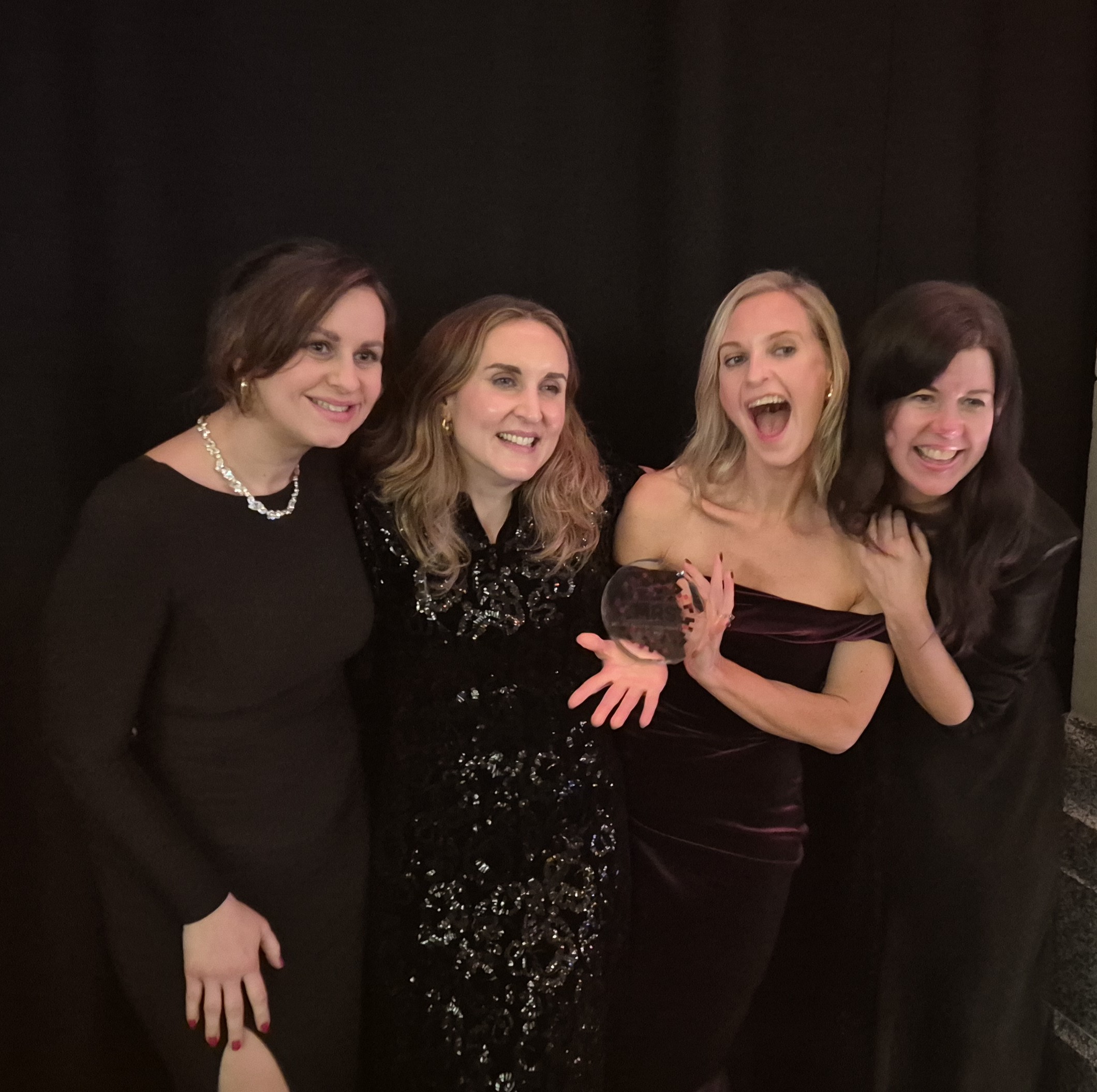
    A fabulous time was had by all 4 finalists of this year’s Award for Independent Consultants at last night’s MRS Awards Dinner in London.

    Huge congratulations go to our WINNERS:

    Wren Insight: Hannah Beech and Judith Terry 

    Reimagining the Students’ Union: transforming student life through a closeness-led segmentation

    Wren Insight partnered with Reading Students’ Union (RSU) to revolutionise how a Students’ Union should operate in 2025 and beyond.  Our ethnographic and closeness-led approaches informed and embedded a statistically rigorous and richly human segmentation, with students’ emotional needs at its heart. The research challenged outdated assumptions about student lives and directly shaped a new RSU in strategy, structure and services – including better targeted student provision and refocused commercial planning.  This enabled RSU to secure increased University funding and deliver to its purpose of helping all students to live a happy and fulfilled life at University.

    https://www.linkedin.com/company/reading-students-union/ 

    https://www.linkedin.com/in/hannah-beech-9bb60752/ 

    https://www.linkedin.com/in/jude-terry-b68b6914/

    Congratulations also go to our Highly Commendeds;

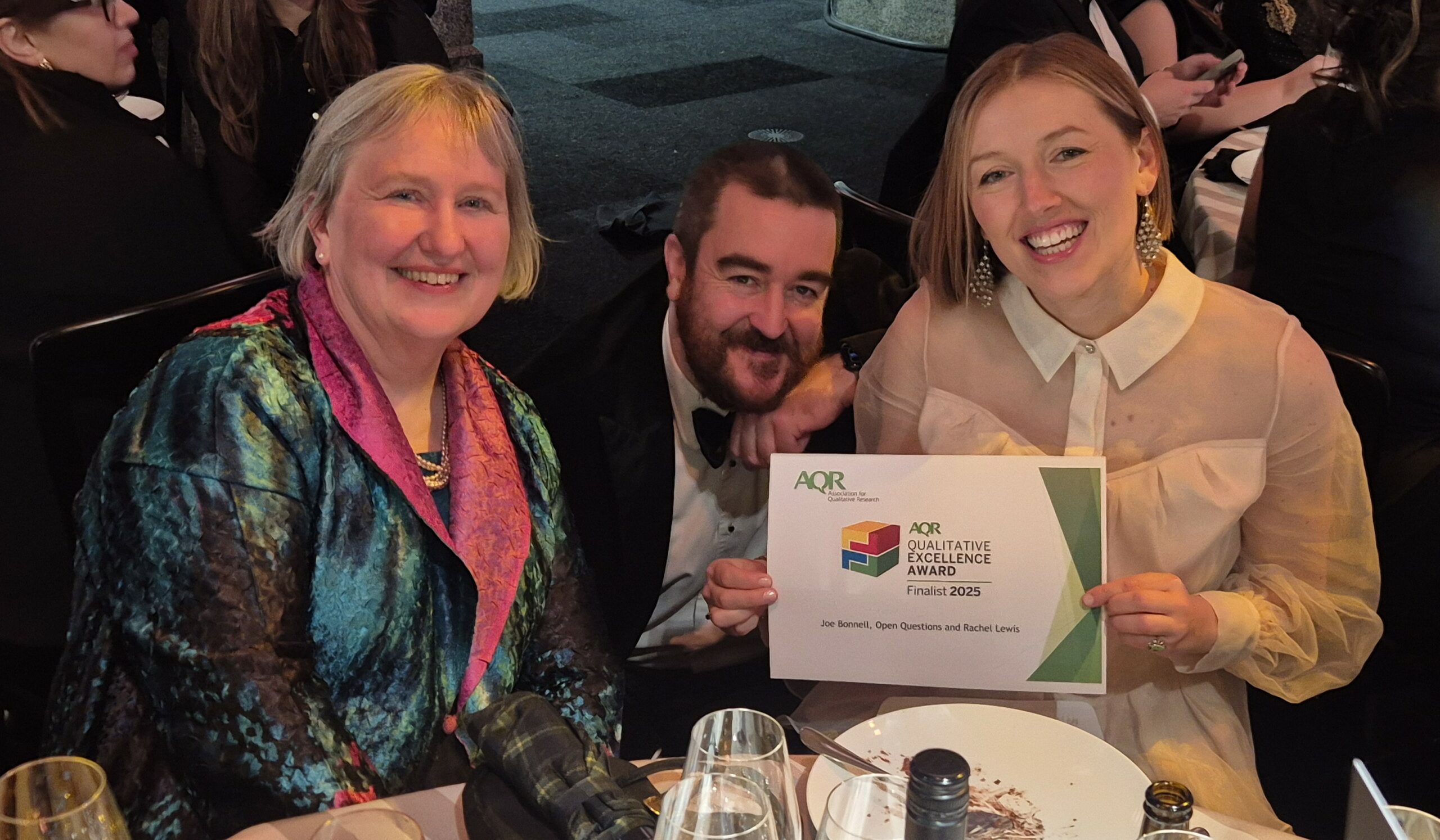
    Open Questions: Joe Bonnell and Rachel Lewis:

    XLH UK Patient Stories – How ethnographic research led to life-changing results for people living with XLH


    This research was conducted by independent researchers Joe Bonnell and Rachel Lewis. It was commissioned by XLH UK, a charity that supports people living with X-Linked Hypophosphatemia (XLH), a rare genetic condition.

    Our client had two research objectives:

    • Generate better awareness and understanding of XLH
    • Provide evidence to NICE / NHS England as they were appraising a game-changing new drug, Burosumab, to receive funding for use in adults with XLH on the NHS

    This was a creative, sensitive and collaborative research project that combined excellence in the use of qualitative interviews and the innovative use of visual ethnography and co-production. Our work had major impacts for our charity client, XLH UK, and the people it supports. Our research contributed to a “life-changing” new drug being approved for funding on the NHS for use in adults living with XLH. Our key analytical theme, “navigating uncertainty”, became central to our client’s strategic vision, shaping the way they frame and offer support, and guiding their communications. Our work also had a significant impact on our participants — feeling confident and empowered to share their personal stories publicly for the first time. This project highlights the impact that a small, specialist team of experienced, independent researchers, dedicated to working equitably and flexibly with our participants and our client, can achieve.

    All outputs from the project are public domain, and you are welcome to view them here and here.

    Joe Bonnell | LinkedIn  Rachel Lewis | LinkedIn

    All Finalists’ submissions here 


  • RECORDING: Prompt Design 2.0: Getting More Useful Results from AI Tools

    RECORDING: Prompt Design 2.0: Getting More Useful Results from AI Tools

    We welcome back ICG member Ramona Daniel to run this follow-up Knowledge Share.


    This follow-up Knowledge Share builds on our foundations session (https://theicg.co.uk/recording-prompt-design-for-independent-researchers-foundations/) and focuses on getting more reliable, useful results from AI tools like ChatGPT or Claude. It’s about moving beyond writing prompts to thinking critically about what the AI gives you back.

    We’ll look at:

    • Simple ways to check and verify the accuracy of AI outputs
    • How to refine prompts when the first answer isn’t quite right
    • Using short, structured prompts to save time and reduce repetition
    • Turning ad-hoc tasks into reusable prompt templates for everyday work

    This is a practical session for independent researchers and consultants who already use AI tools and want to use them with more confidence and consistency – no technical knowledge required.

    Watch the recording here 

  • Award for Independent Consultants 2025: We Have Our Finalists

    Award for Independent Consultants 2025: We Have Our Finalists

    From amongst several superb submissions this year, the ICG judges, alongside those from the MRS, whittled the Finalists down to 4 worthy contenders:

    In business name alphabetical order:

    Deep Blue Thinking: Nick Bonney

    Putting the Art Back into Artificial Intelligence 


    This submission was about harnessing the power of AI alongside rather than instead of sound qualitative research techniques. By using AI-driven sentiment analysis we were able to create structure around a large volume of customer feedback forms and open up the kind of modelling to our SME client (a regional security company) that previously would have been out of reach for a business of this size. However, we would not have got the same results if we’d simply been ‘slaves to the algorithm’ . By combining the machine learning with qualitative techniques such as call listening, spending days with engineers and customer depth interviews, we were able to develop a much more nuanced approach. Perhaps more importantly, we harnessed the power of face to face workshops to ensure we got buy into the results both from senior management and from team leaders. This has enabled the prioritisation of six key customer experience workstreams, each designed to address to a key underlying churn driver.

    https://www.linkedin.com/in/nickbonney/

    Open Questions: Joe Bonnell and Rachel Lewis:

    XLH UK Patient Stories – How ethnographic research led to life-changing results for people living with XLH


    This research was conducted by independent researchers Joe Bonnell and Rachel Lewis. It was commissioned by XLH UK, a charity that supports people living with X-Linked Hypophosphatemia (XLH), a rare genetic condition. Our client had two research objectives:

    • Generate better awareness and understanding of XLH
    • Provide evidence to NICE / NHS England as they were appraising a game-changing new drug, Burosumab, to receive funding for use in adults with XLH on the NHS

    This was a creative, sensitive and collaborative research project that combined excellence in the use of qualitative interviews and the innovative use of visual ethnography and co-production. Our work had major impacts for our charity client, XLH UK, and the people it supports. Our research contributed to a “life-changing” new drug being approved for funding on the NHS for use in adults living with XLH. Our key analytical theme, “navigating uncertainty”, became central to our client’s strategic vision, shaping the way they frame and offer support, and guiding their communications. Our work also had a significant impact on our participants — feeling confident and empowered to share their personal stories publicly for the first time. This project highlights the impact that a small, specialist team of experienced, independent researchers, dedicated to working equitably and flexibly with our participants and our client, can achieve.

    All outputs from the project are public domain, and you are welcome to view them here and here.

    Joe Bonnell | LinkedIn  Rachel Lewis | LinkedIn

    SMPL Research: Poppy Reece, Sean Marks, Maura O’Malley

    Real voices informing real change for women’s safety


    SMPL Research evaluated two women’s safety initiatives for MOPAC and TfL – an impact evaluation of the Women’s Night Safety Charter, and process evaluation of a safety audit programme led by members of the community trained as researchers. We used traditional research methods alongside creative digital ethnography to amplify lived experience. Our insights helped shape improvements to future safety audits and informed strategies to embed inclusive, community-led approaches to make London safer for women and gender-diverse people.

    https://www.linkedin.com/company/smplresearch

    Wren Insight: Hannah Beech and Judith Terry 

    Reimagining the Students’ Union: transforming student life through a closeness-led segmentation


    Wren Insight partnered with Reading Students’ Union (RSU) to revolutionise how a Students’ Union should operate in 2025 and beyond.  Our ethnographic and closeness-led approaches informed and embedded a statistically rigorous and richly human segmentation, with students’ emotional needs at its heart. The research challenged outdated assumptions about student lives and directly shaped a new RSU in strategy, structure and services – including better targeted student provision and refocused commercial planning.  This enabled RSU to secure increased University funding and deliver to its purpose of helping all students to live a happy and fulfilled life at University.

    https://www.linkedin.com/company/reading-students-union/ 

    https://www.linkedin.com/in/hannah-beech-9bb60752/ https://www.linkedin.com/in/jude-terry-b68b6914/


    More info about the Award can be found here. 

  • How Digital Conversation Analysis is Transforming Social Listening: A Methodological Revolution

    How Digital Conversation Analysis is Transforming Social Listening: A Methodological Revolution

    Article by ICG member John Habershon PhD


    Social listening has always promised brands deep insight into what consumers really think. But in reality we’ve been stuck with an uncomfortable choice: either use automated sentiment analysis that barely scratches the surface, or manually analyse samples so small they can’t possibly capture the full richness of what people are actually saying online. Over the past year, I’ve developed and refined an approach I call Digital Conversation Analysis (DCA) – a methodology that fundamentally changes what’s possible with social listening data. Using advanced AI tools, including Claude from Anthropic, DCA lets me analyse tens of thousands of social media conversations with the same interpretive depth I’d bring to a traditional qualitative study. Most social listening projects give you either shallow automated metrics or deep analysis of small, potentially unrepresentative samples. Neither approach really captures what consumers are saying. DCA bridges this gap by combining the scale of automated analysis with the interpretive sophistication I’d normally bring to qualitative research. This isn’t automated sentiment scoring. DCA involves my active direction throughout the analytical process. I design the inquiry, interrogate emerging patterns, test hypotheses, and exercise judgment at every stage. Claude handles the processing scale while I navigate the research questions.

    Answering the ‘Why’ Questions

    Traditional social listening tells you what is happening – sentiment is declining, mentions are increasing, certain topics are trending. But understanding why consumers feel a certain way, why they choose one brand over another, or why particular issues matter to them? That’s typically required direct qualitative inquiry with relatively small samples. DCA changes this. Because I can analyse conversational data at real depth, it reveals the reasoning, motivations, and contextual factors that consumers articulate in their own words – at scale.

    Implications for the Research Industry

    For research buyers, this represents an opportunity to extract significantly more value from social data. Questions you’d previously have answered with limited samples or superficial metrics can now be explored with both depth and breadth.

    Looking Ahead

    Digital Conversation Analysis represents my response to a fundamental challenge in social listening: how to analyse online conversations at scale without sacrificing the interpretive depth that makes qualitative research valuable.

    Here is a link to the longer version on LinkedIn

  • RECORDING: Book Group- ‘The Way We Talk Around Here’ by Gill Ereaut

    RECORDING: Book Group- ‘The Way We Talk Around Here’ by Gill Ereaut


    Join author Gill Ereaut, alongside ICG member Judy Taylor who’ll lead a discussion about this book that shows how your organisation’s culture shows up in your language and why it matters.

    Judy says…

    If you work with companies who are aiming to improve workplace culture and communication, or if you are responsible for advising clients on how they communicate with their staff, about their brands, to their consumers, The Way We Talk Around Here is well worth a read.

    It’s great for qualitative researchers to understand how and why language is the data of culture. By being able to decode language and its influence, it helps highlight how it also sets invisible rules and parameters that affect how we are perceived and how we perceive others.  Reading this book can change how we speak, read and listen. The book outlines clear strategies for leaders to adopt more relevant and meaningful cultural norms through the language they use. The book focuses on linguistics, and provides insights into how small linguistic changes can transform a business or brand culture. It’s great to apply some of her wisdom to running focus groups and depth interviews too, and especially apply it when completing ethnographic work.

    Extract from the Amazon summary:

    The unspoken rules and unquestioned assumptions that make up an organization’s culture are so well hidden that, once we become insiders, we stop noticing them. They’re just ‘the way we do things around here’.  Examining an organization’s language is a powerful and practical way to shed light on its culture.

    Gill Ereaut describes how to uncover organizational and team cultures through paying close attention to the language used and adopted by insiders.

    • How researchers and ethnographers – and those helping organisations – can spot language patterns to identify unconscious rules and norms

    NB Gill Ereaut is a linguistic consultant specializing in analyzing corporate cultures and their effects. She founded UK consultancy Linguistic Landscapes Ltd in 2002, pioneering the commercial application of language analysis to organizational challenges.

    More info

    ‘The Way We Talk Around Here: How your organization’s culture shows up in your language and why it matters’ is shortlisted for the People, Culture & Management category in this year’s Business Book Awards. Run annually, the awards celebrate the work of authors who have shared their industry or market knowledge, experience, and expertise in published book form. The category People, Culture & Management is for books focused on improving people skills, management and working environments.

    Amazon link: https://amzn.eu/d/9xjVnLm

    LinkedIn Live interview : https://www.linkedin.com/events/meetour2025bbafinalists-gillere7356325971311923201/theater/

    Recording of Book Group session is here 

  • The Great Digital Divide: How East and West Approach Technology Integration Differently

    The Great Digital Divide: How East and West Approach Technology Integration Differently

    Article by ICG member Felicia Schwartz 


    Insights from recent consumer research reveal fascinating cultural differences in how we welcome technology into our daily lives

    The “Extra Arms” Philosophy

    In a recent consumer test for an innovative audio product, we uncovered a striking difference in how Eastern and Western consumers view technology’s role in their lives. When Chinese participants described their ideal smart device experience, one phrase stood out: “It should feel like I have extra arms — when my hands are busy with chores, it can play the music I want without me needing to operate it.”

    This wasn’t just about convenience. It revealed a fundamental philosophy where technology becomes an extension of the human body and mind — seamlessly integrated, anticipatory, and almost invisible in its operation.

    Emotional Connection vs. Functional Reliability

    Chinese consumers spoke about technology with emotional language that suggested deep personal relationships. One participant described their ideal smart home setup as making them feel “quite connected to it… like there’s this thing that somehow understands my routines and emotions.” They expected devices not just to respond to commands, but to learn patterns, anticipate needs, and even provide emotional surprises.

    German consumers, while equally sophisticated in their technology adoption, approached it from a different angle. Their focus centered on reliability, craftsmanship, and long-term value. When discussing smart features, German participants consistently emphasized compatibility and longevity: “It all needs to work, it needs to be compatible, otherwise it won’t be useful for me.”

    The Innovation Paradox

    Interestingly, both markets showed appetite for innovation, but their definitions differed significantly. Chinese consumers eagerly embraced the concept of AI that could “anticipate needs instead of just responding” and showed enthusiasm for features that hadn’t been invented yet, asking questions like “Could there eventually be a platform for user-designed visuals?”

    German consumers, while appreciating innovation, filtered it through a lens of practical application and proven reliability. They wanted cutting-edge features, but with the assurance that “five years later the app didn’t really work as well anymore, then I wouldn’t really have much to do with the devices anymore.”

    The Ecosystem Expectation

    Perhaps the most telling difference emerged in how each market envisioned technology integration within their homes. Chinese participants naturally assumed any new device would become part of a broader ecosystem, connecting to existing smart home platforms and enhancing their current setup. They spoke fluently about voice assistants, multi-room audio, and coordinated lighting as baseline expectations.

    German consumers, while interested in smart home features, approached them more cautiously. They valued the option to use devices independently and appreciated having physical backup controls. The attitude seemed to be: “Smart features are welcome, but the core function must work perfectly without them.”

    What This Means for Global Brands

    These insights reveal that successful global technology products can’t simply be localized through language translation or regional pricing. The fundamental relationship between humans and technology varies significantly across cultures.

    Eastern markets appear more willing to let technology into intimate aspects of daily life — to learn personal patterns, make autonomous decisions, and even provide emotional support. Western markets, while embracing technological advancement, maintain stronger boundaries around autonomy and control.

    For product developers, this suggests the need for adaptive approaches: the same device might emphasize AI learning and predictive features in Eastern markets while highlighting user control and reliability in Western ones.

    The Future of Human-Technology Interaction

    What’s particularly fascinating is that neither approach is “more advanced” than the other. Chinese consumers’ willingness to integrate technology deeply into their lives enables rapid innovation and highly personalized experiences. German consumers’ emphasis on reliability and user control ensures robust, long-lasting solutions that truly enhance rather than complicate daily life.

    As technology continues to evolve, understanding these cultural differences becomes crucial for creating products that resonate authentically with global audiences. The future likely lies not in choosing one approach over another, but in designing systems flexible enough to adapt to different cultural relationships with technology.

    The question isn’t whether East or West has the “right” approach to technology integration — it’s how we can design products that honor both the desire for seamless AI assistance and the need for reliable human control.


  • Why We Might Be Witnessing a Return to the Spirit of Punk

    Why We Might Be Witnessing a Return to the Spirit of Punk

    Article by ICG member Hanna Chalmers



    Sameness is everywhere. And the internet is to blame.

    Much has been written about the plague of the global coffee shop, so called ‘enshittification’, AI eating (or reading) itself, the global TikTok ‘mewing’ of teenage boys, beauty standards that reduce all women to a Love Island model of smoothness, all lips and lashes. The colours of beige, putty, cappuccino from cars to leggings, brands that all spout the same words, if it has been ‘crafted’ and ‘artisan’ for the last five years, it’s now all about ‘joy’.

    It’s all so seamless and dull.

    We’ve reached a point in mainstream culture that has never felt less exciting.

    As a life long fan, watcher, non sneery participator and lover of #mainstreamculturethis is a hard truth to stomach.

    The algorithm, designed to serve us what we want to see (buy) and tempt us with what it thinks we might want to see, is driving us downwards into a spiral of sameness and echo chambers. At best, and most hopefully, we are served more of the niche content we are interested in, at worst algorithms suck us into new uncomfortable and sometimes sinister spaces.

    All the while, it’s watching what we look at, ready to flood our screen spaces with more of what we have half-heartedly browsed.

    This surveillance has, until now, been a price worth paying for many, the content vs ads balance felt worth it. But, as content creators are pushed to create blander content in order to get the brand deals – again we are seeing – people that we might have enjoyed watching in the past – become less idiosyncratic, less opinionated, less lively.  And in doing so, they become less interesting to watch, more cynical and more sales focused.

    But this surveillance, which is the pact we make as social users, whether as viewers or creators, is also becoming riskier. As the geopolitical climate hardens and becomes more divided – what we view, say or do, online is being more widely monitored. For most of us, similarly to the balance of content vs ads – this notion of surveillance has felt tolerable (less so in Germany where the long shadow of cold war surveillance tactics has impacted heavily on concepts of privacy).

    Recently, we have seen stories emerge of law makers attempting to access period apps in order to police women’s bodies. We’ve seen broadcasters lose their jobs for voicing their opinions. We also police our own reading material according to our preferences politically and culturally. And that means there is a shrinking of exchange, less open conversations across the boundaries.

    A lot has been said and written about this process of silo-fication. Less is said about the consequences of losing out in being curious about other people and different cultures.

    As a Gen X’er (just) I grew up in the 90’s rave scene. We were unsurveilled – we raved, we did what often looks like quite mad dancing, many took ecstasy and gurned (!) for hours in fields all over the country with no thought given to how they looked – male and female alike.

    Looking at the footage (there are so many pages/accounts on social media devoted to old 90’s rave footage) as someone that was there, and that has experienced what life was like before the internet, it still has the ability to sort of surprise me – it looks totally anarchic – unfettered, unconstrained, nuts and genuinely joyful.

    Watching this old rave content with Gen Z’ers (my teenage sons) it’s sort of incomprehensibleto them to have lived in a moment that was so unsurveilled. And it brings into sharp relief the constraints of today’s level of surveillance and self policing.

    Is it any wonder clubs are dying a death – when everyone now feels so self-conscious, body and internally focused, rather than outward looking?

    But as we see in trend cycles, as mainstream culture feels like its imploding in on itself, interesting things, as ever, are emerging at the edges. It’s more or less off-line – or at the very least in private online spaces, – it’s smaller, more DIY in sensibility, and it’s a safer space for its participants.

    What we’re seeing is a return to difference. There is real emotion, angrier music/art/media, a rejection of so-called perfection, more anarchic, non branded, not chasing ‘likes’, with an embrace of greater physicality, bodies that we simply inhabitrather than view from the outside in and outspokenness. A fuck you attitude, is just around the corner.

    And as a Gen X’er looking on – I can’t wait to see more.

    #enshittification #entertainment #massmarket #mainstreamculture #subcultures #offline #rageagainstthemachine #ai #punk #rave #politics #sameness


  • From Tapes to Tech: How Transcription is Evolving – and So Are We

    From Tapes to Tech: How Transcription is Evolving – and So Are We

    By Accu-Scribe Limited, an ICG long-standing advertiser.

    Accu-Scribe logo


    There was a time, not that long ago, when transcription meant sending out physical tapes in the post and waiting days, sometimes weeks, to receive a typed transcript in return. For researchers, agencies, and consultants, it was a slower world. But one thing was always certain: transcription was essential to capturing and analysing human insight.

    Fast forward to 2025, and the landscape has shifted dramatically. With the rise of digital audio technology, cloud computing and automatic speech recognition and generative AI, transcription can now be turned around in hours, not days. These technologies have brought undeniable benefits: speed, scale, and affordability.

    And yet, as many insight professionals know, speed is not always synonymous with accuracy. For example, while the current star of the show, AI, can do a lot, it doesn’t always pick up on nuance, clarity, or context. Speaker attribution can falter, key phrases may be misinterpreted, and the subtleties that matter to researchers can get lost.

    The Human Touch Still Matters

    That’s why Accu-Scribe continues to play an important role in today’s evolving ecosystem. For years, we’ve been known for our reliable, accurate, and human-led transcription services, and that remains at the heart of what we do.

    But we’re evolving too.

    As the demands of the industry shift, we’re combining the best of technology with the rigour of human expertise to deliver a suite of services designed to support insight professionals, agencies, and independent consultants in a fast-changing world.

    Our Evolved Service Offering

    Hybrid Transcription

    Our most popular new offering – a service that uses AI to generate a fast first draft, which is then checked and corrected by an experienced transcriber. It’s the perfect balance of speed and accuracy.

    Focus Group Plus

    A complete support package for qualitative research tailored to your company’s needs, offering speaker identification, optional keyword tagging, summary outputs, and rapid delivery – helping researchers make sense of group dynamics quickly and clearly.

    Analysis Plus

    Designed for those who want more than transcription. Our content analysis service turns transcripts into structured insights, including coding, thematic summaries, and highlight extraction.

    Excel Transcription

    When data comes in tabular formats or needs structured outputs, our Excel transcription delivers content that’s ready for use in spreadsheets, dashboards, or reports.

    Admin Support Services

    Our newest offering supports freelancers, SMEs, and boutique agencies with flexible admin help – from formatting documents to managing calendars – giving you more time to focus on growth and client delivery.

    Keeping Pace with Change

    We know the demands of transcription and insight work are changing – and so are we. At Accu-Scribe, our goal is not just to keep up, but to actively support our clients as they adapt and grow.

    By combining technology with human judgment, we’re helping to build a future where transcription isn’t just faster, but smarter – and where insight professionals can count on quality, every time.

    For more information, or to talk about how we can support your next project, feel free to reach out to us at info@accu-scribe.co.uk or visit our new website at www.accu-scribe.co.uk

    Accu-scribe Ltd – The ICG