Increasingly researchers are using collaborative whiteboards like Miro and Mural and private response tools like Menti to record and share insight, collaborate across teams and even use them with research participants.
This participatory session will focus on how ICG researchers have been using technology such as this.
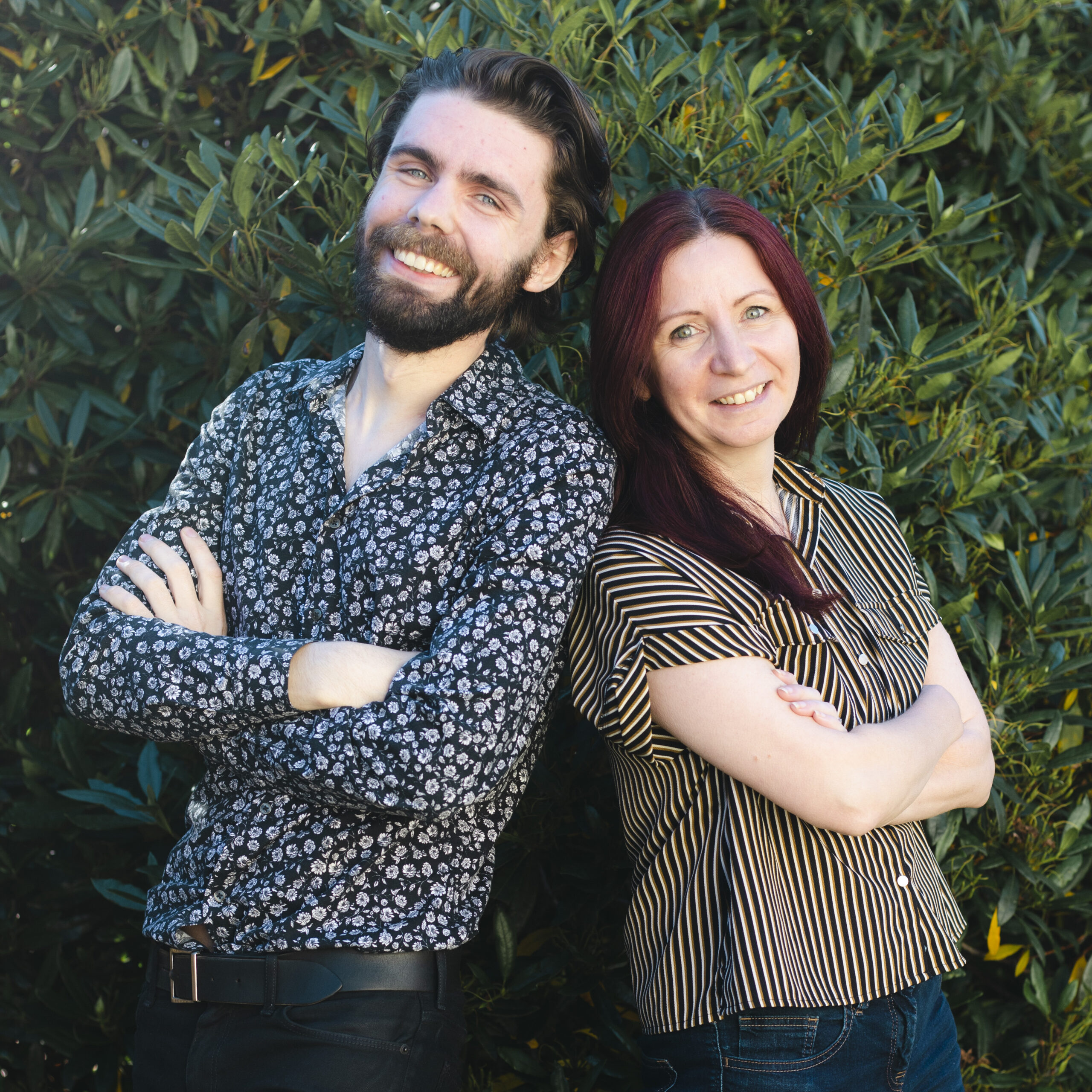
Spearheaded by ICG members Tom Woodnutt,Annabelle Philips and Karen Cooper, this session will be immersive and discursive. You’ll experience the platforms in real time and be asked to share whatever knowledge you have with others (those with no experience at all are also welcome, of course!).
This session came about from a recent e-group post and we hope that it will keep members up to date and informed.
How Qualitative Research Helped Virgin Pure Build A New Product Category
Virgin Pure is a drinking water dispenser that provides filtered water at the touch of a button (while reducing plastic waste). They face the challenge of having to build a new product category from scratch. Over two years, Feeling Mutual used a range of qualitative methods to inform senior management decisions from ethnography (to inspire advertising strategy), to UX lab-testing (to guide a website rebuild), depth interviews (for new product testing) and online and mobile qualitative co-creation (to help shape retention strategy). Virgin Pure’s CEO, Tom Stazicher said:
“Feeling Mutual’s insight drove a game changing 50%+ improvement in conversion rate on the launch of the new website and guided a restructure of the business around a new Customer Experience function”.
What Tom loves about being an independent consultant and his membership of the ICG:
Tom Woodnutt, Feeling Mutual
I’ve been independent for over 10 years. The main benefit to me is having more autonomy over my work and therefore life. Working for myself has given me more opportunity to work the hours that I want, with the clients that I like, using the methods I really believe in. As a father of a young child this has been vital to both our well-being.
This is my third attempt at winning this award – so I hope the old adage about luck holds true!
“The ICG has been critical to my business through the sage advice of its members, the contact recommendations they have shared and perhaps most importantly, the sense that we are not all at it alone.”
The ICG has some of the most talented and experienced researchers in our industry and we are delighted to have them recognised in the MRS’s awards process. The MRS/ICG Award for Independent Consultants, now in its sixth year, is designed to recognise the contribution of researchers who choose to work as micro-businesses rather than in a larger agency environment.
Now in its sixth year, the MRS/ICG Award for Independent Consultants has attracted some of the very best of independent consultants and micro-businesses.
This year we celebrate our four Finalists. Here’s a summary of each of their submissions.
Following the #Covid conversation using MR tools
Matt Gibbs, Bayes Price
Work on this project was inspired by the desire to promote our sector, develop new techniques, engage in peer-to-peer knowledge share, collaborate internationally, and try to make a positive contribution to society in general. Bayes Price were tracking the #Covid-19 conversation since Jan 2020. Gathering 200 tweets every 5mins, for free, via Twitter’s API. At the time of writing they’ve amassed nearly 25 million lines of unstructured text (tweets). This work used automated techniques, some new to MR, to provide a ‘forest-eye view’ of our Big Qual database. They applied Syuzhet Sentiment scores, the NRC Emotion Lexicon, Machine Learning tags, and track conversation sub-topics. They flowed data into existing MR tools, analysing and tabulating in a way only MR tools can! Outputs were connected to visualisations in Tableau and PPTX. The interactive visualisation is hosted on Tableau Public.
Bayes Price hope this project will promote innovation and collaboration across our industry, empower peers to access, analyse and visualise Big Qual databases, emphasize that the BI-world has challenges which MR’s tech & talent is a perfect fit, contribute to the World’s Covid insights, prove that collaboration can help ICG members punch way above our weight and, finally, inspire our peers to get involved in this ongoing project.
Using video to conduct research and deliver insight for NPD
Daniel Parker-Smith and Roseann Smith, The Word Is Out
This paper showcases a project completed in summer 2020 for a global branding and design agency, 1HQ. The project was an in-depth look at how people manage gut health and to find opportunities for new products that could be developed and introduced into the market by 1HQ’s client, a Blue Chip company with >$30bn turnover. The Word is Out communicated their research through video and were subsequently able to present a range of emotive consumer desires and considerations to the client in a time when conventional methodologies were unavailable due to the COVID-19 pandemic. In this niche area of the food market, they gave clarity and a clear focus to move forward with NPD.
How Qualitative Research Helped Virgin Pure Build A New Product Category
Tom Woodnutt, Feeling Mutual
Virgin Pure is a water dispenser appliance that provides filtered hot or cold water at the touch of a button. They faced the challenge of building a new category from scratch. Their CEO Tom Stazicher said: “Feeling Mutual’s insight drove a game changing 50%+ improvement in conversion rate on the launch of the new website and guided a restructure of the business around a new Customer Experience function. Over two years, Feeling Mutual used diverse qualitative methods to inspire management decisions from ethnography (to inspire advertising), to UX lab-testing (to guide a website rebuild), depth interviews (for product testing) and online and mobile qualitative co-creation (to shape retention strategy).
Digging Your Data – How Deep Blue Thinking Helped Doodlebone Champion the Independent Pet Trade
Nick Bonney, DeepBlue Thinking
The pet food category is dominated by large well known brands but bizarrely when it comes to accessories such as collars or harnesses, there is a very little brand affinity. Doodlebone were aiming to change that by establishing by building a brand that can not only cater to the mass market but also tap into new market segments e.g. more active or style-led products. Through a phase of social media monitoring and qualitative research with both dog owners and pet retailers, Deep Blue Thinking helped them refine the positioning both of their current ‘originals’ range and potential new range extensions. They then built a segmentation of their retailers using their own transactional data to help them understand which ranges they should be targeting at which retailers. They’ve enjoyed working with a growing, family-owned business such as this where they saw an immediate impact of the research they were running.
ENTRIES FOR THIS HAVE NOW CLOSED. FINALISTS HAVE BEEN ANNOUNCED
Have you got what it takes to shine? Share what you’ve been up to and let independent consultants reveal their value.
Open to any market research micro-business (3 employees or fewer). You must be an MRS and/or an ICG member (although you can join retrospectively after submission).
Free to enter. You have nothing to lose!
The 2021 Award is now OPEN FOR ENTRIES. Deadline for submissions is 5th July 2021
Do you run an independent research business? Would you like to showcase your experience and raise your profile in the industry? Why not enter the annual MRS/ICG Award for Independent Consultants?
Part of the annual MRS Excellence Awards, this annual award celebrates researchers who choose to work as micro-businesses. It is free to enter and is open to all independent researchers who are members of either the MRS or ICG and employ no more than three full time staff. It is designed to recognise the contribution of researchers working as independents and will be awarded to the researcher who demonstrates excellence in the delivery of research projects, development or application of novel research methods or contribution to a client’s business success.
Feel free to submit more than one application, and if you’ve entered in previous years, you can still enter again this year.
The four finalists will be announced in the Autumn and the winner will be announced in December.
We work hard to promote our four finalists to our members and contacts via our website, social media and webinar platforms. You have nothing to lose and everything to gain by entering.
Here are some tips to help you catch the judges’ eyes:
Think creatively about which subject to choose – the scope is wide and you should aim to demonstrate the depth and breadth of work that independents carry out. Ideas include, but are not limited to, case studies, original comment on technical or topical issues, thought pieces and developing best practice methodologies.
Read the criteria carefully – it might seem obvious but don’t miss out because of a technicality.
Don’t be swayed by papers submitted for other MRS categories – this is an opportunity for you as an independent to show how you’re different.
Use clear language that’s easy to understand – the judges have a lot of content to work through.
Think carefully about your 200-word summary – it’s an important part of your entry and likely to be the first thing the judges read.
Give yourself plenty of time to plan, draft and edit your entry and to get permission from any clients or partners that are featured.
Proof-read your submission carefully and get an overview from a trusted colleague as a second pair of eyes.
Use the resources and inspiration on the ICG website to help you.
Congratulations to ICG member Dan Young of Shed Research Consulting as the winner of the MRS/ICG Award for Independent Consultants 2020!
Dan’s submission was called ‘You don’t need new research to generate growth: how we used insight synthesis to help Primark address its biggest strategic challenge’. It was based on the old maxim of ‘use what you’ve got’ but with a very modern take.
Primark sales in Germany were down 3.2% – unfamiliar territory for a brand used to exponential growth – and the business had many different hypotheses as to why this had happened. Dan helped Primark build a “single version of the truth” by visiting past research, drawing on external data, identifying gaps, and recommending what needed to happen. This led to Primark improving its in-store experience, investing in ATL advertising for the first time in its history, and ultimately led to a reverse of this sales decline.
Of Dan’s submission, the judges said ‘This is a great example of investigative prowess using Critical Thinking in a very focused way to find the key insights and create a compulsive story to drive action. This is a sign of the future, and how research users will have to adapt to succeed.’
Recruitment company Cleverism has recently written an extremely interesting blog entitled ’18 best idea generation techniques’.
The blog which outlines the three stages of ideation, and then goes on to look at 18 idea generation techniques that can be used in workshops to inspire and challenge and that are engaging and fun to do.
Cleversm says ‘Ideas are things that come and go and fairly frequently too. However, the really great ideas usually spring unexpectedly in moments of inspiration. It becomes easier to come up with great ideas when we free ourselves from the mundane, everyday, conventional thoughts that take up the thought space in our brain’.
The three stages of ideation are;
Generation – creating a pool of ideas to address a specific problem or requirement
Selection – picking the best ideas
Implementation – take action based on the top ideas
The article then goes on to outline 18 different idea generation techniques – some of which are familiar (brainstorming, mindmapping, role playing) and some of which are less familiar (SCAMPER, synectics, morphological analysis, reverse thinking).
Useful ideas here for both enabling technques within groups, but also for client workshops and co-creation sessions.
Insight Intelligence is holding the Market Research Summit in May this year. In preparation for, and to provide a solid foundation for discussion, the company conducted an online survey with 102 market research professionals, asking for their views on how the market is developing, trends, challenges and threats. 45% of those that responded to they survey were clients, so the views of the end users are well represented.
Insight Intelligence has kindly given us persmission to reproduce the executive summary here, and you can read the full report by following the link and registering. We have also secured a 15% discount for ICG members to attend the Market Research Summit – look in the events section for more details.
The Evolution of Market Research – Executive Summary
"Asked for forecase future spend, there is a relaitvely postive outlook with respondents across all parts of the business expecting budgetory increased or at very least parity over the coming months. However, whether working client side or in an agency, research professionals are all concerned by the need to manage increasingly high business expectations and to achieve more with the budgets that they do have than before.
The respondents to this survey are relatively confident of their teams' ability to meet most of the challenges that they face. Whilst our heads of research and agency diretors are moderately confident that they have theright skills in place, there is a recognition of the need to continually adapt to meet an expanded remit and the perennial challenges of finding and retaining talented people. Clietns and agencies are united by one particular area where they lack confidence – how to integrate social media into their research approach.
In the brave new world of big data and cheap online research tools however, there is a recognition of common threats to the future of market research as a discipline: the procurement team's attitude to cheaper on-line research tools, the lack of understanding of the value added by a more experienced approach to research that this reveals, the lack of representation of the insight team on the board, the relatively low number of in-house insight teams who are given the responsibility of interpretating in-house data – all point to a need for agencies and in-house research teams to improve the way that they define the value that they add to business planning and strategy."
Other highlights from the report include:
Key client challenges include commercial pressures, growing revenue streams and the unpredictable business environmnet
Internally, clients are struggling to deliver greater insights and gain (and maintain) the skills to do so when techniques are changing rapidly. Equally, ensuring that the status of the insight role is valued is also important
Agencies feel that respondent recruitment, client focus on DIY research tools and procurement issues were making the market a challenging one. Budget reductions are a perennial threat, as is managing client expectations over what different approaches can deliver
Securing and retaining business in a highly competitive market are also issues faced by agencies
Despite all this, respondents (both client and agency side) are positive and confident in their ability to deliver research projects and adopt innovative approaches. The area where there is a lack of confidence was in knowing how to integrate social media into the research approach
Just less than half of clients thought that budgets overall would remain static for the next 18 months, with the remainder equally split between those who thought there would be an increase vs a decrease – but looking at the detail of these figures is interesting as different spend areas appear to be more or less robust
Most agencies thought that investment was likely to be static or grow overall in 2016
If you want to read the full report and look at the underlying detail then click here
Cookie Consent
We use cookies and process personal data to make our site work, for analytics, and for ads personalization. Some of this data is shared with our partners. Open the preferences panel to see which services we use and choose what you allow.
Cookie Preferences
Manage your cookie preferences below:
Essential cookies enable basic functions and are necessary for the proper function of the website.
Name
Description
Duration
Cookie Preferences
This cookie is used to store the user's cookie consent preferences.
30 days
Statistics cookies collect information anonymously. This information helps us understand how visitors use our website.
Google Analytics is a powerful tool that tracks and analyzes website traffic for informed marketing decisions.
Contains information related to marketing campaigns of the user. These are shared with Google AdWords / Google Ads when the Google Ads and Google Analytics accounts are linked together.
90 days
__utma
ID used to identify users and sessions
2 years after last activity
__utmt
Used to monitor number of Google Analytics server requests
10 minutes
__utmb
Used to distinguish new sessions and visits. This cookie is set when the GA.js javascript library is loaded and there is no existing __utmb cookie. The cookie is updated every time data is sent to the Google Analytics server.
30 minutes after last activity
__utmc
Used only with old Urchin versions of Google Analytics and not with GA.js. Was used to distinguish between new sessions and visits at the end of a session.
End of session (browser)
__utmz
Contains information about the traffic source or campaign that directed user to the website. The cookie is set when the GA.js javascript is loaded and updated when data is sent to the Google Anaytics server
6 months after last activity
__utmv
Contains custom information set by the web developer via the _setCustomVar method in Google Analytics. This cookie is updated every time new data is sent to the Google Analytics server.
2 years after last activity
__utmx
Used to determine whether a user is included in an A / B or Multivariate test.
18 months
_ga
ID used to identify users
2 years
_gali
Used by Google Analytics to determine which links on a page are being clicked
30 seconds
_ga_
ID used to identify users
2 years
_gid
ID used to identify users for 24 hours after last activity
24 hours
_gat
Used to monitor number of Google Analytics server requests when using Google Tag Manager
1 minute
SourceBuster is used by WooCommerce for order attribution based on user source.
Name
Description
Duration
sbjs_udata
Information about the visitor’s user agent, such as IP, the browser, and the device type
session
sbjs_first
Traffic origin information for the visitor’s first visit to your store (only applicable if the visitor returns before the session expires)
session
sbjs_current
Traffic origin information for the visitor’s current visit to your store
session
sbjs_first_add
Timestamp, referring URL, and entry page for your visitor’s first visit to your store (only applicable if the visitor returns before the session expires)
session
sbjs_current_add
Timestamp, referring URL, and entry page for your visitor’s current visit to your store
session
sbjs_migrations
Technical data to help with migrations between different versions of the tracking feature
session
sbjs_session
The number of page views in this session and the current page path
30 minutes
sbjs_udata
Information about the visitor’s user agent, such as IP, the browser, and the device type
session
Marketing cookies are used to follow visitors to websites. The intention is to show ads that are relevant and engaging to the individual user.
A video-sharing platform for users to upload, view, and share videos across various genres and topics.
Registers a unique ID on mobile devices to enable tracking based on geographical GPS location.
1 day
VISITOR_INFO1_LIVE
Tries to estimate the users' bandwidth on pages with integrated YouTube videos. Also used for marketing
179 days
PREF
This cookie stores your preferences and other information, in particular preferred language, how many search results you wish to be shown on your page, and whether or not you wish to have Google’s SafeSearch filter turned on.
10 years from set/ update
YSC
Registers a unique ID to keep statistics of what videos from YouTube the user has seen.
Session
DEVICE_INFO
Used to detect if the visitor has accepted the marketing category in the cookie banner. This cookie is necessary for GDPR-compliance of the website.
179 days
LOGIN_INFO
This cookie is used to play YouTube videos embedded on the website.