Topic: Qualitative Research

  • Not another Gen Z brief: Exploring the Older Adult Opportunity in Asia

    Not another Gen Z brief: Exploring the Older Adult Opportunity in Asia

    Developed Asian markets share a defining reality: rapidly ageing societies. Yet most brands persist in chasing youth, overlooking those with longer lives, deeper pockets, and rising cultural influence. To shed light on this huge opportunity, join fellow ICG members Drago Djourov and Scott Percival to hear key insights from their proprietary research — “The New Contract”. Their qual-quant study focused on the experiences of 50+ adults in Singapore and Japan through the lens of retirement. They’re also building on the learnings via a series of expert interviews from across Asia on their podcast – Potluck. This session will unpack the key dimensions that define the older adult experience in Asia — and reveal how brands can authentically engage this audience. With implications for any ageing market – and a challenge to help your clients see what they’ve been missing. Scott Percival Scott is the founder of Lore Consulting, based in Singapore. Lore focuses on learning what brands must know about people, cultures and categories to help drive decisions, inspire ideas and be part of the story. We work with selected local partners and associate researchers across Asia to deliver qualitative projects – with specialisms in brand, communications and UX research. Drago Djourov Drago left post-Communist Bulgaria to go to university in post-bubble Japan, make a stop in post-reunification HK, and then start an insights agency in post-LKY Singapore. Now, with a network of partners, he conducts research across Asia for London-based MNCs, Chinese startups or New York ad agencies. Most of his work is in travel, tourism and hospitality, but has experience across categories. Potluck Born in 2019, Potluck is the podcast that stirs up a unique flavour of people, culture and brands in Asia. As co-hosts, Drago and Scott speak with guests from across the brand, marketing and academic spheres. In 2025, we’ve rebooted the show – using it as extension of our thought leadership collaboration, beginning with The New Contract.

    Register for this session here 

  • The Value of Human-Led Research

    The Value of Human-Led Research

    ICG member Mark Hadfield recently wrote a couple of newsletters about a project that he conducted with the account planning group, looking at the value of human-led research.

    Essentially, it aims to ensure that qual research is still in the mix when it comes to writing the best brand strategies.

    You can read these articles here:

    Part 1: https://meetthe85.substack.com/p/how-to-unearth-strategy-magic?r=oupm3

    Part 2: https://meetthe85.substack.com/p/how-to-unearth-strategy-magic-the?r=oupm3

    Mark Hadfield | LinkedIn

  • Collecting Qual in a Quant Environment

    Collecting Qual in a Quant Environment

    Do you struggle to capture deep, qualitative insights within surveys that are primarily limited to quantitative, closed-ended questions?

    Join Senior Account Manger Oku Egho and discover how to collect real-time video feedback in your research through QuestionPro’s VideoAI solution. AI-driven emotion and sentiment analysis provides you with the flexibility to generate comprehensive reports and create snapshot views for instant insights. Specifically, this session will show you how to gain; ● Authentic insights: capture ‘the why’ through tone, facial expressions, and natural language ● Unified workflow: add qualitative depth without switching tools or platforms ● Compelling Storytelling: share human stories and video clips that resonate with stakeholders more than charts alone

    Register here 

  • The Value of Consumer Connection

    The Value of Consumer Connection

    Article by ICG member Morgan Arnell, Co-Founder of Mingle Connections 


    Most organisations don’t have a data problem.

    They have a distance problem.

    Despite more dashboards, trackers and reports than ever before, many businesses feel strangely unsure when it comes to the decisions that matter most. Teams debate. Alignment meetings multiply. Consumer or customer insight is referenced, but rarely felt. Somewhere along the way, the humans that buy your products or services become an abstraction and are rarely top of mind when decisions are being made.

    Ask yourself this:

    When was the last time your leadership team spent meaningful time with a real consumer — in their world, on their terms?

    For many organisations, the honest answer is rarely — or never.

    This distance has consequences. Brands lose relevance. Innovation misses the mark. Decisions slow down or default to what feels safe internally rather than what works externally. Consumer-centricity becomes something organisations talk about, not something they practice.

    Consumer Closeness is about closing that gap

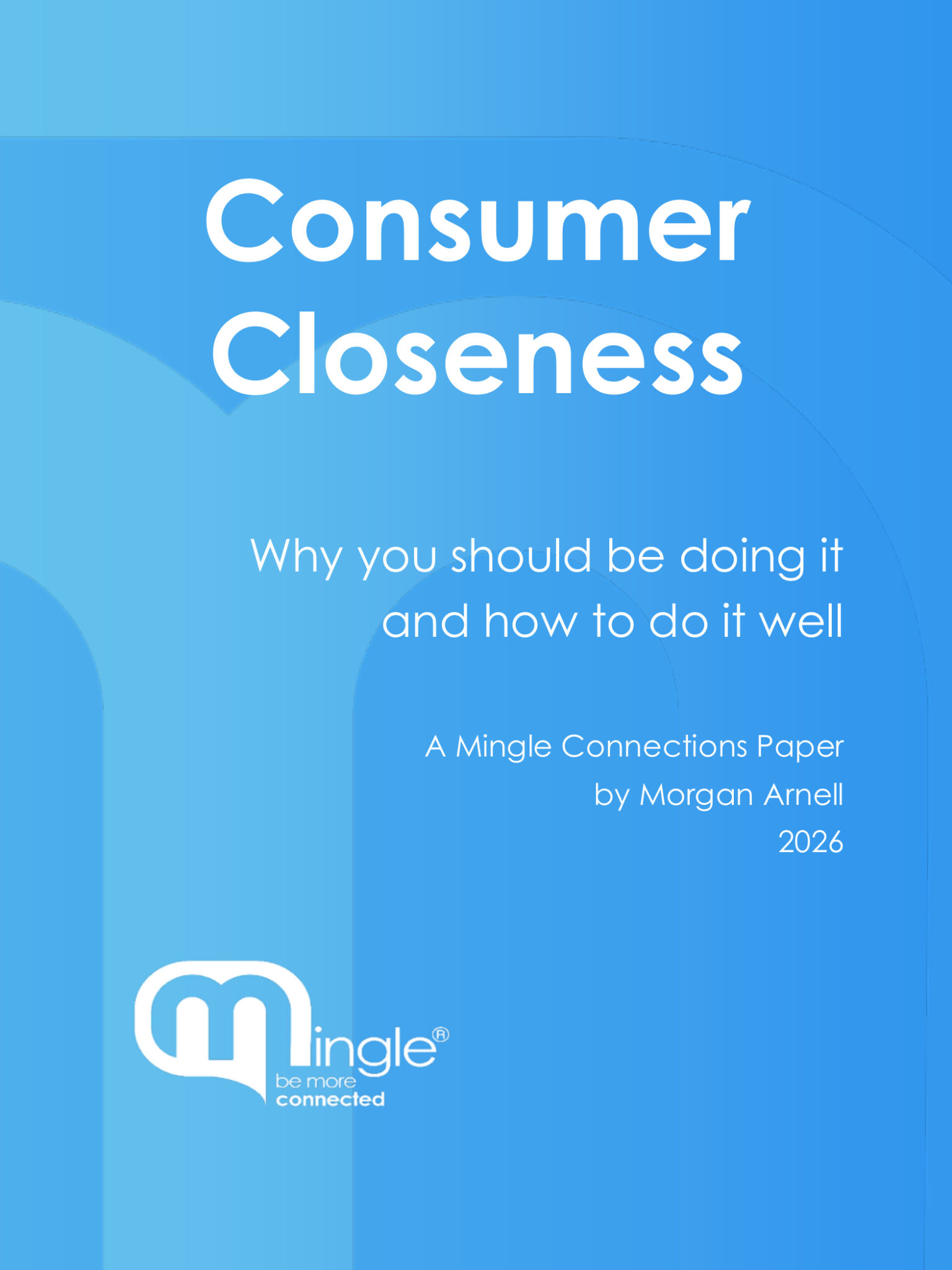
    At Mingle Connections that is all we do! In 30 years of leading it in organisations of all shapes and sizes our Co-Founder, Morgan Arnell, thought he’d put his thoughts into a short guide.

    If you work in the world of brands we’re sure the topic of consumer closeness has probably come up. Maybe it’s got pushed down the list of priorities or you haven’t felt confident enough to drive such activity in your business. We hope this paper can give you the confidence to make a clear business case for making time for consumer closeness and a draw from some of the tools and tips to do it brilliantly.

    Download this free paper to learn:

    • What consumer closeness actually is (and isn’t)
    • Why consumer closeness is more important now than ever
    • The tangible value it adds – not just to the process of insight generation but also to your culture and its impact on decision making
    • A framework for doing consumer closeness like a pro
    • Our top tips to make it stick in your organisation, shifting consumer closeness from a buzz word to something your business just does.

    It will give you the language and frameworks you need to make a real case for consumer closeness in your organisation. To bring the voice of the consumer into everyone’s mind and increase the impact those humans that buy your products and services have on the decisions you make. Because when consumer closeness is led well, owned proudly and linked to real business challenges, it creates impact that goes far beyond the moments of connection themselves

    Mingle Conssumer Closeness Paper


    e: morgan@mingleconnections.com

    w: www.mingleconnections.com

  • RECORDING: Win More Projects With AI-Moderated Qual – and Get Paid for It

    RECORDING: Win More Projects With AI-Moderated Qual – and Get Paid for It

    This is a Lunch&Learn session with Tellet


    In this session, Greg Burke from Tellet will show you exactly how AI-moderated qualitative research works in practice – from designing a discussion guide to analysing hundreds of in-depth conversations at once. You’ll see a live demo of the Tellet platform, hear how independent researchers and agencies are already using it to win new business, and learn how you can start including it in your own proposals.

    He’ll also walk through our new referral scheme for ICG members.

    About Tellet 

    Tellet is an AI-moderated qualitative research platform used by agencies, consultancies, and independent researchers worldwide. It lets you run hundreds of in-depth, conversational interviews simultaneously – giving you qualitative depth at quantitative scale, without needing a large team. For independents and small firms, that means you can take on bigger briefs, deliver faster, and offer something genuinely differentiated.

    Greg Burke

    Greg Burke is the CEO and co-founder of Tellet. Based in Amsterdam, he has spent the last three years building Tellet into a platform used by some of the world’s leading research agencies and brands, including Kantar, NielsenIQ, Vodafone, and KPMG. Greg is passionate about giving independent researchers access to the same tools the big agencies use.

    The referral scheme

    Tellet are introducing a referral arrangement for ICG members, valid throughout 2026. If you introduce a new client to Tellet and they go on to complete a qualifying project (minimum 100 participants), we’ll pay you a referral fee of €500 for the first project. For every subsequent qualifying project that client runs on Tellet during 2026, you’ll earn €250. There’s no ongoing commitment – just a straightforward way to earn from recommending a tool you already know works.


    Watch this session here

  • The Human Advantage in a Digital World – How to navigate the tension between convenience and connection

    The Human Advantage in a Digital World – How to navigate the tension between convenience and connection

    This webinar has been generously sponsored by Babble Research, Research, Meeting and Training Facility in Solihull Birmingham  Babble logo In a world which is increasingly digitised, and in an industry in which digital and agentic services abound, it’s hard to remember the power that in-person, real-life, human interactions can bring at every stage of the research journey. This webinar will act as this reminder. We welcome representatives from two industry initiatives, ‘Power of Presence’ and ‘The Fieldwork Collaboration Group’ to talk about their work, after which we will open up the discussion for your thoughts. Specifically, you will leave the webinar with;
    • A greater understanding of what these industry initiatives are doing – and how we can all benefit
    • An understanding of the sorts of arguments that you can present to clients who resist the human advantage
    • An appreciation of the power of industry collaboration (rather than competition)
    • A sense of hope about the future of the Insight sector.

    Power of Presence

    As research becomes increasingly digital and AI-supported, the industry is asking an important question: what role does human presence still play in insight? Drawing on findings from the Power of Presence (POP) industry survey, this session explores why connection remains central to understanding people. Rather than positioning technology and human interaction in opposition, POP highlights the importance of balance. In a screen-mediated world, the ability to connect, observe and engage meaningfully may be one of the most valuable and undervalued skills in modern research.

    The Fieldwork Collaboration Group

    The Field Collaboration Group (FCG) was formed in early 2025 by Richard Bryan, Managing Director at Qa Research and Kathy Tomlin, Managing Director at QRS Market Research. It is a collective of market and social research agencies’ across the UK that offer or use face-to-face research as a key service offering. The aim is to grow the volume of interviewers, particularly in low coverage areas across the country. Since the Covid-19 Pandemic the volume of face-to-face interviewers and recruiters has declined significantly, with many at the time deciding to retire or find other forms of employment. Some parts of the country have a very low volume if any interviewers at all, which affects our industry’s ability to fully meet client demands for this methodology when required. The face-to-face research method is critical to accessing parts of the population that are harder to reach via online research methods. It is able to target very specific local geographies and therefore fulfil survey quotas that other methods struggle to achieve. The main goal of the FCG collective is to boost face-to-face interviewer numbers by 100-200 into the market and social research industry over the next couple of years. Interest in the group is continually growing with 16 companies actively involved. In March 2026 the FCG are running a pilot training session with prospective interviewers in Greater Manchester following a recruitment process in the region and working collectively to produce training materials. Following the pilot agencies across the FCG will share and discuss lessons learnt and agree improvements that could be made to the process. They will then select another region in the UK to deliver a recruitment and training session, focusing on a locality that has low interviewer coverage but continued high demand for this methodology. During the webinar Richard and Kathy will share more about the FCG and its aspirations and how others can get involved.

    Our Speakers:

    Cara Allan  Cara is a Director at Plus Four Market Research (and The Qualitative Lab, London SW19) with over 20 years of international qual and quant expertise. She is known for her quick grasp of complex issues and cutting through the noise to achieve clear, human-centred insight. Cara energises projects with creative thinking, combining methodologies to produce tailored approaches across sectors. She brings audience motivations to life and delivers sharp, actionable findings that inspire confident decisions and drive meaningful change. With an awareness of the need for an evidence base, Plus4 have supported the POP campaign delivering a pro bono industry survey. Richard Bryan Richard is Managing Director of Qa Research a full service social and market research agency operating in a range of sectors including transport, education, utilities, health and social care, agriculture, environment, and tourism. Qa offers a wide range of online and offline qual and quant research services. A key part of Qa’s offer includes face-to-face surveying, often as part of multi-mode projects or as the only method on a project. Richard worked with Kathy Tomlin as a joint founder of the Field Collaboration Group (FCG) to bring the industry together to help boost the volume of interviewers in low coverage areas of the country. Richard chairs monthly online meetings with the FCG and provides advice on strategy. He also chaired a smaller group of FCG members to focus on developing the process and materials for training new interviewers. Sam Grey Sam is Managing Director of i-view London and has worked in market research for over 24 years. Beginning her career in recruitment and fieldwork operations, she has supported both qualitative and quantitative research across a wide range of sectors. Sam now leads one of the UK’s most awarded viewing facilities and is the founder of the Power of Presence (POP) campaign, a collaborative initiative bringing together UK viewing facilities to champion the value of face-to-face research. Her work is grounded in the belief that insight is created through human connection, and that as research evolves, empathy, interpretation and presence remain central to its impact. Kathy Tomlin Kathy is Managing Director of QRS Market Research with over 30 years’ experience in the industry. As a fieldwork specialist, Kathy initially started as a telephone interviewer and mystery shopper before her career spanned into all methodologies and areas of the business. Operationally, it has been impossible to ignore the sharp decline in UK based interviewers following the Covid pandemic and its resulting impact on fieldwork coverage, quality, and cost — issues Kathy believes are critical to the long-term sustainability of face-to-face research. As a joint founder of the Field Collaboration Group (FCG), Kathy is responsible for overseeing the group’s operations and co-ordinating its first recruitment pilot in March ‘26. Boosting interviewer numbers and maintaining a quality field force is imperative for safeguarding the long-term survival and future of face-to-face interviewing in an evolving research landscape.

    Register for this session here

  • RECORDING: AI for Discussion Guides

    RECORDING: AI for Discussion Guides

    This Knowledge Share will be presented by ICG member Jay Zaltzman and is sponsored by Indeemo.


    A lot has been said about using AI for qualitative analysis and report-writing, but what about using AI to prepare for qualitative research? In this Knowledge Share, Jay Zaltzman will share how he used ChatGPT to help design the methodology and write a discussion guide for a sample research project. You may have heard the expression that the first focus group is “like the first pancake” – it rarely comes out quite right and you frequently end up tweaking the discussion guide afterward. AI may be able to help figure out in advance which questions might “fall flat” and how to rewrite them.

    Jay Zaltzman

    Jay Zaltzman is based in Palm Springs, California, USA. He is a frequent presenter at research conferences and a past president of the QRCA. He writes an email newsletter called Research Tidbits – short, digestible tidbits about the world of marketing and market research, available here: https://bureauwest.com/subscribe . And more information about Jay is available here: https://www.linkedin.com/in/jayzaltzman/

    Watch this session here

  • Focus groups without the friction (experience a live online focus group from both sides of the room)

    Focus groups without the friction (experience a live online focus group from both sides of the room)

    Experience a live online focus group from both sides of the room.

    High Tech Development (HTD) is running a Lunch and Learn session as an online focus group within their flagship qual platform, HT Meet. HT Meet is not a meeting platform alternative. It is a qual research environment designed for insight teams who require simplicity, reliability and strong data protection. You may join in this Lunch&Learn demo in one of two ways:
    • As a participant: Take part from the respondent’s view. 10 spots available. (No incentives or food, just good conversation 🙂  REGISTER AS A PARTICIPANT HERE (note we will email you the login a few days before) 
    • As a client observer: Watch the group as clients do, interact privately through chat, submit questions to the moderator, and join a live debrief at the end. REGISTER AS AN OBSERVER HERE (note we will email you the login a few days before) 
    What we’ll explore:
    • What slows online focus groups down and how to remove that friction
    • How the observer backroom should feel when it’s built for research, not meetings
    • Managing privacy, translation and compliance without disrupting flow
    • What moderators really need in-session (and what they don’t)
    • How remote, mobile and facility research can connect in one ecosystem
    • Mobile UX
    • Breakout rooms, Lobby and Tech rooms
    What sets HT Meet apart:
    • Purpose-built for qual: Designed for focus groups, IDIs, and client observation – not business meetings
    • True researcher backroom: Separate observer audio, private chat, timestamped markers and instant multilingual playback
    • Privacy & compliance by design: Automatic PII-redacted transcripts, GDPR/TCPA-ready workflows and IP watermarking
    • Global, multilingual research:Native multi-audio channels with live language switching for observers.
    • Zero friction:100% browser-based – no downloads, logins or IT hurdles
    • Unified ecosystem: Seamless integration with HT Mobile (UX & ethnography) and HT Facility (in-facility qual)
    • White-glove tech support: Sessions run end-to-end so moderators can focus on the conversation
    About High Tech Development High Tech Development has been building secure, purpose-built video streaming technology for qualitative research since 2015. Our flagship platform, HighTech Suite™, supports in-person and online focus groups, IDIs, ethnography, UX studies, and global streaming, all built on a foundation of security, speed, and simplicity. Our tools are designed specifically for Qual research workflows and offer advanced capabilities such as secure observer backrooms, real-time translation and multilingual audio channels, instant one-click participant access, blur and watermarking for IP protection, encrypted data transfer, and robust access controls. HighTech Suite™ brings together purpose-built products that support qualitative research wherever insight is created:
    • HT Meet: Remote live focus groups and IDIs with instant access, secure client viewing, real-time translation, built-in research tools, and immediate recordings.
    • HT Mobile: Global mobile streaming and fieldwork capture that enables teams to stream from anywhere in the world to anywhere.
    • HT Facility: High-quality in-facility and hybrid streaming with multi-camera support, multilingual audio, and a secure observer backroom.
    • HT Ethno: Mobile ethnography and in-the-wild capture including video diaries, in-home sessions, picture-in-picture, online UX recording, and multi-device streaming with real-time translation.
    • HT Insights: AI-powered analysis with automated clip generation, summaries, and smart tagging.
    Built to Wall Street-grade compliance standards (GDPR, SSAE 18, SSAE 23, TCPA), HighTech Suite™ delivers seamless streaming, multilingual collaboration, and AI-driven analysis for research teams worldwide, so teams can focus on insight, not logistics.
    “When facility streaming failed in Germany, HT Mobile delivered a secure backup in minutes, streamed from a phone and saved the project” ICG memberJeff Deighton @ Insight-Engineers
    Speaker: Tom Meyritz – Global Partnerships Director Tom has been working on the commercial side of Insight for over 20 years, and has worked client side, agency side and supplier side. An enviable black book of end client contacts has helped agency partners win business with the likes of Diageo, Amazon, Coca-Cola – so if you need introducing to a new prospect that’s where Tom fits in. Speaker: Andrei Sarbu – Founder & CEO of HighTech Development Creator of HighTech Suite™ – the privacy-first platform for qualitative research. Speaker: Belma Lugic – Engagement Consultant | Client Relationships, Communication & Growth With many years of experience across client engagement, employee engagement and business development in the market research industry, Belma brings a practical, relationship-led approach that helps businesses build trust, loyalty and clear, consistent positioning. Speaker: Vlad Climase-Catrava  – Senior Client Success & Product Specialist Vlad assists research teams and moderators with conducting seamless online and in-person studies that are both secure and engaging. He supports every aspect, from onboarding and moderator training to resolving any unforeseen issues during sessions.

    REGISTER AS A PARTICIPANT HERE

    REGISTER AS AN OBSERVER HERE 

    High Tech Development
  • Using AI for Discussion Guides

    Using AI for Discussion Guides

    This Knowledge Share will be presented by ICG member Jay Zaltzman and is sponsored by Indeemo. A lot has been said about using AI for qualitative analysis and report-writing, but what about using AI to prepare for qualitative research? In this Knowledge Share, Jay Zaltzman will share how he used ChatGPT to help design the methodology and write a discussion guide for a sample research project. You may have heard the expression that the first focus group is “like the first pancake” – it rarely comes out quite right and you frequently end up tweaking the discussion guide afterward. AI may be able to help figure out in advance which questions might “fall flat” and how to rewrite them. Jay Zaltzman Jay Zaltzman is based in Palm Springs, California, USA. He is a frequent presenter at research conferences and a past president of the QRCA. He writes an email newsletter called Research Tidbits – short, digestible tidbits about the world of marketing and market research, available here: https://bureauwest.com/subscribe . And more information about Jay is available here: https://www.linkedin.com/in/jayzaltzman/

    Register for this session here 

  • Dr StrangeQual, or How I Learned to Stop Worrying and Love AI Analysis

    Dr StrangeQual, or How I Learned to Stop Worrying and Love AI Analysis

    By ICG member Arthur Fletcher
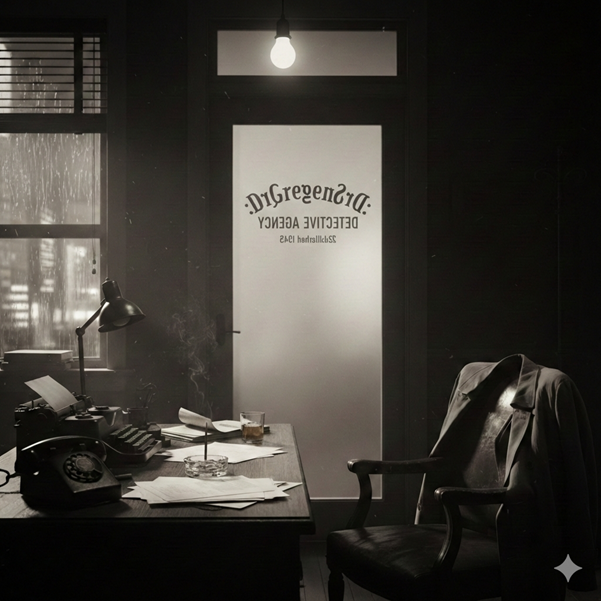
     

    For years I loved interviewing people and quietly dreaded everything that came afterwards. AI didn’t replace my craft – it gave it back to me.

    Most qualitative researchers I know love the same part of the job:

    • The interviews
    • The focus groups
    • The moments when someone says something that genuinely matters.

    I believe there’s an intimacy in good qualitative work that isn’t always acknowledged.  It’s a temporary contract between two people: one asking thoughtful questions, the other being given permission to share what they really think and feel.  The best qualitative researchers are great communicators, careful listeners and instinctive analysts.  We ask, listen, notice what’s missing and adapt our questions in real time.

    For me, a qualitative enquiry feels like detective work.  You don’t accept the first answer you’re given – you probe, circle back, test assumptions – following threads until something deeper reveals itself.   When a session ends well, you have a quiet sense of achievement:

    I did my job properly. I learned something useful, something insightful that will help my client understand their customers more clearly.

    And then comes the part I dread – the analysis.

    Re-watching recordings can feel like reliving your life, only slower. Transcripts are unforgiving – slabs of text stripped of tone and warmth. Making notes is laborious. Cutting, tagging and condensing hours of rich personal conversation into something coherent and insightful is hard work, and not always the good kind:

    • What should I keep?
    • What should I leave out?
    • How do I decide, with deadlines looming and energy fading?

    The irony is that this is exactly when we should be at our best. But the pressure doesn’t help interpretation and the grind doesn’t encourage curiosity. If I’m honest, there were times when the sheer weight of analysis dulled the joy I felt during fieldwork. If it weren’t for the analysis, I’d happily interview all day long.

    But then comes the presentation, the part we all look forward to.

    This is where everything comes together – where great questions and response driven probing turn into insights.  This is where clients see something they hadn’t fully understood before, the knowing nods of appreciation feel earned.  I have to admit there’s a sort of performative pleasure to it, even a little preening. We bask briefly in our feathered glory… before returning to our desks and the next round of transcripts.

    This is where AI changed everything for me:

    • Not as a shortcut
    • Not as a replacement
    • But as a partner

    I now analyse my qualitative work with AI beside me – tireless and attentive with a perfect memory of every word spoken in every session.  I can start at a high level, understand the overall landscape, and then choose where to go deeper. I can follow themes, test interpretations, explore contradictions and revisit ideas with fresh eyes.

    This is where the detective in me solves the crime – method, motive and opportunity.

    Working with my little AI friend feels less like trawling through material and more like continuing the conversation.  It’s an opportunity to question my respondents again, this time where I can see the whole picture at once.

    Crucially, AI gives me back the time I lost in lengthy and sometimes laborious video/transcript reviewing.  It gives me the time to think and reflect on the responses and do the parts of the job that made me fall in love with qualitative research in the first place – sense-making, interpretation and recommendation.

    My analysis is more comprehensive because nothing is forgotten and my thinking is sharper because I’m not exhausted by the mechanics.  I feel more like a researcher again and less like a data janitor.

    So no, AI doesn’t make qualitative research colder or more mechanical for me, it liberates me to produce work which is more comprehensive, more insightful and more valuable to my clients.

    It also did something far more surprising.

    It helped me stop worrying and start loving analysis again!


    (1) Arthur Fletcher | LinkedIn

    Arthur Fletcher, Author at The ICG