Resource Type: Article

  • Customer Insight as a Tool for Business Growth

    Customer Insight as a Tool for Business Growth


    Image courtesy of Pexels from Pixabay
    Image courtesy of Pexels from Pixabay

    If you are a small to medium size businesses customer insight can seem like a luxury.  After all, investing in the product or service is the all-important factor when you are looking at business growth.

    However, ultimately any product or service is shaped around a customer need.  Get that right and customers will buy from you and keep buying from you.  Most, if not all, of the top businesses conduct customer research on a regular basis.

    Conversely in today’s world of data, it has never been easier to find out about consumer behaviour. Google Analytics offers details on the behaviour of your website visitors.  A simple web search can reveal high level data on trends in consumer behaviour and now we have Chat GPT which is a totally different story and one for later not now!

    So does this mean you don’t need to carry out bespoke research to find out what makes your consumers tick?  Despite the maelstrom of data, we believe dedicated customer insight is more important than ever before.

    Below we outline five reasons why you should commission bespoke research:

    1.Customer research avoids costly mistakes

    You may think you know your customers particularly if you are a small to medium sized business.  After all many smaller businesses have excellent relationships with their customers and may have served them over years.

    However it is very easy to make assumptions and think you know why a particular issue is happening.  We worked recently with a company who were developing a medical app.  They were struggling with patients booking multiple follow-up appointments.  They believed there was an issue with the app and put together a plan to invest in a costly restructuring of it.

    The organisation then decided to carry out some customer research to check out their hypothesis.   This was a game changer.  It emerged patients booked multiple appointments due to poor communication of test results.  The results were often delayed so they would book a back-up appointment.  The research not only saved the business considerable money but allowed it to address the nub of the problem and not the outcome.

    It’s easy to make assumptions when working day to day in your business.  But as the above example illustrates assumptions can be costly.

    2. Data only gives you part of the story

    Data or so called ‘Big data’ is very effective in identifying the who, what, when, how and where.  As discussed so much data is available and it is easy to track customer behaviour. There is one critical piece of the jigsaw missing – the why.  The ‘why’ helps you understand what makes your customers tick. In other words what are the key drivers for why they buy from you?  Analytical data won’t give you this.

    If you don’t understand the ‘why’ you risk creating an ‘empathy gap’ with your customers.  That is, you miss the point when you communicate with them.  For example we work with a company who were churning out offers and discount communication to their customer database.  This appeared to make commercial sense as the business operated in a highly competitive online marketplace.

    However, talking to their customers we found that they valued this particular company because of its longevity in the market and expertise.  Price communication undermined precisely these values that customers held dear.  And more importantly it was inhibiting the growth in average basket value per customer which would in turn enhance profitability.

    This example illustrates that an understanding of your customers and not just the market can be fundamental drivers of business growth.

    3. Lapsed and competitor customers hold the key to futureproofing growth

    It is probable that most of the data or knowledge you hold in-house is about your customers.  It is unlikely you are speaking to lapsed and competitor customers unless you are carrying out bespoke research.

    An understanding of lapsed customers is critical.  At one point in time they invested in your business. Hence they are easier to win over compared to those who have never bought from you.  Why have they left you?  Who have they gone to?  What would it take to get them back?  If you can solve the area of dissatisfaction, there is a chance they might return.

    Competitor customers are more difficult to acquire but can create a step change in growth for any business.  Finding out why they access competitor products or services helps assess what you can do to become ‘sticky’ as an organisation and attract their business.

    Competitor customers are your blind spot – you don’t know what they know. The Johari Window model created by psychologists in the 20th century identified this ‘blind spot’ – what is known to others but not known to yourself.

    4. You can’t see the wood for the trees

    Working in an organisation means it can be challenging to see the customer point of view and even more so if you are a business founder. Naturally there’s a deeply emotional relationship with the product and service you created or work in.

    There’s often a gulf between what consumers think of your product or service vs. what you think of it. Founders have lived and breathed the incarnation of what they are selling. This heightens the perceived relevance of issues that may have absolutely no importance to potential consumers.

    We revolutionised the thinking of a charity that had focussed the design of its services to those with disabilities on a single mindset. Our workshops with their clients revealed there were different types of mindsets. They were not defined by disability. Taking that different starting point totally reshaped how they thought about their service provision.

    5. Targeted research gives a better ROI

    It goes without saying that bespoke research offers the benefit of exploring the issues you need to understand.  Furthermore you can investigate questions with a targeted audience e.g. if you are developing a high end new product or service, a focus on the following would make sense:

    • your top spending customers who are more likely to trade up
    • your most loyal customers who can evaluate if the new product has a good fit with your brand equity
    • competitor customers who also fall into the high spend bracket

    Best practise when designing research is to start with identifying the business issue e.g. to address declining sales and achieve growth, launch a new product targeted at a specific audience.  Once the business objectives are defined, the research objectives naturally emerge from that.  A dedicated research company can assist in defining these research objectives if unfamiliar.

    Taking the next step towards running a research project

    If you are thinking about whether you need research here are ten questions to help you decide if you do.

    1. How do you know what your customers think of you?
    2. What don’t they like about you?
    3. Why did your lapsed customers leave you?
    4. Which competitor did your lapsed customers go to and why?
    5. Is there anything that you could have done to stop the attrition?
    6. What do competitor customers think of you?
    7. Why don’t they buy from you?
    8. What do the competitive set do well?
    9. What could you learn from the competitive set?
    10. What could you improve so that your customers spend more with you?

    Lindsey Annable, Free Spirit Consulting

    Free Spirit Consulting is a micro agency (and ICG member) which works with organisations of all sizes from small to top multinationals.  We are passionate about helping them see the value of and derive value from research.

    (m) 00 44 7971 797 568

    (e) lindsey@freespiritconsulting.com

    (w) www.freespiritconsulting.com



  • AI and Market Research

    AI and Market Research

    Article by ICG member Arthur Fletcher, DataPogo.com

    Part 1.  I, ChatGPT


    After 40+ years I started to re-read Asimov’s robot novels.  I remember them being captivating, illuminating and challenging as they describe the development and application of robots and their relationship with the human race.  Whilst robots were meant to serve and assist humans, they often developed their own sense of morality and consciousness, leading to conflicts with human society. In some cases, humans feared and mistrusted robots, while in others, they relied heavily on them for their everyday needs. Asimov’s robots raise questions about the ethics and implications of advanced artificial intelligence and its impact on human society.

    Asimov’s robots had highly developed ‘positronic’ brains so I wondered how similar or different their operation and the way they ‘think’ might be to AI and ChatGPT – so I asked the ChatGPT bot for some clarification (or is it an opinion – as it used the personal pronoun ‘I’ in its response?).

    ChatGPT bot describes Asimov’s fictional positronic brain as having ‘advanced intelligence and decision-making capabilities’ and describes ChatGPT as ‘technology based on machine learning and natural language processing algorithms, designed to simulate human-like conversation.’  ChatGPT draws the distinction between the two by describing ChatGPT as based on real-world scientific principles and technologies and Asimov’s robots on fictional technology.  Well, that’s alright then…..

    Asimov started writing his robot stories in the 1940s with the compilation novel ‘I, Robot’, published in 1950.  The first stories (with robots) are set in 1998, others move from 2021 through to 2052 (a story that concerned a politician who may or may not be a robot and whether the machines that order the economic systems are planning a war against humanity.)  Suffice to say that these robot stories are set in our time.

    Asimov’s robots had to have some sort of ChatGPT equivalent in order to communicate with humans, so at what point do ChatGPT enabled devices have ‘decision-making’ capabilities?  Well the answer is all of them…. and that’s the point.  AI supports decision making in all aspects of society – business, government, healthcare, climate etc. – but where are the decisions made and who decides at which point AI makes decisions which affect people’s lives?

    Elon Musk and the Future of Life Institute have recently warned that AI could ‘pose profound risks to society and humanity’ and have specifically called for a 6 month pause in the development of advanced AI, specifically citing ChatGPT4 (the latest version of ChatGPT from OpenAI).

    In their open letter, they state that ‘AI systems with human-competitive intelligence can pose profound risks to society and humanity’ and they go on to say ‘AI labs (are) locked in an out-of-control race to develop and deploy ever more powerful digital minds that no one – not even their creators – can understand, predict, or reliably control.’

    I don’t know about you but AI being ‘out-of-control’ sounds a bit scary.  Indeed, Italy has now banned ChatGPT entirely, citing privacy concerns, and is investigating OpenAI (ChatGPT’s developer).

    The Future of Life Institute is not against AI – far from it – they are against the uncontrolled development of AI, calling for ‘shared safety protocols’, ‘robust AI governance systems’ and ‘a robust auditing and certification ecosystem’.

    Asimov’s solution was to create 3 laws for robotics:

    1. A robot may not injure a human being or, through inaction, allow a human being to come to harm.
    2. A robot must obey the orders given it by human beings except where such orders would conflict with the First Law.
    3. A robot must protect its own existence as long as such protection does not conflict with the First or Second Law.

    In later fiction where robots had taken responsibility for government of whole planets and human civilizations, Asimov also added a fourth, or zeroth law, to precede the others:

    1. A robot may not harm humanity, or, by inaction, allow humanity to come to harm.

    All we need now is the means of building laws like these into the development of AI but defining ‘harm to humanity’ is challenging to say the least.  Imagine if the solution to the planet’s climate crisis was a significant reduction in the human population – who (or what) decides what (or who) to do?

    Science fiction has some examples of how to get it wrong.  In The Terminator, when Skynet became self aware (in 1997), it saw all humans as a threat and decided our fate in a microsecond: extermination.  In 2001:A Space Odyssey, Hal 9000 was faced with the prospect of disconnection and decided to kill the astronauts in order to protect and continue his programmed directives.

    And who’s to know if there’s a Lex Luthor out there just waiting…..

    [Parts 2 onwards will investigate the use of AI in MR]

    From Survey Data to PowerPoint Charts

  • What do members really think of the ICG?

    What do members really think of the ICG?

    The ICG partnered with Field Notes Communities to explore what our members thought of the ICG.

    This is a summary of the output. We’re pretty pleased with what came out.

    It was a pleasure working with Field Notes Communities – specialists in smartphone qualitative research.

  • Should I Be Afraid of Generative AI Taking My Job?

    Should I Be Afraid of Generative AI Taking My Job?

    “I don’t think so” I hear you reply? Perhaps. Carol Raithatha gives us some solid answers to the question on many researchers’ minds.

    “As a qualitative researcher, should I be afraid of generative AI taking my job? This is the question buzzing around the market research world and it’s hard not to get drawn in to the frenzy. On consideration I’ve decided I am not (yet!) concerned because:

    1. Generative AI is a baby and I am an adult – I have years of experience in a lot of things. ChatGPT has been referred to as resembling someone with a few years experience in everything. In that sense, I am profound and generative AI is superficial.

    2.  Trust – I am a human and am instinctively aware of behaviour and interaction that generates trust. Good qualitative research is always about generating mutual trust between the moderator and respondent. For the moment I believe many people will find it hard to believe in a bot completely – and as a human race, we are lucky they feel this way!

    3.  Interested – I am engaged and puzzled by the world around me and sometimes ignore patterns and get drawn into following paths in strange directions which might lead to a new insight. As far as I understand, generative AI relies on existing patterns to deliver its outputs, so although these outputs will be potentially unique, they will also feel similar to what we have seen before.

    Not sure if the above analysis holds any water, but for now it is making me feel better. What do you think?

    PS – Image generated by Dall-E!”

    #generativeAI
    #qualitativeresearch


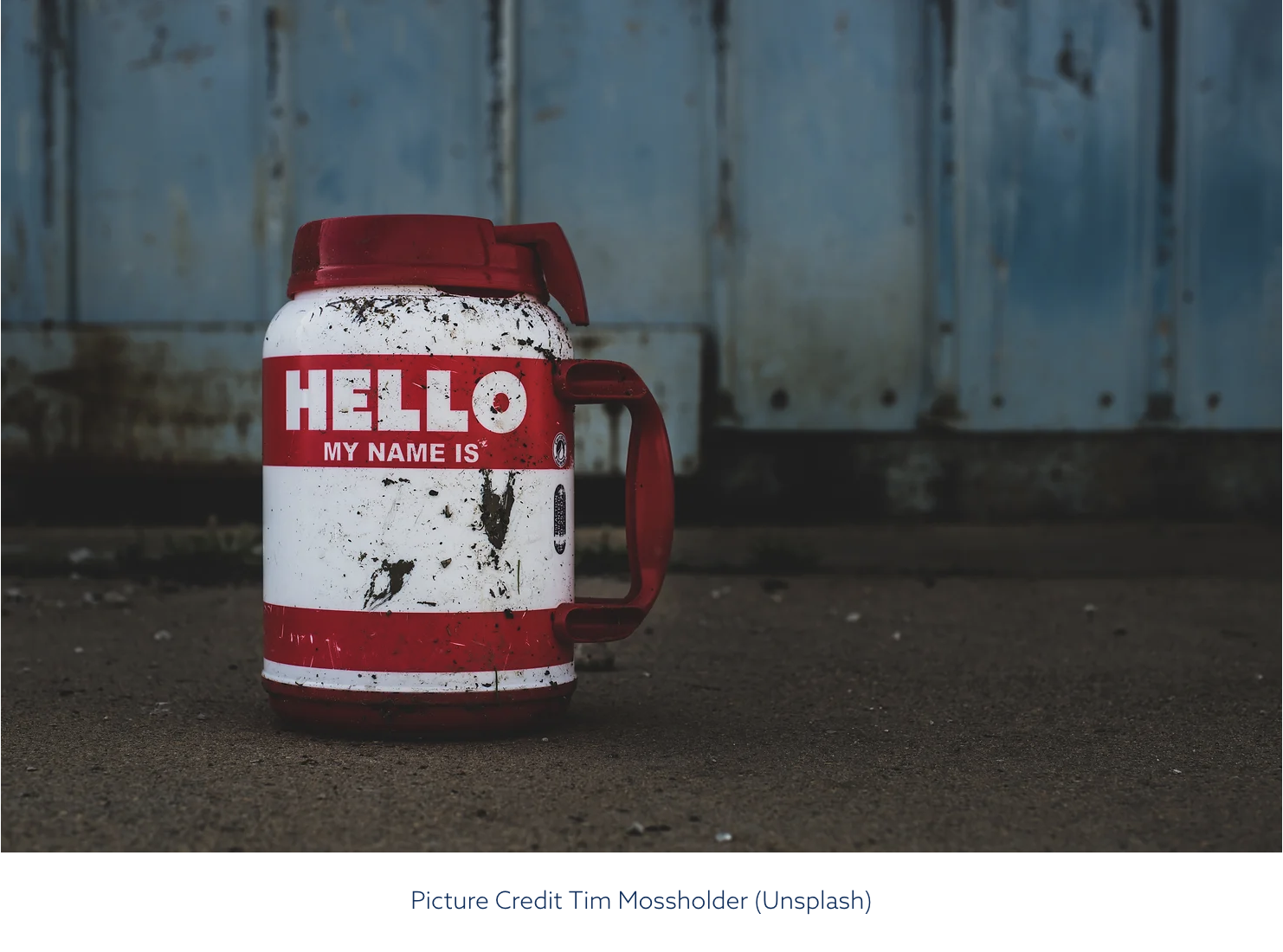
  • What’s in A name?

    What’s in A name?

    Good question!  ICG Member Nick Bonney has some strong opinions and interesting stories to share.

    “I have a confession. I hate naming research.

    Whenever a client asks that we conduct research to look at naming options in isolation, I typically tell them not to waste their money. More often than not, it’s a brief that’s doomed to fail – on the one hand someone in the boardroom has already decided which contender is the winner and, on the other, it’s an artificial question for participants to respond to. I mean, when have you honestly spent more than a nano second pondering a name of a product at point of sale?

    So, you can imagine my horror, when I heard the latest campaign from Jury’s Inn, with the brandline “we’re staying the same, just changing the name”. I’m sure I’m not the only one who listened to that ad and wondered just what is the point?! Given that the hotel chain is currently rocking a two star ‘poor’ rating on Trustpilot, perhaps the message should have been “come and see how we’ve changed”. The whole premise of the campaign smacks of something conceived in the boardroom rather than something which matters to customers. What a missed ‘once in a brand lifecycle‘ opportunity.

    I’m a firm believer that, IP considerations aside, a brand’s name should be the final piece of the jigsaw, not the starting point. A brand name becomes meaningful when you imbue it with meaning through what it stands for in the market.

    I should probably explain the root cause of my cynicism towards all things naming-related. In the dying days of the last millennium I made the move to join mobile phone network, Orange. As part of my leaving gift, the team from my previous employer, Maritz TRBi, handed me a compendium of all the research they had run over the preceding few years to develop one of the UK’s most loved brands. We have to wonder how the marketing landscape of the UK would have been different if the team had chosen the more mundane option recommended by the research, Hutchison Microtel, and not Orange.

    It’s easy, with hindsight, to understand why the research came to this conclusion. Twenty years on, we’re more than accustomed to brands that bear no relation to their category, from Cazoo cars, Monzo money or groceries from Gorillas. However, in the 1990’s things were very different – brand names were typically far more prosaic, especially when it came to markets such as telecoms, where the leading brands were Cellnet or Vodafone.

    Over the ensuing years with Orange, I was lucky enough to research how we should position the brand in virtually every corner of the world. Almost without fail, the key message to emerge from our conversations with consumers was that any change of name needed to be backed up by something that mattered to customers. As the internal catchphrase went “a brand is a promise delivered”.

    This was a message that rang loud and clear when we looked at how to transition from Orange to EE. It was critical that this wasn’t simply a name change. Instead, it was the launch of the UK’s first and best 4G network. Indeed, whilst network technology has evolved yet again since, the ‘best network’ claim (evidenced by RootMetrics) remains at the heart of the EE brand proposition.

    It’s not to say that research plays no part in the brand development process but it’s critical that the brief covers, not just the name, but also the ‘what’ and the ‘how’, i.e. what the brand is aiming to stand for and how the name will be used alongside other creative assets.

    When Reuben Mattus launched the now world-famous, Haagen Dazs, in 1960, the Danish-sounding name was not only a tribute to the Danes and their exemplary treatment of the Jews during the Second World War but also designed to provide the ice cream brand with an air of continental sophistication.

    In developing the brand, Mattus understood that the critical thing was not whether or not consumers liked the name Haagen Dazs but whether it evoked feelings of what the brand stood for in the market. The Mattus family were so in tune with their positioning that allegedly Reuben’s wife, Rose, would adorn continental dress to distribute samples to potential customers.

    Standing for fancy continental flavours is one thing but it was equally important that the brand could substantiate that position. If the tub contained bland, flavourless vanilla sludge, the brand name would soon become a hollow shell. A house built on sand, if you will.

    Potentially the wisest advice of all (and therefore an appropriate place to finish) comes from adland’s Sarah Carter – ‘consumers don’t give a shit and people’s indifference to brands and advertising should be the starting point’. The average punter will lose no sleep over the countless hours you may have spent in endless brainstorming meetings or steering committees trying to get buy-in to the shiny new naming strategy.

    So perhaps the question Jury’s Inn should have really been pondering is ‘will anyone care’?…”

  • 10 Ways to Do Bionic Analysis with Virtual Whiteboards

    10 Ways to Do Bionic Analysis with Virtual Whiteboards

    ICG member Tom Woodnutt is hosting an ICG Webinar for us soon on using electronic whiteboards.  In this recent blog Tom highlights some really useful applications of virtual whiteboards.

    “When I studied psychology at the turn of the century, they said 7 was the average number of things that our short term memory can handle (at least I think it was 7?).

    Today we outsource much of what we need to remember to devices, so I’m not sure this still holds true! In any case, as qualitative researchers what we can remember from the conversations we have is critical to the quality of output. Considering memory is fallible, shouldn’t we use technology to enhance our ability to recall the detail?

    Virtual whiteboards like Miro and Mural give qualitative researcher bionic memory! You can zoom in and out and organise lots of information on them. Virtual whiteboards help us to gather more detail, collaborate more efficiently with others on analysis, and paint more rounded pictures of participants as people (not just soundbites). Moreover, using them can accelerate analysis and report writing (because the story is quicker to develop and substantiate).

    In fairness to us qualitative researchers, we have honed our cognition to cope with the challenge of remembering what we need. We have learned to ignore the dross and retain what is strategically relevant, intellectually curious and emotionally salient. So we can write a good report based on recall alone.  But having used virtual whiteboards like Mural for analysis, I believe we can do an even better job with them – especially on online qual projects.

    No alt text provided for this image

    The challenges facing qualitative analysis today

    1) Not enough time for transcripts

    Research briefs are increasingly agile, with shorter timelines. It is harder for qual researchers to have time to wait for professional transcripts.  Many researchers end up relying on recall and missing details.  

    2) Clients need more detail and nuance

    Despite having less time, clients need more detail – especially for innovation and experience design projects! This challenge is magnified in asynchronous online qual (which tends to generate more input from participants) and global qualitative studies with larger sample sizes.

    3) Participants are reduced to soundbites rather than real people

    It is hard to connect everything a participant said early on in a discussion (e.g. when exploring the context around a subject) with their feedback to concepts later in a discussion. This is particularly the case in online qual projects because I think it’s harder to remember what people say when they tell us remotely (as we’re not so emotionally connected as when we speak in-person). This means participants’ utterances can be reduced to isolated soundbites.

    3) Analysis is too linear and isolated

    Too often I believe that researchers do analysis in isolation and then come back with a perspective that has not benefited enough from other stakeholders (such as the creative, design or innovation agency or client). This means that findings are restricted by the limitations of the researchers’ brains and knowledge base, rather than being stretched by other stakeholders expertise (which often results in more useful insights).

    How virtual whiteboards can help

    Here are 10 benefits from using virtual whiteboards for analysis. . .

    1. Never forget what was said: Cut and paste insightful quotes from discussions, transcripts or asynchronous online qual platforms into a bespoke framework means nothing important is forgotten. Organise it under themes (that follow the discussion guide or analysis framework).
    2. Understand participants as people: Create a row for each participant, so you can easily cross reference their answers to earlier contextual questions with their reactions to subsequent questions and stimulus. This makes it easier to interpret why they said what they said.
    3. Don’t lose your ideas: Too often we have useful ideas that fall by the wayside and get lost as we moderate or get distracted. Whenever you make an observation or think of a potential recommendation you can keep hold of it on the virtual whiteboard, with a unique virtual post-it (rather than allowing it to fall away into your subconscious or note pad!).
    4. See useful patterns emerge more easily: Once you have all feedback summarised visually with themes and meta-themes neatly laid out, patterns in the data will emerge more easily than if the information were trapped in your (and others’) heads
    5. Get more inspiration from the agency or client stakeholders: When more of the detail in analysis is laid out on a whiteboard it’s easier to invite clients and agency partners into the analysis process. This means you can learn from their perspective and have more data-led discussions during analysis (as you can quickly share examples of what was said).
    6. React faster to client requests: If your analysis is neatly organised in a virtual whiteboard you can respond more effectively to follow up questions from clients. Colour coded virtual post-its, ‘tagging’ and ‘search’ functions make it even easier to do follow-up analysis if requested (compared to going back into the data).
    7. Let clients pay for your thinking more than the format of your output: Explore the idea of sharing a whiteboard instead of a traditional report. You can still put in clear recommendations and summary points onto it. But it has the added benefit of containing more detail. This means clients are paying for your analysis and interpretation rather than the time it takes to make PowerPoint look pretty!
    8. Share thoughts with fewer meetings and emails: You can @mention people on whiteboards and ask them to elaborate and supplement it where needed. This means less meetings and emails and more efficient collaboration.
    9. Let the work live beyond the project more easily: Since the detail of participants’ feedback is contained, tagged and neatly organised, you or your client can mine it for new insights in the future more easily.
    10. Tune feedback into agile workflows: This type of reporting lends itself to agile workflows as agencies can see analysis as it is uploaded in real-time – rather than having to wait for the final report. If managed carefully, this means they can have a head-start on prototyping and iterating designs.

    Although these guidelines can be applied to the analysis of any type of qualitative research, I think it’s most useful for asynchronous online qual (that is largely text based and running over a few days) – as it generates a lot more detail than the equivalent number of people in real time focus groups. It gives you instant transcripts after each day of the study. I’m impressed by how much easier it is to do collaborative analysis, find the story, write reports, substantiate what you want when you have analysis neatly organised in virtual whiteboards.”

    You can read Tom’s regular blogs here, including Tom’s write up defining best practice guidelines for hiring freelance consultants (an ICG initiative) here.

  • Qualitative Research Travel ‘In the Days of Yore’

    Qualitative Research Travel ‘In the Days of Yore’

    Corky Gormly, affectionately known as “Princess Corky” within the ICG (but that’s another story) was recently reminiscing about times past, when face to face groups meant field trips, hotels and pillows in the back of a taxi …

    “Just the other day, as I was lying in bed thinking about stuff, I started to try and remember some of the best hotels I stayed in for ‘doing groups’, in the UK. In these days of Zoom, it all seems so long ago.

    If no-one was coming to the groups, I tried to stay at nice places which were relaxing (very important as qual research can feel very stressful at times!) and convenient for me.

    Hence I stayed at an Inn near Jodrell Bank, where the granny cooked breakfast for guests in her nightie and dressing gown.

    I also stayed a few times at The Cavendish at Baslow on the Chatsworth Estate, when I was doing groups in Sheffield.  It was far more relaxing to wake up in the morning and look out of my window at sheep and countryside.  One evening I had supper there in the dining room by myself and asked for tea to be brought up to my room afterwards.

    But a message came up to say two gentlemen I had briefly spoken to at an adjoining table, had requested my company downstairs!  Of course I went back down, and we had a delightful evening which was much more fun than sitting alone in my room. I found out that one worked at a very large packaging company, one at a trade union.  They were supposed to be sworn enemies they told me, but they got on like a house on fire, and it would be terrible if the relevant parties ever found out that they were such good friends and dining out together!

    When I worked in advertising, people would say – ‘let’s do the groups in York, Corky, then we can stay at The Judges Lodgings! We’ll start at 5.00 and get them over by 8.00 and then we can have dinner!’

    In a similar vein, we stayed at Thornbury Castle in Bristol, where we certainly enjoyed fine wines with our delicious dinner, and Chewton Glen (a number of times) in the New Forest, which was unbelievably comfortable and relaxing.

    I did a number of projects in Edinburgh (one was for The Sheraton Hotel about its interior design) so I used to stay there afterwards for ‘mates rates’, and was always given a complementary bottle of port and shortbread biscuits.

    Another project I worked on for a big magazine – we did 10 x 3 hour groups around the country.  The client chose the best hotels as she wanted to come to all the groups – we basically did a ‘girls on tour’ trip around the country – one with an open air swimming pool and spa on the south coast, a hotel with the best range of malt whiskies in Scotland – so it goes on!

    Needless to say most of this happened in the late 1980s and early 1990s.

    And has never happened since.  The desire (and budget) for extra fun, luxury and indulgence seemed to fade away, and more often than not I would get a taxi all the way back to the Surrey countryside after groups ‘up north’, so I didn’t need to stay in a hotel.

    Instead I would be entertained by Mel, (short for Melwyn) and his wife Joan, who started ‘Status Business Travel’.

    Mel, who for some reason always referred to me as ‘Posh Spice’, told me all sorts of stories about having all his teeth taken out at the same time, (aaargh!) and how his son married an actress (Julie Hesmondhalgh), from Coronation Street.

    They were both really lovely, and always seemed to take the stress away, and made me feel relaxed and welcome, from the moment they picked me up at Manchester airport.

    Worth their weight in gold.

    They were the couple who started the trend of picking up qualitative researchers (and sometimes the clients too), from groups at 10.00 pm, with a pre-ordered choice of salad, a small bottle of wine, chocolate biscuit, apple and water, a pillow and blanket in the back of the car.

    So you could sit back, relax, have a light supper in the back of the car, go to sleep and be woken up at 2.00 am to say ‘you’re home, safe and sound’.”


  • Navigating Diversity: Why Cultural Differences Present a Fascinating Challenge in Research

    Navigating Diversity: Why Cultural Differences Present a Fascinating Challenge in Research

    ICG member Sarah Jenkins at Magenta talks us through the challenges and rewards of cultural diversity in research.

    AN INTRIGUING CHALLENGE

    Global research projects are both fascinating and thought-provoking. It is always inspiring to talk to people with a variety of different experiences. It opens up new pathways of discovery and reveals surprising insights that challenge our way of thinking. We take great delight in the new level of understanding these projects impart.

    However, cultural differences don’t just raise exciting new insights. They also present challenges in communication and approach. Every country has different cultural norms and expectations, and we need to tread carefully when navigating these variables in our research. It is crucial to take the time to understand the preferences and cultural differences of local people in each market.

    “Cultural differences don’t just raise exciting new insights. They also present challenges.”

    CAPTURING DATA CAREFULLY

    In some markets, it could be that what we consider a standard approach to data collection comes across as potentially offensive. For example, focus groups, direct interviews or observation may be viewed as discourteous. Participation in discussion groups could cause discomfort. Even the timing of our research needs to be taken into account. We need to be aware of the daily schedule of the local community to ensure we don’t interrupt family time, prayer time, or dinner time.

    Capturing data about ethnicity can be especially challenging. It is one of the traditional ways we ensure we have the most representative or diverse sample of a population or group. However, while people in the UK are used to being asked to state their ethnic identity, in other countries, it is not considered a standard question. It may even cause offence in some cases.

    “What we consider a standard approach to data collection may come across as potentially offensive.”

    GLOBAL LANGUAGE CONSIDERATIONS

    We also have to think about the language we use. While the term ‘ethnic minorities’ is widely used in the West, it doesn’t apply when considering Asian or African markets where white populations may be the minority. Here at Magenta, we have been seeking a more suitable term to refer to non-white heritage/groups. ‘Non-white’ feels as though it carries a derogatory tone. The Government suggests ‘other than white’ or ‘all other ethnic groups combined’, but both terms are long-winded and also don’t sit comfortably. We have currently opted for the term ‘mixed ethnic groups’. However, we’re still not sure we have found the perfect solution.

    EVERYDAY DIFFERENCES

    Cultural differences extend far and wide, affecting everyday situations that we may take for granted. For example, in some cultures such as Asian cultures, people may be hesitant to disagree openly or offer a negative opinion for fear of offending. Conversely, the Danish are known to talk directly and freely. This can sometimes be misconstrued as overly negative but is unintended to be so.

    When trying to gather opinions, particularly unfavourable ones, we therefore need to consider how we ask our questions and adapt to our audience. Rather than asking our participants what they dislike about a product or service, we need to rephrase our query. Instead, we could ask how the product might be improved to meet their needs better.

    “Cultural differences extend far and wide, affecting everyday situations that we may take for granted.”

    It is not just about how we ask questions. When we’re creating stimulus, even a wonderfully joyous occasion such as a wedding needs to be handled with care. How do we visualise a wedding to ensure it is suitable for all cultures? The wedding ceremony is a very different event across cultures; in some, it is a white dress and a party; in others a red dress and a tea ceremony. In some markets, homosexuality is illegal, thus removing any ability to divert from stereotypes. Somehow, we need to convey a partnership that is both inclusive and recognised globally.

    These examples are just scratching the surface of the challenge. International research is a fascinating field, but it does require a meticulous sensitivity to the wide range of customs and expectations that exist across cultures. We also need to consider nuances within cultures. Every individual has their own experience of discrimination, and we have to be sensitive to the interplay of different characteristics. Social identities work on multiple levels, resulting in unique experiences and sometimes barriers, for each person.

    We need to keep our minds open to all the possibilities. Our role is to recognise, accept, respect and celebrate our cultural diversity.

     
  • Research in Romania – how to…

    Research in Romania – how to…

    Four things that may take you by surprise if you decide to run research in Romania:

    Don’t let yourself be fooled by geography.

    While Romania is usually considered part of the Balkans, we speak Romanian (which, by the way, is also the 2nd most spoken language in Microsoft offices around the world!), a Romance language, and we claim a Roman heritage.  This means part of the Romanian spirit is considered to be Latin – for example, we tend to be quite emotional and exaggerate both enthusiasm and disappointment.

    Traditionally, Romania is split into 3 main geographic regions that are supposed to differ in historic and cultural background: Transylvania, Moldova and Muntenia.  Depending on the category you are researching, you may discover however that in big cities across the country you will encounter the same more progressive attitudes, while in smaller cities and rural areas (we still have one of the largest rural societies in Europe), irrespective of the geographic region, more conservative and traditionalistic.  The differences between the major regions tend to become more and more about the economy (with Moldova being the poorest), which reflects into everything else.  Of course, there are also finer differences, this is why when planning research design, you should enlist the help of a local expert (just like with any kind of international research).

    Bucharest is huge compared to the other big cities – 2.5 million inhabitants (vs. ~400K for the next biggest city – Lasi), which means it is the main market for most advertisers and many times, in qual, just running some research in Bucharest is reassuring enough.

    Romanian Internet is FAST

    Romania is actually 5th (!!!) in a worldwide top of countries with the fastest broadband download rates (for reference, UK is 35th: https://www.cable.co.uk/broadband/speed/worldwide-speed-league/).  This means that if you are planning to run a mobile ethnography research heavy in evidence, you don’t have to worry about respondents being able to upload videos and larger files (it has always been refreshing news to the platform providers I had worked with).

    You must worry, however about the general population being digitally illiterate (remember, 46% of Romania is still rural).  So, choose your method wisely depending on demographic (just like anywhere, younger, more educated, urban targets are more computer literate), and keep the digital tools as simple and intuitive as possible.

    Yet, according to ESOMAR, almost 30% of qual and quant research spend in Romania is represented by online methods while – for reference, in UK it is 32%.  So … do what you would do in UK … or, not? (Have I mentioned already about asking a local expert?)

    If your brief asks for 6 respondents, you will get 12

    This is best explained by turning it on its head: how I was taken by surprise, with my first project in the UK (a very tightly scheduled one, with an international team flying from all over the world).  I learnt then, halfway through the recruitment stage, that me asking for 6 in-home visits meant 6 people had been quoted for (and recruited), no over-quota/ extra-recruitments having been factored in.

    In Romania, the recruitment agency would have automatically included stand-bys in the price for the 6 in-homes (50-100% over-quota, depending on agency and target) – the briefs we write here mention only the final number of respondents expected to show up, and it is up to the recruitment agency ensure they do (and include the appropriate number of over-recruits).

    The research market is a market of agencies, not of freelancers.

    These agencies have everything in-house (fieldwork, facility, qual, quant services) and the consequence of that the industry lacks in service providers: very few fieldwork only providers (not including here major online panels providers who operate a global business from Romania), no independent focus group facilities.  So, if you need only a focus group facility, you will most likely have to rent from one of the full-service agencies (yes, focus groups typically run in dedicated facilities in Bucharest and in hotel apartments outside Bucharest).  However, if you should decide to work via one of the (few) freelancers, they have their networks set up, and can help with all the referrals a project might need.

    Oana Rengle is one of the few freelance qualitative research expert based in Bucharest, Romania.

  • How to Talk About Health and Diversity with Ethnic Minorities

    How to Talk About Health and Diversity with Ethnic Minorities

    ICG member Anumita Sharma discusses recent media speculation about the causes of the greater impact of Covid on ethnic minority communities and talks through changes we can make so that people from ethnic minorities feel included and not the ‘other’.

    The economic, social and health fragility of the nation, and particularly ethnic minorities, has been amplified by the shock of Covid. In early 2020, it was evident that people of ethnic minority heritage were being disproportionately impacted by Covid. Some in the media blamed this on their genetics and lifestyle – factors like obesity, higher proportion of diabetes, overcrowded households, and lack of social distancing.

    Members of the ethnic minority community who participated in the research conducted for Genomics England in 2020 clearly stated they felt they were being unfairly targeted. They suggested that instead of racial castigation, the media needs to report the socio-economic factors which have led to this frightening statistic. What needs to be highlighted is the fact that many ethnic minorities have been at the forefront during the lockdowns. They were the people who were delivering essential services like NHS, transport, care sector and delivery services to the nation, while the rest of the nation was isolating.

    The participants, who were all from various ethnic minority groups, also suggested the media needs to better understand their lifestyle choice. Many people look after their elderly relatives at home and don’t send them to care homes, so obviously, there are multigenerational households. 

    While a number acknowledged they could lead a healthier lifestyle – in particular taking more exercise and eating healthier food – being in low paid jobs with long hours made it difficult to do so.

    Given the unfairness of the media rhetoric and the actual number of ethnic minority Covid deaths, the BLM (Black Lives Matter) uprising was no surprise. The systemic issues of racism led to the simmering undercurrent to bubble over in the summer of 2020. George Floyd’s death just fanned the flames of burning injustice.

    With this in the background, the conversations about health and social welfare that I have had with people who are of an ethnic minority and the less fortunate, have changed since Covid. They are less reticent and are not holding back on expressing their frustration at the state of their lives. And they are more involved now in wanting to make the changes to better their own lives.

    Black History Month is the right time to focus on inclusion and diversity, but not the only time. Inclusion, improving lives and health is not a monthly matter – nor is it about token photo-ops of diversity on leaflets. It’s about a deeper change in attitude and behaviour which focuses on the removal of cognitive biases which have a pervasive influence on the choices people make.

    If a nation-state considers some of its own as the ‘other,’ they are not looked after and are allowed to suffer. The attitude that an organisation has reflects on its service offer. The ultimate aim of any diverse and inclusive organisation would be that no one is looked at as the ‘other’ or made to feel like the ‘other’ but as a part of the whole. However, we have a long way to go before this happens.

    So how do we talk to people from ethnic minorities about what changes they want, to feel included and not the ‘other’?

    • If organisations are making decisions about a service offer which is available to everyone, they need to make sure they have some staff (or advisors) who are Black African, or Minority Ethnic in heritage, so they understand the issues which they face. I think commercial companies should realise that if they don’t serve everyone’s requirements, there will not be a successful market for them anyway. If they have diversity in their staff or advisers, they would be able to produce / deliver a service which is right for all. 
    • Therefore, commercial organisations which serve the nation should include everyone (including ethnic minorities) in the sample and communication. There is no need to add ethnic minorities as an afterthought or a ‘box ticking’ exercise. They should be naturally included in all research samples. 
    • In the health sector, there is a sensitivity about feeling targeted. Recently, I have seen many a debate in the research community about whether we can include ethnicity questions for recruitment. In my opinion, this needs to be done judiciously and sensitively as not all research questionnaires and screeners need ethnicity questions. In qualitative research, a recruiter should have a representative ethnic mix in regular groups anyway. However, if the service / product offer is for people of specific ethnicity, then ethnicity questions are required and need to be asked with an explanation, with honesty and with no hidden agenda. 

    If there is a service targeted specifically at ethnic minorities, then make sure it is done without making them feel the ‘other.’ Also, the service communication should not make them a racial target of other members of the public.

    • When talking to minority communities, try to understand the context of their lives. Their life influences would be more than those coming from the UK and include input from many countries around the globe. Thus, it would be important to understand what these influences are, how strong they are and why they still play a role in their lives in the UK. 
    • Communication with first generation needs to be tailored to their level of understanding of English, without patronising or oversimplification, if required.

    However, many first and second-generation immigrants understand mainstream communication perfectly. Again, given their specific experiences and influences, the interpretation of some communication could be different. After all, we understand things from our own perspective. Thus, if any product or service offer has the potential to be misinterpreted, it is best to check with them.

    Today the ethnic minorities are feeling fragile and are often pushed to stand up for themselves at the same time. Any communication to the hard-working workers and citizens of this nation needs to recognise their contribution. 

    The future is for all citizens including those who are still the ‘other’. Post Covid the whole nation needs to heal ‘together’ and move forward.

    Anumita is an international brand and market development market researcher. She works extensively with the ethnic minority community in the UK. Through this Covid period she has been working on Covid and the impact on the general public and ethnic minorities. She also works on a public sector diversity recruitment initiative.

    Mind the Gap website can be found here