Topic: Running your Business

  • RECORDING: Insights Ignite: Cultivating a Growth Mindset

    RECORDING: Insights Ignite: Cultivating a Growth Mindset

    This webinar has been generously sponsored by Norstat


    Join ICG member Lara Meyer  in this webinar designed to kick-start your new year.

    In this session, we’ll dive into the power of a “Growth Mindset” and why it’s a game-changer for both work and life! Lara will reveal simple, actionable ways to nurture your growth mindset while uncovering those sneaky traps that can pull you back into a fixed mindset (without you even realising!). Get ready for inspiring case studies and real-world examples that will spark fresh ideas and show you exactly how to apply this mindset shift to supercharge your success.

    Why you should attend:  

    If you’ve ever found yourself stuck in a loop of ‘I can’t’ or ‘I’m just not good at this,’ then it’s time to break free! Join this session to discover how you can transform obstacles into opportunities for learning and growth. It’s not magic – it’s science!

    Lara Meyer

    Lara is a researcher turned coach for leaders in the insights industry, helping them and their teams find the sweet spot between high performance and happiness. She offers 1:1 and team coaching, training and motivational talks to support positive wellbeing.

    https://www.linkedin.com/in/lara-biddiscombe-meyer/


    Watch this webinar here 

    Presentation slides here

    Additional Resources:

    Anyone who would like to find out the relative strength of their inner saboteurs that keep them in a fixed mindset can take the free online assessment (approx. 10 mins to complete) here https://www.positiveintelligence.com/saboteurs/

    Additionally, any ICG member who would like a complementary deep dive to discuss their saboteur assessment results and how they can use that knowledge to build their growth mindset  just needs to email Lara and she can set that up!

    The books Lara mentioned at the end were:

    • Mindset by Carol S Dweck
    • Positive Intelligence by Shirzad Chamine
  • Working Well Together

    Working Well Together

    Full article by ICG member Danny Russell, Significant Insight’s newest columnist.

    “Alone we can do so little; together we can do so much”

    So said Helen Keller.

    I would confidently predict that every client and agency leader that you care to ask would agree to that very same sentiment.

    Makes perfect sense for clients to work collaboratively with their agencies – synchronising the skills, expertise and knowledge of both parties to ensure the ultimate success of all concerned. We hear words such as trust, partnership, mutual understanding, transparency, honesty, collaboration and co-operation from most people when this subject is raised. So, we are all sorted then, correct?

    Well, sorry Folks, I hate to burst the bubble here but, I would suggest, all is not well in this apparent utopian world. And I think you know it!

    Full article here

    Sign up to AURA’s Working Well Together Charter here

    Watch out for publicity for our webinar about the Working Well Together Charter on the 3rd April
    Danny would welcome input from ICG members as to what other topics/burning issues they’d like to hear me write about for this regular, new column. Contact him here
  • RECORDING: Survive and Thrive: Motivation Hacks for Independent Researchers

    RECORDING: Survive and Thrive: Motivation Hacks for Independent Researchers

    This webinar is generously sponsored by Indeemo

    In this webinar, we welcome ICG members Steph Holland (Hush Research and Strategy) and Joe Bonnell (Open Questions) who’ll share 1st hand experiences of what they have done to stay motivated, upskill and generate new work when the going gets tough. This includes talking about tangible examples of how they brought together teams of experts from within and outside the ICG to deliver proprietary research to build expertise and open new doors.

    Why you should attend this webinar

    If you’re dealing with the ups and downs of research, have some spare time to fill, or just need a boost of inspiration, this is the place for you. Steph and Joe will share ways to stay optimistic, find new opportunities, and keep your research game strong. You’ll walk away with fresh ideas and new ways to connect with other ICG members who get what it’s like to navigate these difficult times.

    There’ll be an opportunity during the webinar to share experiences so that everyone can learn from each other. A great way to meet fellow members at the same time.

    Steph Holland

    Steph spent the 1st part of her career leading sales, marketing and insight teams in Mars, Pepsi and GSK before taking the family to Hong Kong where she kick started her entrepreneurial journey. Now a seasoned researcher and brand strategist, she heads HUSH research and strategy. This was established to bring together global experts, ensuring clients receive unparalleled service without compromise.

    Joe Bonnell

    Joe is an Ethnographer and Qualitative Researcher,  Visual Anthropologist and  Documentary Photographer and Filmmaker.

    He designs and conducts context-rich and person-centred qualitative research in the UK and internationally. His approach is characterised by collaboration, curiosity, empathy and in-depth analysis.

    Watch this session here

  • Recording: Everything You Wanted to Know About Marketing

    Recording: Everything You Wanted to Know About Marketing

    Everything you wanted to know about Marketing (but were afraid to ask). A Q&A with two Marketeers (who are not afraid to answer)

    This webinar has been generously sponsored by Teneo Translations

    Teneo Presentation – The ICG July 2024

    Join this Q&A style webinar with marketers Chantal Cornelius (Appletree Marketing) and Paul Griffiths (Client Advocates) and ask them any marketing-related questions you may have, such as;

    • I know what I should be doing but I just can’t seem to do it; why?
    • What’s the best way to promote my business? Phone, email or social media?
    • What can I do to make my business stand out?
    • I don’t know where I should be marketing and to whom?
    • Is marketing really all it’s cracked up to be; isn’t word of mouth more important?
    • I don’t know how to differentiate myself….

    Chantal and Paul are no strangers to the ICG. Both have presented individually to our members several times.

    This time, we bring you both of them together for their combined expertise.

    Chantal Cornelius

    Chantal Cornelius left the corporate world in 2000 to set up Appletree Marketing. It was the second best decision she’s ever made.

    Since then, she’s filled her time helping hundreds of coaches, consultants and trainers to grow their businesses. Her marketing advice is bossy, practical and down to earth. She’s written two books and her third one might even ready, by the time you read this!

    Now she spends her time showing her clients what marketing to do, simplifying how they promote their businesses. She is straight talking and will give her honest opinion to any question she’s asked.

    Paul Griffiths, Client Advocates

    Paul helps owners of Market Research and Insight Agencies to grow revenues by implementing proven growth strategies.

    For more than 20 years he’s helped grow research and insight agencies. In that time he’s sold research projects, managed clients and spoken to many Heads of Insight. He understands the challenges of growing a research business while also being a practitioner within it.

    Paul knows what great client growth strategies look like and how to implement them in a way that is both effective and efficient. He’s seen what works, what doesn’t, and how to engage with your clients and market to win work. He can help you grow your research business more effectively and more quickly.

    RECORDING HERE 

  • Recording: Ensure Your Research Is Trustworthy and Your Processes Efficient, an Introduction to Ayda

    Recording: Ensure Your Research Is Trustworthy and Your Processes Efficient, an Introduction to Ayda

    This 30-min Lunch&Learn session with Ayda will help you better understand Ayda’s  suite of products with a deeper dive into Ayda Trust and Ayda Pay. 

    This is a must-attend for anyone who wants to make their research operations smoother and easier.

    Ayda

    Founded by ex-ICG member Shifra Cook in 2021, Ayda provides a suite of tools for a modern approach to Research Operations (ResOps), spanning recruitment and participant management through to incentivisation and fraud prevention.

    More info about Ayda here

    Our Speakers:

    Letycia Bialle – Customer Success Manager (12) Letycia Bialle | LinkedIn

    Shifra Cook – CEO and Founder of Ayda (12) Shifra Cook | LinkedIn

    Watch this Lunch&Learn here

  • Understanding Your Brand

    Understanding Your Brand

    Article by ICG members at Kath Rhodes and Claire Thomas at Qual Street.


    For anyone undertaking a brand exploration: thinking about growth, innovation, developing a proposition or positioning … we would argue that they would be well-served think about a multi-method – layered research approach.

    Why? Because people ‘think, feel and do’ brands in different ways and at different moments across their daily lives.

    It’s why at Qual Street so many of our proposals end up being ‘layer cakes’.

    We often have two or three layers to the cake, a shopping the brand layer, a using the brand layer, a layer that is about identity – me and the brand, a cultural layer …

    This brings complexity to the design of our projects, and sometimes we know that complexity can feel overwhelming. If you have different consumer segments, participating in different methods – it can feel like a cake that’s cut into slices and layered. Which is certainly not straightforward.

    But still, we’d like to argue in favour of ‘layered’ methodologies.  And to suggest that by investing in a multi-method approach you should end up with a clear, uncomplicated outcome.

    In order to grow, businesses need to understand how people’s head, heart and body all relate to the brand, and that means accepting complexity as an input – knowing that synthesis and clarity need to be the outcome of the project.

    Multi-layered insight…and why it’s crucial…

    Put your brand in this picture…

    When we are buying, we come to the brand as a shopper.  What drives our motivations at this point is ‘situated’. How we’re feeling in the moment [of purchase] affects our choices (are we up or down beat, energised or exhausted?) Qual Street’s year-long project (Year in the Life) following the lives of 9 women, highlighted for us the emotion cycle, how even in the pattern of an average week, people go through emotional (and physical) cycles that deeply affect how and what they buy.

    As shoppers/ buyers people also have constraints – time, money, motivation.  AND we are affected by behavioural influences: where a brand is sited, how well it tells its story at the point of choice, price and promotional influences.

    So to understand a brand – we need, as part of the story, to know how it’s shopped … and to do this well we need to explore where it is purchased – the moment of purchase too. One layer to our cake.

    People also have deep underlying drivers and needs that underpin their choices – mental connections, patterns and habits that are established outside of the shopping  moment, as they use the brand.  We have likely formed attachments, habits, behaviours that pre-determine the brands that we want and how we feel about them.

    So we need to understand how the stories and experiences of a brand play out in life.  How someone uses a brand, and how that use creates memories, and associations, which contribute to a person’s identity –  the part a brand has to play in “the dream of the mind” (Will Storr).

    We need to understand how the brand lives in people’s lives … ideally we want to see these brand experiences as they happen and understand their qualitative significance to a person. This is another layer to our cake.  Again, if we can explore this ‘live’ – all the better.  And so we can start to see the place diary apps, pre-tasks, in-home interviews, ethnography can all play in our exploration.

    And beyond that there is the story the brand tells about itself through communication, advertising, PR, through the signs and symbols that it adopts and the part in plays in culture.  Here we want a wider lens to explore how people, as part of the group, use the brand to navigate their way through the world.  What part does it play in their role as a social being?  People are inherently social– we relate to the groups we are in, yes as individuals, but always relative to other people.  We have parts to play in the game of life – the mother, the lover, the hero, the helper, the helpless.  Sometimes a sociological lens really helps to understand where a brand contributes to the human game, sometimes other cultural lenses – anthropology, semiotics should be applied.

    And because we want to understand social influence, exploring the social mind – in ‘social mind groups’ in conversation can be really useful.  We are layering again…

    Layering helps us with a deeper, better understanding of what’s going on

    There is another argument too for multi-methods.

    Conversational methodologies also help us explore and dig into complexity.  We often like to have ‘behavioural layers’ to our projects at Qual Street that are then topped off with conversation. (At-fixture work plus group conversations, for example, or diary work then zoom sessions to follow up).  We completely accept that people don’t always know the ‘why’ behind what they do, so to understanding this we need to understand the ‘doing’. But that said we also see the value in conversation and methods that involve talking to people individually, in pairs and bigger group settings too.

    Case study example…

    We’re in the middle of a user-testing project at the moment.  We’ve set up an on-line community where participants are trying out a prototype and reporting back.  We have a really robust sample size and everyone’s done a great job in fulfilling their tasks.  (In part because we like to brief everyone over Zoom these days before they start and get them ‘up’ for the project, and also because this project is more fun than average.) Everyone is acting as an ‘individual’ representative of their household in the ‘community’ part of this project.  The only group contact they’ve had in this stage has been at the Zoom briefing at the start.

    The responses we got from our on-line community were rich and detailed.  On some level it felt like we’d learned what we needed to know. Because we are Qual Street, though, we also cherry-picked participants who’d given us interesting responses and reconvened them over Zoom to take part in on-line trios.

    And these trios delivered significant and new insight.

    Why? Well it’s the difference between text/ email and a chat. Text and emails are great for headlines and efficient, convenient ways to exchange information.  But they fail when there are lots of interconnected ideas that need to be examined and then put back together again.  So this comes back to brand/ layers.  If the sensorial user experience is ‘x’,  and we pull, stretch, examine that with participants, then perhaps the brand story would need to pull, stretch or change as a consequence.  Conversational enquiry, is spontaneous, adaptable, and flexible. It took us further.  And conversational dynamic, often does well in small groups, as participants compare and contrast their reactions with others.  That said we like smaller groups so there isn’t too much ‘social brain’ dynamic going on. (Which is why we did trios).

    In this project, we had to have the ‘trial’ part of the project.  And the online community was perfect for that.  We could ‘drop’ different tasks each day, and build up our understanding.  But It turned out we really needed the conversational approaches too…to see how the brand story would come into play/ overlay.

    Focus on detail going in to create a simple clear, picture coming out.

    The danger of covering all the angles comes from reporting the complexity.  Businesses don’t need to know what happened across the course of these different approaches.

    Our job is NOT to report.

    Our job, to keep the cake-making analogy going, is to mix up all the ingredients and bake in understanding.  We need to communicate at the debrief stage clear ideas and insight that makes sense, so the client team know what to do next and why.

    Busy businesses don’t have time to sift through detail, they need to know what the strategy is.  Qual Street’s promise to clients is ‘dedication to the answer’. (It’s not we did this in a complicated way, here’s the complication for your to get your heads around).

    Tech to help with sense-making

    We love the part of our job which is about asking questions, but the bit we love more is sense-making.  These days we’re using lots of tech to help us do our jobs better.  We use Miro to help analyse our sessions – it’s a sandbox to play in and ‘dump’ ideas, it’s a place to build a story-telling structure…

    We use Coloop AI to help us be more efficient (and the other AI that comes built into platforms like Qualzy, Fieldnotes) in our analysis and to find golden nuggets (film clips, quotes) that will help us tell the ‘story’ of the debrief better.

    This technology is helping us handle the complexity we build into our research design both quickly and efficiently.  The AI also brings a research assistant into play.  We can ask Coloop to create summaries and basic insight.  It delivers insta-analysis so we can be confident in the foundations that we are building our more nuanced and human understanding on.

    Business is in a hurry – we can handle that

    In the past, when we needed quicker insight we tended to plump for focus groups – lots of people, interviewed by a few researchers in a small amount of time.  We know groups (on their own) are often quite a flawed method that do reveal social dynamics – how our ‘social minds’ operate, but aren’t reliable when it comes to brand behaviour.

    Now we can use AI to our advantage to help work through the detail of our multi-method approaches (the right way to be doing brand projects) but much more quickly.

    That said, you want a beautiful, delicious cake, you take time at all stages of the making…

    Best results are always when time to reflect, question and review are built in to a project.  It’s a luxury these days, but ultimately taking time delivers better insight.

    The cake-makers…

    Claire, Ambreen and I (Kath), we’ve all been doing qualitative research for around 30 years now… None of us can bear to do the actual maths – and we are qualitative researchers after all, but it’s decades of asking, listening, thinking, communicating.

    If we are talking archetypes we’d be very happy if you visualised us as cooks in the kitchen, prepping, making, and then delivering delicious dishes.

    However, you might have noticed that one of us, Ambreen, is all about the cake – she’s a cake-maker extraordinaire with her own cake-making business. So please do feel free to order up some wonderful, delicious qualitative insight from us.  But if you live in the Brighton area, you never know – she might also bake you a cake too.

    We love what we do, we want to work with you

    Next project you have where you want to understand your brand, how people do, think, feel about it.  We’d love to be part of that exploration.

    https://www.qual-street.co.uk/


  • Free Meeting or Working Venues in London – Suggestions by ICG Members

    Free Meeting or Working Venues in London – Suggestions by ICG Members

    The ICG members’ egroup is a fount of knowledge from everything to do with running a small business and insight-related questions.

    Here ICG member James Powell collates the responses he got to his question about free meeting venues in London.

    Free meeting or working venues in London

  • Knowledge Share: Writing a Business Book – Are You Asking for Trouble?

    Knowledge Share: Writing a Business Book – Are You Asking for Trouble?

    This Knowledge Share is sponsored by Perspective Research Services.

    Come and hear ICG member Jon Cohen,  Kindling Strategy, talk about writing a book.

    Based on Jon’s personal experience of writing and self-publishing a business book, the talk will include an overview of the challenges and benefits of writing a business book as well as advice on writing, producing and self-publishing a book.

    They’ll be plenty of chance to ask questions.

    Jon is a qual researcher and long-standing member of the ICG.

    Jon published ‘Asking For Trouble: Understanding what people think when you can’t trust what they say’ in 2021. It was short-listed for business book of the year 2022.


    1ST PART OF RECORDING

    2ND PART OF RECORDING


  • RECORDING: Webinar: What Will 2034 Look Like?

    RECORDING: Webinar: What Will 2034 Look Like?

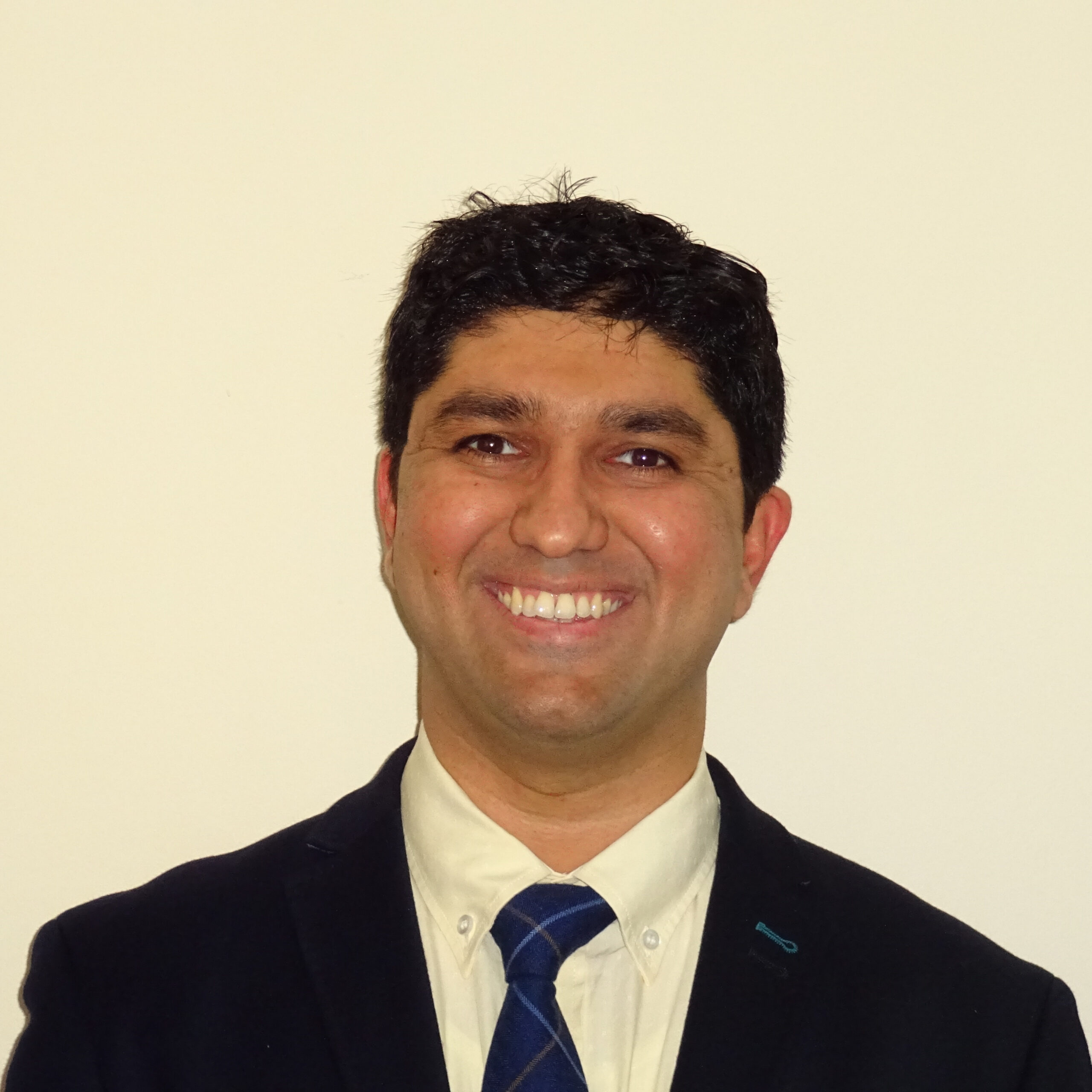
    This webinar will be presented by ICG member Preriit Souda, Director: Data Science & Strategic Insights, PSA Consultants, and was originally presented at the EPHMRA Conference 2024.

    This presentation will start with a question for the audience: What do you think 2034 will look like? Then after this we will move on to address what the future might look like 10 years from now.

    Preriit will talk about how society might evolve, how work might evolve, and how consumer behaviors might change. Then, the paper will focus on the possible future of market research/insight – what might happen and where the industry might evolve. What might be the possible strengths and possible weaknesses?

    Finally, there will be a discussion on the skills that will be needed and what we can do today to be ready for tomorrow and to succeed in what the coming 10 years might bring.

    Preriit Souda

    For the last 15 years, Preriit has helped organizations answer different strategic questions by unraveling explicit and implicit human expression through the mining of social and digital data alongside other data sources like Consumer surveys, IoT (Internet of Things) data, CRM data, Mobile behavioral data, Weather data, Locational data, etc. Works with structured and unstructured data analytics, data mining-machine learning, natural language & image processing, etc. Have consulted clients from a range of sectors including CPG/FMCG, Finance, Travel, Telecom, Public Sector, across different geographies like UK, US, China, India, Continental Europe, Asia Pacific, Oceania, Middle East, North Africa.

    Watch the recording here

  • ICG Wellbeing Check Ins … Some Suggested Resources

    ICG Wellbeing Check Ins … Some Suggested Resources

    Since the launch of our monthly informal ‘Zoom watercooler’ get togethers in December we’ve mulled over some challenges, swapped some very useful tips and benefitted from some practical and funny conversations.  There is no agenda for these sessions, it’s a free space to discuss whatever’s on the minds of those ICG members present.  So far we’ve talked about:

    • how necessary and nice a quick chat with another adult is in the working day
    • staying in touch with clients and colleagues and worries about not having enough work coming in
    • AI and the opportunities as well as threats it brings
    • frustrations when elements of the business process are outside our control, whether that’s paying participants on time or expectations of turn-around time

    Interestingly AURA have acknowledged the need for clear guidance on best practice working between clients and research agencies. They say “we believe that the way clients and research agencies work together can make a real difference to people’s confidence and well-being”.   They’ve produced an “AURA Working Well Together Charter” and have committed to a set of standards they will live up to when you work with them.

    You can find the Charter here

    We’ve also produced a pdf with live links to some brilliant content and tools – you can access it here or click below.

    ICG Wellbeing Check FINAL