Resource Type: Article

  • The Human Touch for Market Research Translation

    The Human Touch for Market Research Translation

    Translation is a key part of international market research projects. Getting it right first time can save time and money, improve responses and ensure the smooth running of the project from start to finish.

    More than three decades of working with the industry’s leaders has shown us that the human touch is essential to best-in-class market research translation. The best results are achieved when expert mother-tongue linguists harness their extensive experience of translating for the sector to provide high-quality, accurate and culturally-sensitive translations.

    In this blog The Language Factory (long-standing advertisers of the ICG)  explain why humans are at the heart of gold-standard market research translation.

    https://thelanguagefactory.co.uk/market-research/

    See full article here

    https://theicg.co.uk/advert/the-language-factory/


  • Rethinking Sustainable Packaging in FMCG

    Rethinking Sustainable Packaging in FMCG

    This article was written by Benori, an ICG Advertiser and Lunch&Learn presenter. and a supplier to several ICG members. 

    The FMCG sector is rapidly adopting sustainable packaging due to rising environmental concerns and consumer demands. Shifting from traditional methods, companies now focus on eco-friendly materials and innovative designs like plant-based plastics and reusable packaging. Despite challenges such as cost and durability, the commitment to reducing waste and enhancing environmental protection remains the foremost plan of action. Collaboration and new technologies are driving this transformation, and the future holds promise with more biodegradable materials and smart packaging solutions. Explore the complexities and innovations shaping this significant shift in this report.


    VIEW THE FULL REPORT HERE 

    https://theicg.co.uk/advert/benori-bespoke-research-solutions/


  • Researchers with Balls

    Researchers with Balls

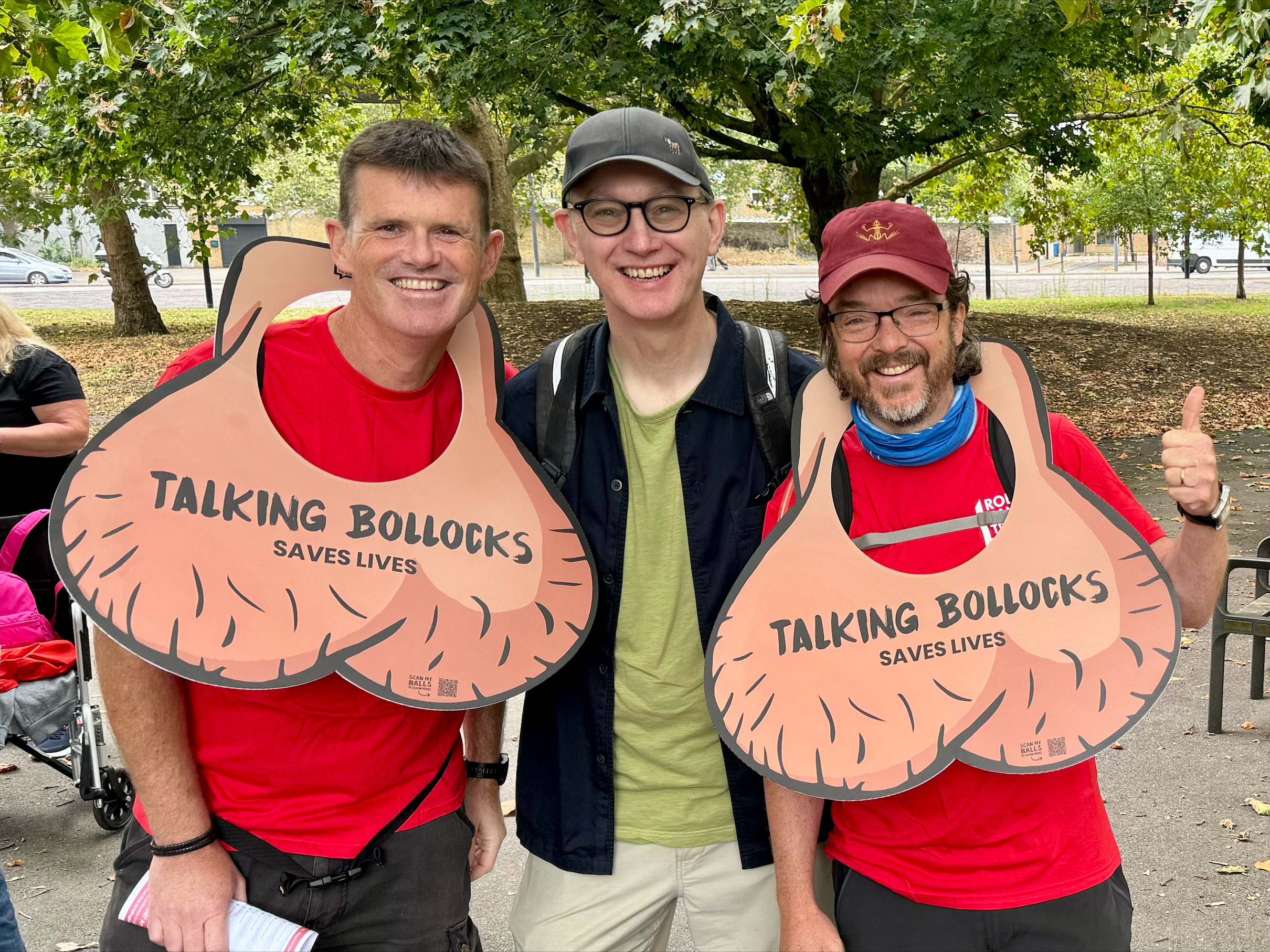
    Earlier this year, following a networking lunch, Andrew Smith proposed a charity walk with a difference. The plan was to walk the Monopoly Board, raising awareness and money for The Robin Cancer Trust who focus on testicular and ovarian cancer. After a few more drinks, the #walkingbollocks event planning team were in full swing and the campaign quickly expanded to include clients, suppliers, friends, family, dogs and even other researchers!

    On Saturday 7th September, Paul Griffiths, Matt Kirby and Andrew set off from Old Kent Road with 40 others looking like this. The group visited every stop on the Monopoly Board, walking 16 miles and engaging with the general public along the way. We made people smile, we confused others, some even donated money on the spot and above all, like all good researchers, we stimulated discussions.

    Thank you so much to all those who have donated already. As I type this, we have raised around £3,000 but if you would like to support the #walkingbollocks and #talkingbollocks team please visit https://www.justgiving.com/campaign/monopolywalk. Thank you.

    Finally, thank you to Paul and Matt for being part of this special day. I’m already dreaming up the next charity event, so let me know if you fancy joining the fun!

    Andrew

  • Embracing Diversity: Strategies for Inclusive Excellence in the Workplace and Research

    Embracing Diversity: Strategies for Inclusive Excellence in the Workplace and Research

    Article written by  Daniel Singham, Commercial Director, of Yonder Data Solutions.

    The beginning

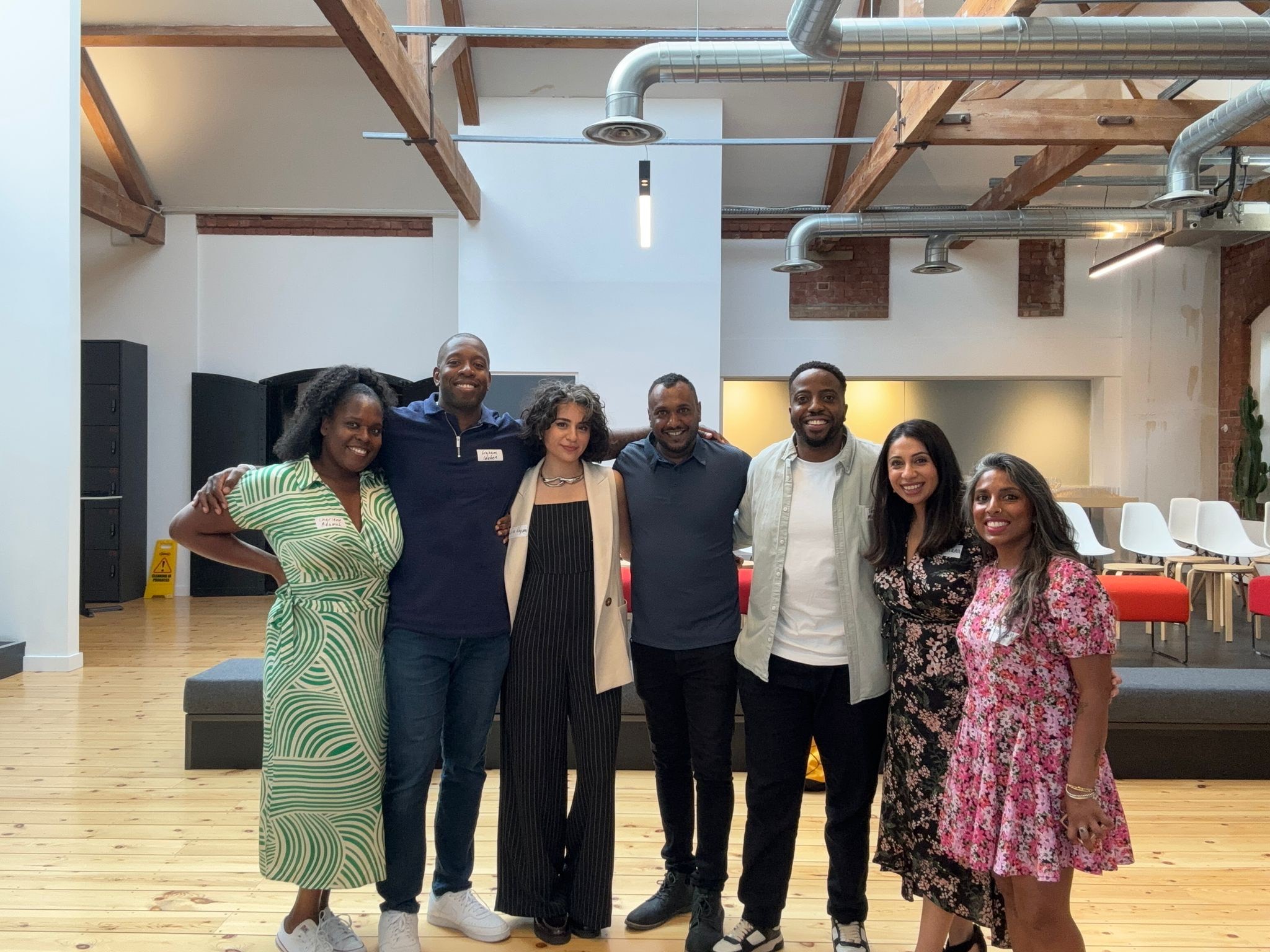
    In the summer of 2023, after a brief discussion with industry leaders Shazia Ginai and Babita Earle, I joined the Colour of Research (CORe) steering committee and the MRS Equality, Diversity and Inclusion Council, embarking on an amazing journey of personal growth, learning, and expanding connections. Together, we collaborate with various MRS Purpose Groups to drive positive change throughout our industry, aiming to create a sector that genuinely represents the world we seek to understand. In June 2024, CORe hosted our first in-person event, which was a tremendous success for both us and our audience, receiving robust support from the industry. The event was hosted at our offices here at Yonder Data Solutions and sponsored by Savanta, IPSOS, The Mix, and Hasson Associates. We extend our heartfelt thanks to all of them, as their support was vital to the event’s success.

    What is Colour of Research?

    Colour of Research actively promotes the inclusion of ethnic professionals in the market research industry. Our goal is to provide support and motivation while creating meaningful connections to foster growth and development.

    The objective of the event was for a deeper understanding of our purpose, showcase examples of our impact, highlight genuine allyship, and suggested actions we can all take to make this industry inclusive for everyone. We are proud of our progress and grateful for your support in this journey towards change.

    How important is representation in research? What are the benefits?

    A primary focus of ours is on the crucial role of representation in research (external practice). For those unaware, the MRS has a Representation in Research Steering Group which I strongly encourage you to follow and collaborate with to refine research approaches and enhance the depth of insights.

    We believe that a nationally representative sample must have a strong enough similarity to the population of the country being studied in order that results will be valid. This means ensuring that the sample represents the country’s population in key demographic characteristics. For instance, at Yonder Data Solutions, our established national representative sample for the UK has included representative quotas on gender, age, region, social grade and ethnicity for several years.

    The value of diversity in market research cannot be overstated, it fosters innovation, enhances market intelligence, and appeals to a consumer base that values inclusivity. As a Commercial Director, I champion inclusive research practices, recognising their role not only in securing competitive advantages but also in contributing to a more equitable and diverse marketplace. By prioritising diverse perspectives in our research strategies, we not only strengthen our competitive edge but also support the development of a more inclusive industry.

    Representation in research mitigates the risks of cultural biases that can lead to market failures. By understanding diverse perspectives, companies can foresee potential problems before they occur, adjust strategies timely, and avoid costly mistakes.

    Diverse groups bring different viewpoints to the table, leading to innovative and creative solutions. When market research is inclusive, it captures these varied perspectives, often leading to breakthrough ideas and pioneering products that keep companies ahead of their competition.

    Choosing the right research methodology is crucial. While online research is quicker and more cost-efficient, it often overlooks significant segments of the population like those with limited digital access or narrow internet usage. Other hard-to-reach groups via online methods include individuals with mental health issues, disabilities and residents of rural areas. A single methodology might be sufficient for specific target audiences, but a mixed methodology approach is essential for achieving a truly nationally representative sample where it is applicable to the brief at hand. It is our responsibility to advocate for and implement these comprehensive strategies with brands and agencies. The initiative must begin with us.

    How important are diverse teams to a business?

    We focus on internal strategies as well, encompassing HR, recruitment, affinity groups, DE&I internal committees, and general DE&I committees in association with the Market Research Society. We acknowledge the underrepresentation of ethnic minorities in the research industry, particularly within senior leadership. There exists a prevailing sense of uncertainty on how to effectively address this issue, a shortage of diverse new talent entering the field, and insufficient awareness among potential allies regarding these challenges. Diversity encompasses a wide range of identity factors, including gender, race, ethnicity, age, sexual orientation, religion, and educational background.

    DEI not only benefits the internal dynamics of a company but also enhances its external interactions and societal contributions. It is vital for sustainable growth and social development.

    A positive initial action is to support the MRS Inclusion Pledge where CEOs commit towards creating safer and more representative workplaces. The pledge includes: publishing pay statistics annually, working towards government targets for women and ethnic minorities at board level and improving recruitment practices.

    Call to action

    If you are interested in having CORe speak at your business, please feel free to get in touch. I would also recommend exploring the MRS Purpose groups, which include MRS Pride, MRS Unlimited, MRS Social Inclusion Group, and Women in Research.

  • Reflections on a Return to the ICG

    Reflections on a Return to the ICG

    Article by returning member Tracey White, White Insight


    It’s exciting, weird – and I won’t deny, a little scary to be back. It also feels like I’ve come home after a long trip away without much contact with my much-loved family. I’m wondering what took me so long.

    I’ve always told people (and it’s true in my head) that I’ve spent most of my career running my own business/freelancing but I’ve just calculated that after 40 years in the industry (which considering I’m only 39 doesn’t ‘compute’) I’ve been employed agency-side for 28 years and only worked independently for 12. So I’m having to re-evaluate my self-image.

    It’s already 12 years since I shut up shop at Fizz Research, left the ICG, and got myself a ‘proper job’. At the time, this return to employment was barely conscious – rather, it was driven by…

    1. boredom – or more accurately a need to get out of the house, the desire to put on ‘grown up’ clothes and get – not only a regular salary – but also a pension (perhaps I’m a bit older than 39) – and
    2. b) laziness… my client base had dwindled to just 3 or 4 regular buyers who were keeping me (more than sufficiently) busy when the most dependable one announced they’d been bought out – by a big, fancy London Ad. agency – and they needed a Head of Insight. I was offered the job, and if I didn’t take it, that income stream would likely dry up. I’d be facing a daunting new biz drive and I just didn’t have the appetite for the inevitable ‘hustle’.

    And it worked extremely well for 9 years… less well for the last 3. You’ll all be aware of the many (potential) pros of being employed; I hardly need to list them. If you’re working for a decent company with authentic ‘lived’ values, and savvy yet fair senior management, all well and good. But if your employers’ values don’t match your own, its only a question of time… that is, if you’re fortunate enough to jump ship and be able to take what is always, to some extent, a risk.

    So here I am. Not only is the ICG perhaps 4 times bigger than when I was last in the club (meaning 4 times the expertise and collaboration opportunities), it’s even changed its name (which I love btw). The new branding, the website (and its functionality), the diversity of members and the many varied and thought-provoking events – are all such valuable benefits. At just over £100/year, it was a ‘no brainer’ to re-join. The MRS and AQR will have to wait ‘till my first WhiteInsight invoice is paid (and I’m very unimpressed that re-joining the MRS means I’ll have to stump up £220 for the first year).

    The e-group asks are reassuringly similar: it’s such a joy to see the many requests for regionally based individual/independent recruiters… my most recent employment had me convinced qual is now entirely online, asynchronous and panel recruited! Oh the joy of the prospect of engaging with real respondents f2f and being pretty confident they really are who they claim to be! I can’t wait.

    Scared to be back? Scratch that – I’m completely happy! I’m also really looking forward to 11th July when I hope to re-connect with some of those who are still here from 12+ years ago. And say Hello to many more new faces, who have chosen the freedom of an independent life.

    Plus ça change, plus c’est la même chose.


    Tracey White; WhiteInsight.


  • Understanding Your Brand

    Understanding Your Brand

    Article by ICG members at Kath Rhodes and Claire Thomas at Qual Street.


    For anyone undertaking a brand exploration: thinking about growth, innovation, developing a proposition or positioning … we would argue that they would be well-served think about a multi-method – layered research approach.

    Why? Because people ‘think, feel and do’ brands in different ways and at different moments across their daily lives.

    It’s why at Qual Street so many of our proposals end up being ‘layer cakes’.

    We often have two or three layers to the cake, a shopping the brand layer, a using the brand layer, a layer that is about identity – me and the brand, a cultural layer …

    This brings complexity to the design of our projects, and sometimes we know that complexity can feel overwhelming. If you have different consumer segments, participating in different methods – it can feel like a cake that’s cut into slices and layered. Which is certainly not straightforward.

    But still, we’d like to argue in favour of ‘layered’ methodologies.  And to suggest that by investing in a multi-method approach you should end up with a clear, uncomplicated outcome.

    In order to grow, businesses need to understand how people’s head, heart and body all relate to the brand, and that means accepting complexity as an input – knowing that synthesis and clarity need to be the outcome of the project.

    Multi-layered insight…and why it’s crucial…

    Put your brand in this picture…

    When we are buying, we come to the brand as a shopper.  What drives our motivations at this point is ‘situated’. How we’re feeling in the moment [of purchase] affects our choices (are we up or down beat, energised or exhausted?) Qual Street’s year-long project (Year in the Life) following the lives of 9 women, highlighted for us the emotion cycle, how even in the pattern of an average week, people go through emotional (and physical) cycles that deeply affect how and what they buy.

    As shoppers/ buyers people also have constraints – time, money, motivation.  AND we are affected by behavioural influences: where a brand is sited, how well it tells its story at the point of choice, price and promotional influences.

    So to understand a brand – we need, as part of the story, to know how it’s shopped … and to do this well we need to explore where it is purchased – the moment of purchase too. One layer to our cake.

    People also have deep underlying drivers and needs that underpin their choices – mental connections, patterns and habits that are established outside of the shopping  moment, as they use the brand.  We have likely formed attachments, habits, behaviours that pre-determine the brands that we want and how we feel about them.

    So we need to understand how the stories and experiences of a brand play out in life.  How someone uses a brand, and how that use creates memories, and associations, which contribute to a person’s identity –  the part a brand has to play in “the dream of the mind” (Will Storr).

    We need to understand how the brand lives in people’s lives … ideally we want to see these brand experiences as they happen and understand their qualitative significance to a person. This is another layer to our cake.  Again, if we can explore this ‘live’ – all the better.  And so we can start to see the place diary apps, pre-tasks, in-home interviews, ethnography can all play in our exploration.

    And beyond that there is the story the brand tells about itself through communication, advertising, PR, through the signs and symbols that it adopts and the part in plays in culture.  Here we want a wider lens to explore how people, as part of the group, use the brand to navigate their way through the world.  What part does it play in their role as a social being?  People are inherently social– we relate to the groups we are in, yes as individuals, but always relative to other people.  We have parts to play in the game of life – the mother, the lover, the hero, the helper, the helpless.  Sometimes a sociological lens really helps to understand where a brand contributes to the human game, sometimes other cultural lenses – anthropology, semiotics should be applied.

    And because we want to understand social influence, exploring the social mind – in ‘social mind groups’ in conversation can be really useful.  We are layering again…

    Layering helps us with a deeper, better understanding of what’s going on

    There is another argument too for multi-methods.

    Conversational methodologies also help us explore and dig into complexity.  We often like to have ‘behavioural layers’ to our projects at Qual Street that are then topped off with conversation. (At-fixture work plus group conversations, for example, or diary work then zoom sessions to follow up).  We completely accept that people don’t always know the ‘why’ behind what they do, so to understanding this we need to understand the ‘doing’. But that said we also see the value in conversation and methods that involve talking to people individually, in pairs and bigger group settings too.

    Case study example…

    We’re in the middle of a user-testing project at the moment.  We’ve set up an on-line community where participants are trying out a prototype and reporting back.  We have a really robust sample size and everyone’s done a great job in fulfilling their tasks.  (In part because we like to brief everyone over Zoom these days before they start and get them ‘up’ for the project, and also because this project is more fun than average.) Everyone is acting as an ‘individual’ representative of their household in the ‘community’ part of this project.  The only group contact they’ve had in this stage has been at the Zoom briefing at the start.

    The responses we got from our on-line community were rich and detailed.  On some level it felt like we’d learned what we needed to know. Because we are Qual Street, though, we also cherry-picked participants who’d given us interesting responses and reconvened them over Zoom to take part in on-line trios.

    And these trios delivered significant and new insight.

    Why? Well it’s the difference between text/ email and a chat. Text and emails are great for headlines and efficient, convenient ways to exchange information.  But they fail when there are lots of interconnected ideas that need to be examined and then put back together again.  So this comes back to brand/ layers.  If the sensorial user experience is ‘x’,  and we pull, stretch, examine that with participants, then perhaps the brand story would need to pull, stretch or change as a consequence.  Conversational enquiry, is spontaneous, adaptable, and flexible. It took us further.  And conversational dynamic, often does well in small groups, as participants compare and contrast their reactions with others.  That said we like smaller groups so there isn’t too much ‘social brain’ dynamic going on. (Which is why we did trios).

    In this project, we had to have the ‘trial’ part of the project.  And the online community was perfect for that.  We could ‘drop’ different tasks each day, and build up our understanding.  But It turned out we really needed the conversational approaches too…to see how the brand story would come into play/ overlay.

    Focus on detail going in to create a simple clear, picture coming out.

    The danger of covering all the angles comes from reporting the complexity.  Businesses don’t need to know what happened across the course of these different approaches.

    Our job is NOT to report.

    Our job, to keep the cake-making analogy going, is to mix up all the ingredients and bake in understanding.  We need to communicate at the debrief stage clear ideas and insight that makes sense, so the client team know what to do next and why.

    Busy businesses don’t have time to sift through detail, they need to know what the strategy is.  Qual Street’s promise to clients is ‘dedication to the answer’. (It’s not we did this in a complicated way, here’s the complication for your to get your heads around).

    Tech to help with sense-making

    We love the part of our job which is about asking questions, but the bit we love more is sense-making.  These days we’re using lots of tech to help us do our jobs better.  We use Miro to help analyse our sessions – it’s a sandbox to play in and ‘dump’ ideas, it’s a place to build a story-telling structure…

    We use Coloop AI to help us be more efficient (and the other AI that comes built into platforms like Qualzy, Fieldnotes) in our analysis and to find golden nuggets (film clips, quotes) that will help us tell the ‘story’ of the debrief better.

    This technology is helping us handle the complexity we build into our research design both quickly and efficiently.  The AI also brings a research assistant into play.  We can ask Coloop to create summaries and basic insight.  It delivers insta-analysis so we can be confident in the foundations that we are building our more nuanced and human understanding on.

    Business is in a hurry – we can handle that

    In the past, when we needed quicker insight we tended to plump for focus groups – lots of people, interviewed by a few researchers in a small amount of time.  We know groups (on their own) are often quite a flawed method that do reveal social dynamics – how our ‘social minds’ operate, but aren’t reliable when it comes to brand behaviour.

    Now we can use AI to our advantage to help work through the detail of our multi-method approaches (the right way to be doing brand projects) but much more quickly.

    That said, you want a beautiful, delicious cake, you take time at all stages of the making…

    Best results are always when time to reflect, question and review are built in to a project.  It’s a luxury these days, but ultimately taking time delivers better insight.

    The cake-makers…

    Claire, Ambreen and I (Kath), we’ve all been doing qualitative research for around 30 years now… None of us can bear to do the actual maths – and we are qualitative researchers after all, but it’s decades of asking, listening, thinking, communicating.

    If we are talking archetypes we’d be very happy if you visualised us as cooks in the kitchen, prepping, making, and then delivering delicious dishes.

    However, you might have noticed that one of us, Ambreen, is all about the cake – she’s a cake-maker extraordinaire with her own cake-making business. So please do feel free to order up some wonderful, delicious qualitative insight from us.  But if you live in the Brighton area, you never know – she might also bake you a cake too.

    We love what we do, we want to work with you

    Next project you have where you want to understand your brand, how people do, think, feel about it.  We’d love to be part of that exploration.

    https://www.qual-street.co.uk/



  • Feeding the Feed: Social Media and Youth’s Food Choices

    Feeding the Feed: Social Media and Youth’s Food Choices

    Writtten for the Institute of Food Science and Technology, ICG member Carol Raithatha shares an overview on how social media shapes youth’s food preferences and influences consumption patterns today.


    See here for article

    https://www.linkedin.com/in/carolraithatha/

  • Why China Doesn’t Do WFH

    Why China Doesn’t Do WFH

    Written by ICG member Simon Shaw, Ignite Qualitative Research Consultancy

    While working from home has become the ‘new normal’ in the West, it most certainly has not in China.  Most companies require people to make the daily commute to the office and, more to the point, people happily comply.

    Why should this be so?  Here are some of the main reasons:-

    1. Unsuitable homes

    Chinese apartments tend to be small, with limited access to green space.  They are cold in winter and hot in summer.  Older apartments may have slow internet connections.  For many, home is little more than a place to rest your head at night: the metaphorical bolthole.

    Most young Chinese live with Mum and Dad until they get married.  This means that a large proportion of 20 and 30-somethings not only have cramped living space to contend with, but the presence of Mum and Dad too.  In many families, grandparents are also present, adding to the claustrophobic atmosphere.

    In this context, the office – especially if it is modern and well-appointed – is positively appealing.

    1. Uniquely miserable lockdowns

    In China, the term ‘lockdown’ meant just that: an order to stay inside your home, at all times, until further notice.  All shops were shut and food distribution became the responsibility of local government.

    For weeks on end, people left their apartments only when ordered downstairs to line up for an enforced lateral flow test.  There, they would be met by the dystopian sight of the community ‘da bais’ – health workers, security guards and policemen dressed head to toe in hazmat suits.  If they tested positive, they would be carted off to a ‘fangcang’ – an industrial-scale warehouse in which those infected with the virus could be detained until further notice.  If this meant separation from family, tough.

    As if this was not enough, the lack of any furlough or business support schemes resulted in huge financial losses from which many have never recovered.  The shuttered-up shops that still line streets up and down the country are testament to the damage done to countless livelihoods.

    The experience of working from home was at best miserable, and at worst traumatic.  Getting back to the office was a cause for joy, not regret.

    1. Corporate norms

    In many local enterprises, corporate structures are hierarchical, not flat.  Relationships between bosses and workers tend to be ‘master-servant’ in nature.  Working independently is discouraged, and micro-management is the norm.

    Workers themselves – especially younger ones – feel more comfortable under the wing of their boss.  Their formative years, all the way through to tertiary education, have been characterised by the observance of rules, conforming to norms, and learning by rote.  Acting alone, taking the initiative, being a ‘self-starter’: such ideas are anathema to the young Chinese worker.

    While Westerners may value the space and freedom of working from home, their Chinese peers are just as likely to find it perplexing and paralysing.

    1. Lack of trust

    In the West, employers tend to assume that their employees can be trusted to act in the interests of their employer.  And, broadly speaking, they do.  Safeguards of course exist to ensure miscreants are caught, but the expectation is that malign behaviour is the exception, not the rule.

    This in simply not the case in China.  The assumption is that the employee will find ways to maximise their own interests, regardless of whether or not such interests are aligned with those of the company.

    And there is good reason for this.  Sales people may direct new business enquiries to a third party in which they have a stake, or who offers them a cut.  As Western companies operating in China know only too well, IP laws are rarely enforced and employees can be easily tempted to share data with competitors, especially when the reward of offer is equivalent to a year’s salary.

    In this context, it pays to have your employees where you can keep an eye on them.  Allowing them to access sensitive data from home would pose too great a risk.

    1. The importance of relationship-building

    In a society where the rule of law is inconsistently applied, trust between parties is the cornerstone of business relationships.  However, given that the default is a lack of trust, building confidence requires a lot of time and effort.

    Above all, it requires those involved to get to know each other as people.  Business entertainment in the form of long lunches and dinners is commonplace: many people will go out two or three times a week to oil the wheels of client or colleague relationships.  Water-cooler moments or trips to the golf club are more than just helpful asides in the course of a working week; they are absolutely essential to the function of business.

    The personal, human dimension is everything in China, and this is best done via face-to-face contact.  Zoom will never offer this.

    1. A love of being with others

    Chinese culture is built on relationships.  Unlike Westerners, who view themselves primarily as individuals, Chinese people define themselves as members of groups: the family, the friends’ circle, the company.

    They are never happier than when they are with others, and never unhappier than when they have to spend long periods of time alone.  It is no coincidence that holidays are taken in tour groups, that shopping malls are crowded and that restaurants are noisy.  Indeed, it has even been demonstrated that Chinese people are more likely to sit near others when entering a bus or train carriage, when Westerners naturally choose to sit further apart.

    The workplace is a great example of this tendency.  There is no culture of eating alone, at one’s desk.  Instead, workers eat with colleagues, often in groups of 4 or 5, sometimes more.  It is notable that offices tend to empty out at the same time, as if workers take comfort in the knowledge that it is not just their group eating together, but everyone else’s group eating at the same time as them.

    Eating at home, isolated from the one’s colleagues, might fill the stomach, but it does not nourish the soul.


  • Free Meeting or Working Venues in London – Suggestions by ICG Members

    Free Meeting or Working Venues in London – Suggestions by ICG Members

    The ICG members’ egroup is a fount of knowledge from everything to do with running a small business and insight-related questions.

    Here ICG member James Powell collates the responses he got to his question about free meeting venues in London.

    Free meeting or working venues in London

  • Diversity and Inclusion over the Last 25 Years: Ethnic Dimension

    Diversity and Inclusion over the Last 25 Years: Ethnic Dimension

    Ethnic Dimension, set up by ICG member Jag Poonia, is 25 years old this month (June) and is still going strong.

    Over the years, this specialist agency has helped ensure racially diverse voices are represented and included in market research, way before Diversity and Inclusion was an explicit focus for clients and the industry.

    It has been talking, listening and understanding the UK’s racially diverse communities for brands, charities and the social sector, helping them to reach and engage in ways that are culturally sensitive. The focus has always been to uncover the nuances among and between these communities that bring them to life for clients.

    Specialists from South Asian, Black Caribbean and Black African heritages have been storytellers on a wide range of important social issues: knife crime, female genital mutilation, mental health, the Covid pandemic, sexual health, obesity, smoking, among other things.

    Throughout the last 25 years we seen societal changes triggered by events that have impacted the lives of people of colour including race equality legislation, the death of Stephen Lawrence and George Floyd, the Black Lives Matter movement and Covid-19.

    Research has provided a platform for them to express their responses, lived experiences and how these events have coloured their perspectives of the society they live in, organisations and brands that serve them as consumers, and the extent to which they feel public services meet their needs.

    It has been an incredible journey, and there is real gratitude for all of those respondents who have shared their voices with honesty, fortitude and humour.